

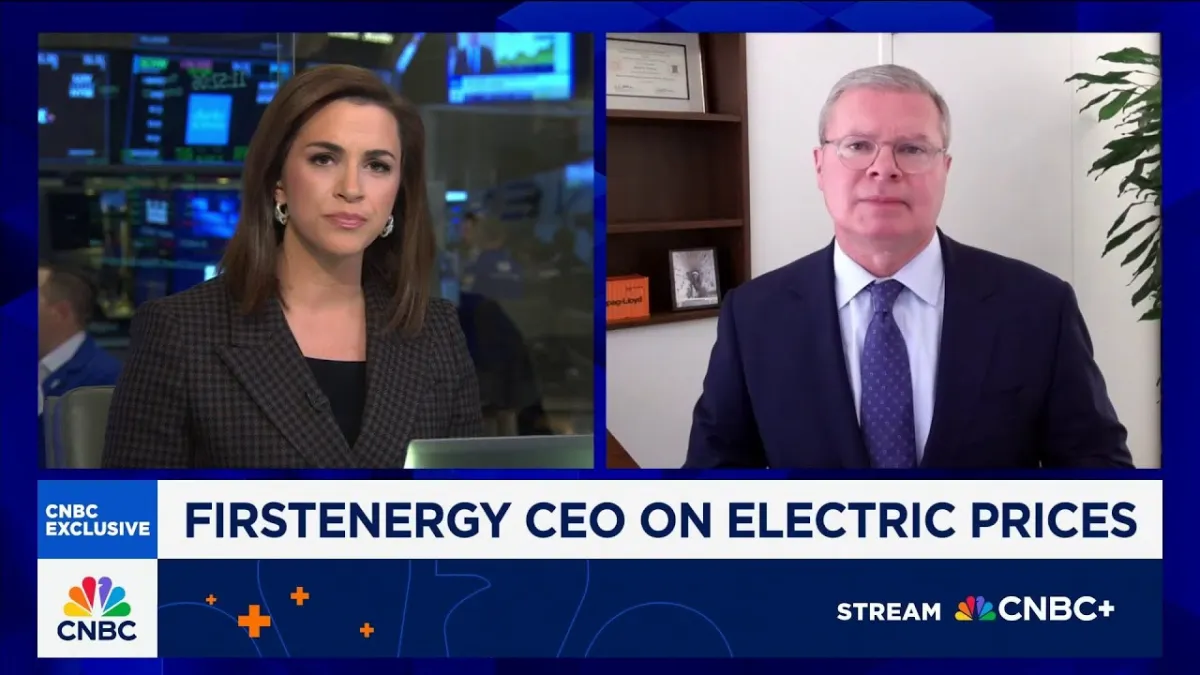
The burgeoning artificial intelligence revolution, often discussed in terms of computational power and algorithmic breakthroughs, is quietly ushering in an equally transformative demand on foundational energy infrastructure. This critical, often overlooked, dimension of AI’s growth was a central theme when FirstEnergy CEO Brian Tierney spoke with CNBC’s 'Money Movers,' delving into the company's recent quarterly earnings and, more significantly, the profound impact of rising data center demand on their long-term investment strategy for the transmission grid.
Tierney's discussion underscored a stark reality for founders, VCs, and AI professionals: the scale of investment required to power this new era extends far beyond silicon and software. As one interviewer pointed out, estimates suggest that "for every dollar spent on AI, another three will be needed to be spent on supporting infrastructure." This ratio highlights the immense capital expenditure flowing into the physical backbone necessary to sustain AI's insatiable hunger for electricity. FirstEnergy, a major utility operating across Ohio, Pennsylvania, Maryland, West Virginia, and New Jersey, is experiencing this firsthand.
The utility sector is witnessing a significant surge in load, directly attributed to the proliferation of data centers and broader electrification trends. This isn't a speculative projection; it's a present-day reality driving strategic decisions. Tierney noted, "the increase that we're seeing in our load associated with data centers and other electrification that we're seeing across the board, is driving our load up significantly, and we're having to respond to that by investing in the transmission grid." This response is translating into substantial financial commitments.
FirstEnergy plans to increase its next five-year capital expenditure plan for transmission by approximately 30% compared to current levels, a trend they anticipate will continue. This proactive investment in grid modernization is crucial, as the existing infrastructure, while robust, was not designed for the unprecedented, concentrated power demands of hyper-scale AI data centers. The CEO emphasized, "We're going to increase our next five-year CapEx plan for transmission about 30% versus where it is today, and we see that trend just continuing in the future." Such figures underscore the critical role utilities play as enablers of the AI economy, essentially building the highways upon which the digital future will travel.
Beyond capital, the sheer human effort involved in this infrastructure build-out presents another challenge. The interviewer raised concerns about the availability of a skilled labor force to support such ambitious plans. Tierney, however, offered an optimistic outlook, detailing FirstEnergy's strategies to address this. The company has reinstituted an apprenticeship program to train new workers, alongside actively hiring experienced "tenured line people." This dual approach, nurturing new talent while attracting seasoned professionals, demonstrates a pragmatic recognition of the human element in scaling physical infrastructure.