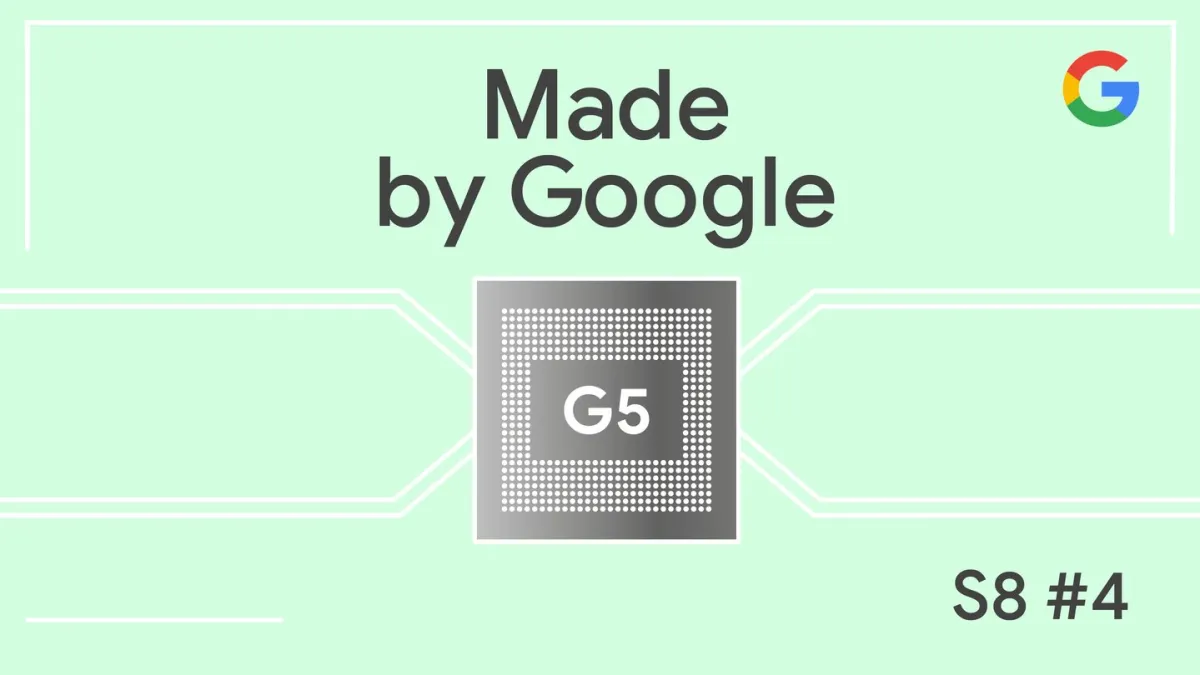
Google's next-generation silicon, the Tensor G5, is poised to redefine the Pixel experience, pushing the Pixel 10 far beyond its predecessors. According to the announcement, this isn't just an incremental upgrade; it's a foundational shift, signaling Google's aggressive play in the on-device AI arms race. The Pixel 10 Tensor G5 isn't merely about faster app launches or smoother graphics; it's about fundamentally changing how users interact with their smartphone, making it a more intelligent, proactive, and personalized companion.
For years, Google's Tensor chips have been the bedrock of its Pixel strategy, prioritizing machine learning capabilities over raw benchmark scores. With the Tensor G5, that philosophy matures considerably. We're looking at a chip designed from the ground up to handle the increasingly complex demands of on-device AI, from sophisticated image processing and real-time language translation to advanced contextual awareness and potentially, generative AI features that run entirely on the phone. This move solidifies Google's vertical integration strategy, giving them unparalleled control over the hardware-software synergy, much like Apple has achieved with its A-series chips.
Early indications suggest a significant leap in both CPU and GPU performance, closing the gap with competitors while simultaneously widening the chasm in AI processing. This means the Pixel 10 Tensor G5 will not only feel snappier in everyday tasks but will also unlock new possibilities for mobile gaming and augmented reality experiences. But the real magic lies in the updated Tensor Processing Unit (TPU), which is reportedly far more efficient and powerful, capable of executing complex AI models with unprecedented speed and lower power consumption. This directly translates to longer battery life even with more intensive AI features running in the background.
Imagine a Pixel 10 that can instantly edit photos with professional-grade precision, understand nuanced voice commands in noisy environments, or even summarize lengthy articles and emails without ever sending data to the cloud. These are the kinds of experiences the Tensor G5 is engineered to deliver, moving AI from a cloud-dependent luxury to an on-device staple. It’s about making the phone smarter without compromising user privacy or relying on a constant internet connection.
The Industry's AI Arms Race
The arrival of the Pixel 10 Tensor G5 throws down a gauntlet to Qualcomm and Apple. While Qualcomm's Snapdragon chips have made strides in AI, and Apple's Neural Engine is formidable, Google's singular focus on AI-first hardware gives it a distinct advantage in specific use cases. This isn't just about winning benchmark wars; it's about defining the next era of mobile computing. As generative AI becomes mainstream, the ability to run these models efficiently and securely on a device will be a critical differentiator. Google is betting big that the future of mobile is deeply personal AI, and the Tensor G5 is its vehicle.