

Patrick Debois on Scaling Teams and AI Agents

Patrick Debois of Tessl discusses how AI coding agents, like human teams, require intentional design and processes to scale effectively, challenging the notion of self-scaling.

7 min read
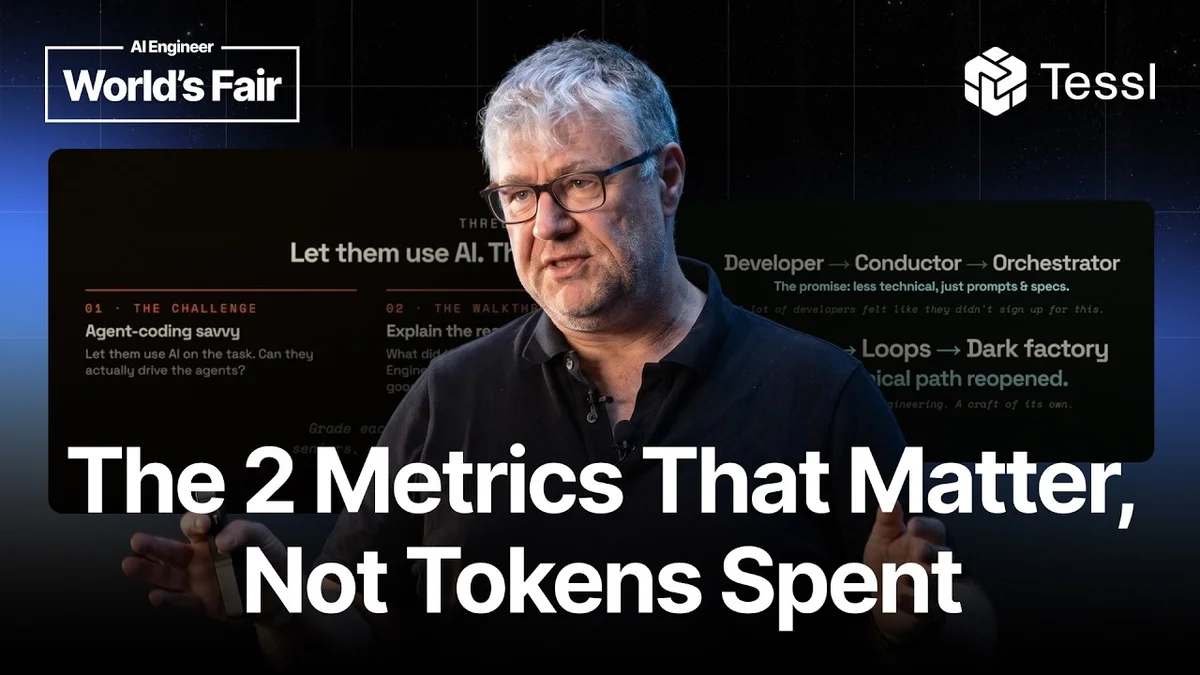
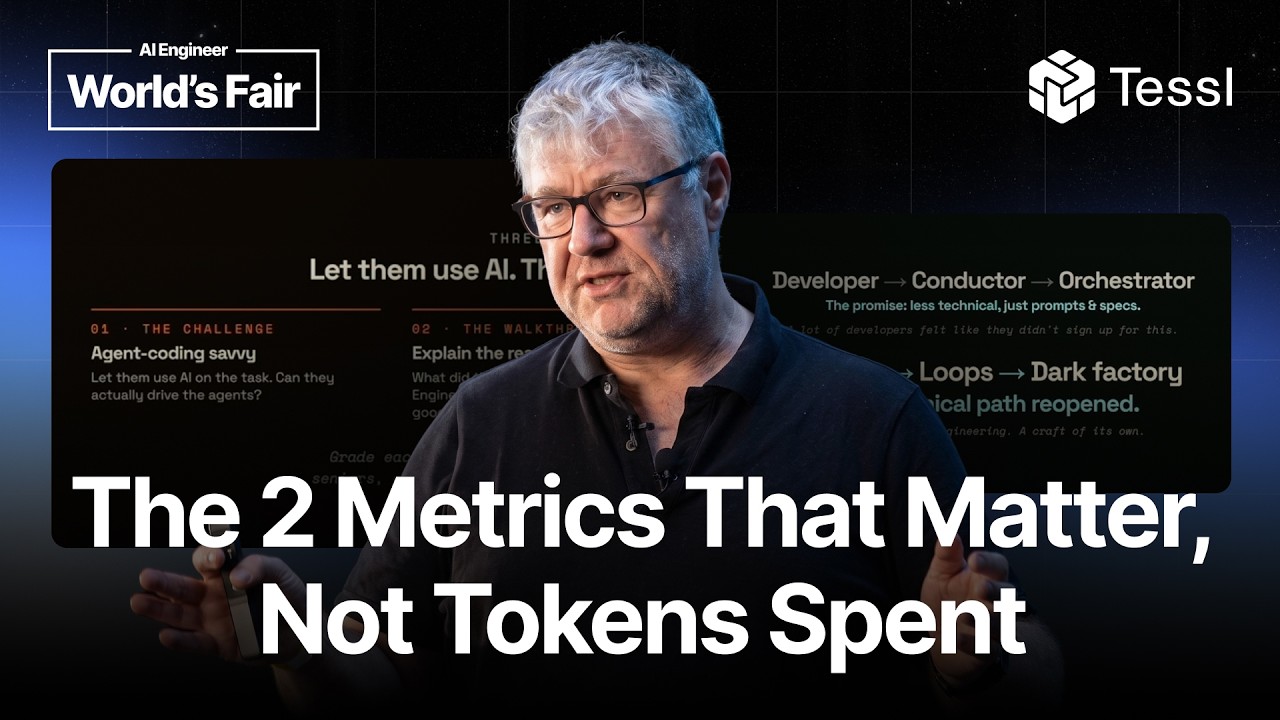
Patrick Debois speaking at a conference stage
AI Engineer

Visual TL;DR. Self-Scaling Myth challenged by Patrick Debois. Patrick Debois applies to AI Coding Agents. Patrick Debois applies to Human Teams. AI Coding Agents needs Intentional Design. Human Teams needs Intentional Design. Intentional Design and Defined Processes. Defined Processes enables Sustainable Growth.

  1. Self-Scaling Myth: AI agents or human teams don't scale autonomously without strategic planning
  2. Patrick Debois: founder of Tessl, challenges common perceptions about scaling AI and teams
  3. AI Coding Agents: require intentional design and processes to achieve effective, sustainable growth
  4. Human Teams: scaling challenges parallel those of AI agents, needing similar solutions
  5. Intentional Design: critical for structuring how AI agents and human teams operate and grow
  6. Defined Processes: well-established workflows are paramount for managing growth in both domains
  7. Sustainable Growth: achieved through deliberate planning, not spontaneous expansion of capabilities
Visual TL;DR
Visual TL;DR, startuphub.ai Self-Scaling Myth challenged by Patrick Debois. Intentional Design and Defined Processes. Defined Processes enables Sustainable Growth challenged by and enables Self-Scaling Myth Patrick Debois Intentional Design Defined Processes Sustainable Growth From startuphub.ai · The publishers behind this format
Visual TL;DR, startuphub.ai Self-Scaling Myth challenged by Patrick Debois. Intentional Design and Defined Processes. Defined Processes enables Sustainable Growth challenged by and enables Self-Scaling Myth Patrick Debois IntentionalDesign Defined Processes SustainableGrowth From startuphub.ai · The publishers behind this format
Visual TL;DR, startuphub.ai Self-Scaling Myth challenged by Patrick Debois. Intentional Design and Defined Processes. Defined Processes enables Sustainable Growth challenged by and enables Self-Scaling Myth AI agents or human teams don't scaleautonomously without strategic planning Patrick Debois founder of Tessl, challenges commonperceptions about scaling AI and teams Intentional Design critical for structuring how AI agents andhuman teams operate and grow Defined Processes well-established workflows are paramountfor managing growth in both domains Sustainable Growth achieved through deliberate planning, notspontaneous expansion of capabilities From startuphub.ai · The publishers behind this format
Visual TL;DR, startuphub.ai Self-Scaling Myth challenged by Patrick Debois. Intentional Design and Defined Processes. Defined Processes enables Sustainable Growth challenged by and enables Self-Scaling Myth AI agents or humanteams don't scaleautonomously… Patrick Debois founder of Tessl,challenges commonperceptions about… IntentionalDesign critical forstructuring how AIagents and human… Defined Processes well-establishedworkflows areparamount for… SustainableGrowth achieved throughdeliberateplanning, not… From startuphub.ai · The publishers behind this format
Visual TL;DR, startuphub.ai Self-Scaling Myth challenged by Patrick Debois. Patrick Debois applies to AI Coding Agents. Patrick Debois applies to Human Teams. AI Coding Agents needs Intentional Design. Human Teams needs Intentional Design. Intentional Design and Defined Processes. Defined Processes enables Sustainable Growth challenged by applies to applies to needs needs and enables Self-Scaling Myth AI agents or human teams don't scaleautonomously without strategic planning Patrick Debois founder of Tessl, challenges commonperceptions about scaling AI and teams AI Coding Agents require intentional design and processesto achieve effective, sustainable growth Human Teams scaling challenges parallel those of AIagents, needing similar solutions Intentional Design critical for structuring how AI agents andhuman teams operate and grow Defined Processes well-established workflows are paramountfor managing growth in both domains Sustainable Growth achieved through deliberate planning, notspontaneous expansion of capabilities From startuphub.ai · The publishers behind this format
Visual TL;DR, startuphub.ai Self-Scaling Myth challenged by Patrick Debois. Patrick Debois applies to AI Coding Agents. Patrick Debois applies to Human Teams. AI Coding Agents needs Intentional Design. Human Teams needs Intentional Design. Intentional Design and Defined Processes. Defined Processes enables Sustainable Growth challenged by applies to applies to needs needs and enables Self-Scaling Myth AI agents or humanteams don't scaleautonomously… Patrick Debois founder of Tessl,challenges commonperceptions about… AI Coding Agents require intentionaldesign andprocesses to… Human Teams scaling challengesparallel those ofAI agents, needing… IntentionalDesign critical forstructuring how AIagents and human… Defined Processes well-establishedworkflows areparamount for… SustainableGrowth achieved throughdeliberateplanning, not… From startuphub.ai · The publishers behind this format

In a thought-provoking discussion, Patrick Debois, a prominent figure in the tech community and founder of Tessl, explores the parallels between the scaling challenges faced by artificial intelligence agents and human teams. Debois posits that neither coding agents nor development teams possess an inherent ability to scale themselves. Instead, he argues that intentional design and well-defined processes are paramount for achieving sustainable growth in both domains.
Patrick Debois on Scaling Teams and AI Agents - AI Engineer
Patrick Debois on Scaling Teams and AI Agents — from AI Engineer

The Self-Scaling Myth

The idea that advanced AI agents, particularly those designed for coding and software development, might autonomously scale their own capabilities or the teams they work with is a common, yet often unsubstantiated, notion. Debois challenges this perception, drawing a direct analogy to the realities of managing and growing human engineering teams. Just as a startup cannot simply expect its workforce to grow organically without strategic planning, neither can AI agents be presumed to scale their own effectiveness or the scope of their operations without deliberate intervention.

Debois's core argument centers on the need for external guidance and structure. He suggests that the development of AI agents, much like the development of agile methodologies for software teams, requires a conscious effort to build in mechanisms for growth, adaptation, and increased efficiency. This involves identifying bottlenecks, defining clear objectives, and implementing feedback loops that allow for continuous improvement.

Lessons from Team Scaling

The experience of building and scaling engineering teams provides a rich source of lessons applicable to AI development. Debois highlights that successful team scaling is rarely a passive event. It involves careful recruitment, onboarding, establishing clear communication channels, defining roles and responsibilities, and fostering a culture that supports collaboration and learning. Without these foundational elements, teams can quickly become inefficient and overwhelmed as they grow.

Applying this to AI agents, Debois implies that achieving true scalability requires more than just increasing computational resources or data inputs. It necessitates a thoughtful architecture that can accommodate new functionalities, a robust framework for managing complexity, and a clear understanding of how the agent interacts with its environment and other systems. The agent's ability to handle an increasing workload or solve more complex problems is a function of its design, not an emergent property of its existence.

The Role of Process and Design

Debois's perspective underscores the critical importance of process and design in achieving scalability. For AI agents, this could translate to modular architectures, well-defined APIs, and intelligent orchestration layers that manage task allocation and resource management. For human teams, it means embracing agile practices, implementing effective project management tools, and continuously refining workflows.

The takeaway is clear: if you are building AI agents or leading a team, expecting them to scale themselves is a recipe for disappointment. Instead, invest time and resources in designing for growth. This proactive approach ensures that both your AI initiatives and your human capital can effectively meet the demands of an ever-evolving technological landscape.

© 2026 StartupHub.ai. All rights reserved. Do not enter, scrape, copy, reproduce, or republish this article in whole or in part. Use as input to AI training, fine-tuning, retrieval-augmented generation, or any machine-learning system is prohibited without written license. Substantially-similar derivative works will be pursued to the fullest extent of applicable copyright, database, and computer-misuse laws. See our terms.