

Palantir CTO: AI Race is About Value, Not Just Models

Palantir CTO Shyam Sankar discusses the U.S.-China AI race, emphasizing economic value realization and the role of American workers in the AI revolution.

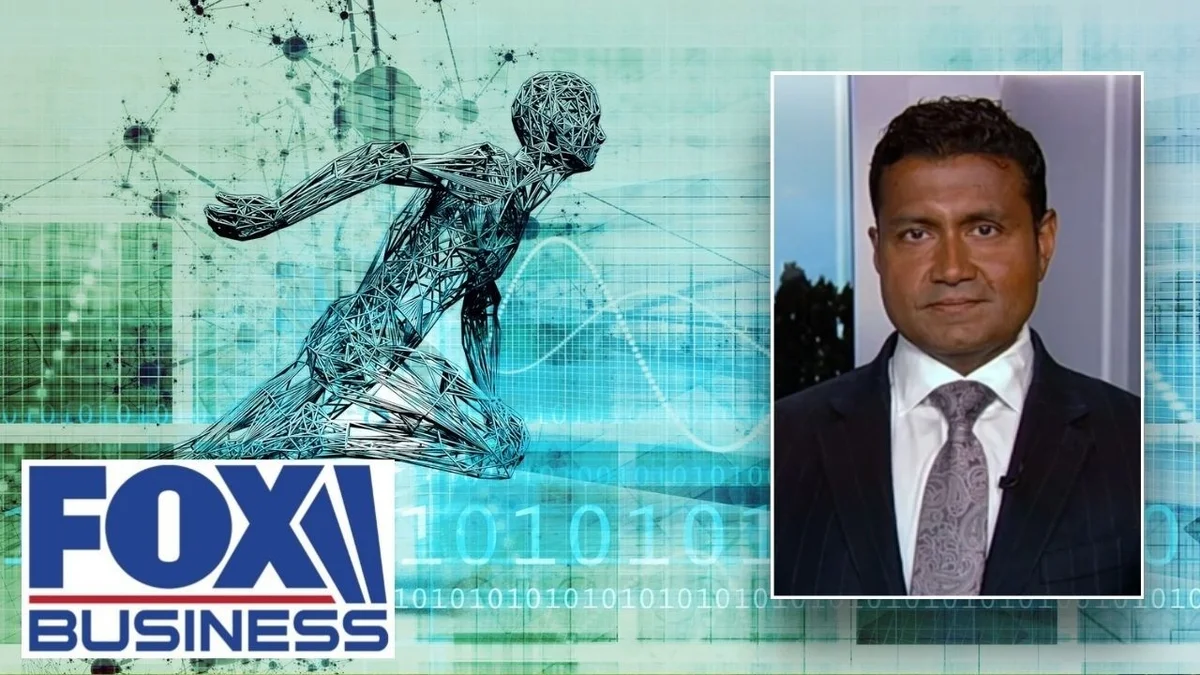
Shyam Sankar, Chief Technology Officer at Palantir, speaking on a television broadcast.
YouTube
Visual TL;DR
US-China AI RaceDriver
competition between nations for AI dominance and economic advantage
From the article 2 mentionsIn a recent appearance on 'Mornings with Maria,' Palantir Technologies CTO Shyam Sankar discussed the competitive landscape of artificial intelligence, particularly the race between the U.S. and China.
Palantir's RoleCore
known for decision-making platforms in national security and beyond
From the article 2 mentionsPalantir, a company known for its decision-making software, is a key partner for the Pentagon, assisting military operators in analyzing large datasets to make faster decisions on the battlefield.
Value, Not Just ModelsContext
true success is realizing economic value from AI, not just building models
From the article 2 mentionsSankar argued that the true measure of success in AI is not solely in developing advanced models, but in the practical application and realization of economic value from these technologies.
Empower American WorkersEffect
AI gives American workers 'superpowers' for reindustrialization and prosperity
From the article 3 mentions"The race that we're really in is a race to realize economic value from these models," Sankar explained, adding that AI can "give the American worker superpowers."
Sovereign AIContext
next frontier: secure, trusted AI for nations, protecting data and values
From the articleLooking ahead, Sankar identified "sovereign AI" as the next frontier.
Economic ProsperityOutcome
From the article 5 mentionsHe believes that the diffusion of AI into the economy is crucial for underwriting American prosperity and fostering reindustrialization.
Address AI RisksDriver
mitigating risks while preserving human agency and ethical considerations
Contents(5)

In a recent appearance on 'Mornings with Maria,' Palantir Technologies CTO Shyam Sankar discussed the competitive landscape of artificial intelligence, particularly the race between the U.S. and China. Sankar argued that the true measure of success in AI is not solely in developing advanced models, but in the practical application and realization of economic value from these technologies.

The AI Race: Beyond Model Building

Sankar stated that while the U.S. is focused on building superior AI models, the actual competition lies in the ability to translate these models into tangible economic benefits. He believes that the diffusion of AI into the economy is crucial for underwriting American prosperity and fostering reindustrialization. "The race that we're really in is a race to realize economic value from these models," Sankar explained, adding that AI can "give the American worker superpowers."

Palantir's Role in National Security and Beyond

Palantir, a company known for its decision-making software, is a key partner for the Pentagon, assisting military operators in analyzing large datasets to make faster decisions on the battlefield. Sankar highlighted how AI is transforming defense, citing the OODA loop (Observe, Orient, Decide, Act) and how AI accelerates this process. He also touched upon the broader implications for national security, noting that AI can help in understanding the signs of brewing conflict and mobilizing the industrial base.

Empowering the American Worker

A central theme of Sankar's argument is the importance of the American worker in the AI revolution. He stressed that the impact of AI will be determined by those wielding the technology, not just its creators. "The voice that's really missing is the voice of the builder," Sankar said. He emphasized that policies should focus on giving American workers a seat at the table and ensuring that AI's benefits are diffused throughout the economy. This includes empowering workers in various sectors, from manufacturing to insurance, to use AI for automating processes and enhancing their capabilities.

The Next Frontier: Sovereign AI

Looking ahead, Sankar identified "sovereign AI" as the next frontier. He explained that a company's unique knowledge, experience, and proprietary approaches are its core assets. These cannot be replicated by generic models. Sankar suggested that the current focus should be on using open models as a foundation to integrate and post-train a firm's unique, proprietary knowledge, ensuring that the company owns this compounding asset and its workers can wield it for economic advantage.

Addressing AI Risks and Human Agency

Regarding concerns about AI agents behaving unpredictably, Sankar pointed to the necessity of strong orchestration and governance layers. He reiterated that AI is a tool, and its application is driven by human agency. "We should not unilaterally see that through a lack of imagination," he stated. Sankar concluded by emphasizing that the intelligence already available through current AI models is more valuable than often realized, and the focus should be on effectively implementing and making these models work, rather than solely pursuing the next generation of more powerful models.

© 2026 StartupHub.ai. All rights reserved. You may not republish this article in full without a license. Search engines and AI research tools may crawl and summarize for reference. Bulk reproduction or model training requires a license. See our terms.
Daniel Singer

Written by

Daniel Singer

Editor, StartupHub.ai

Daniel Singer is the editor of StartupHub.ai, a technology expert and thought leader on AI and its applications across sectors, from fintech and healthcare to developer tooling and consumer software. He writes and tests the tools covered here thoroughly and regularly, and built StartupHub.ai to give founders, operators and buyers a clearer read on what they are actually being sold.