

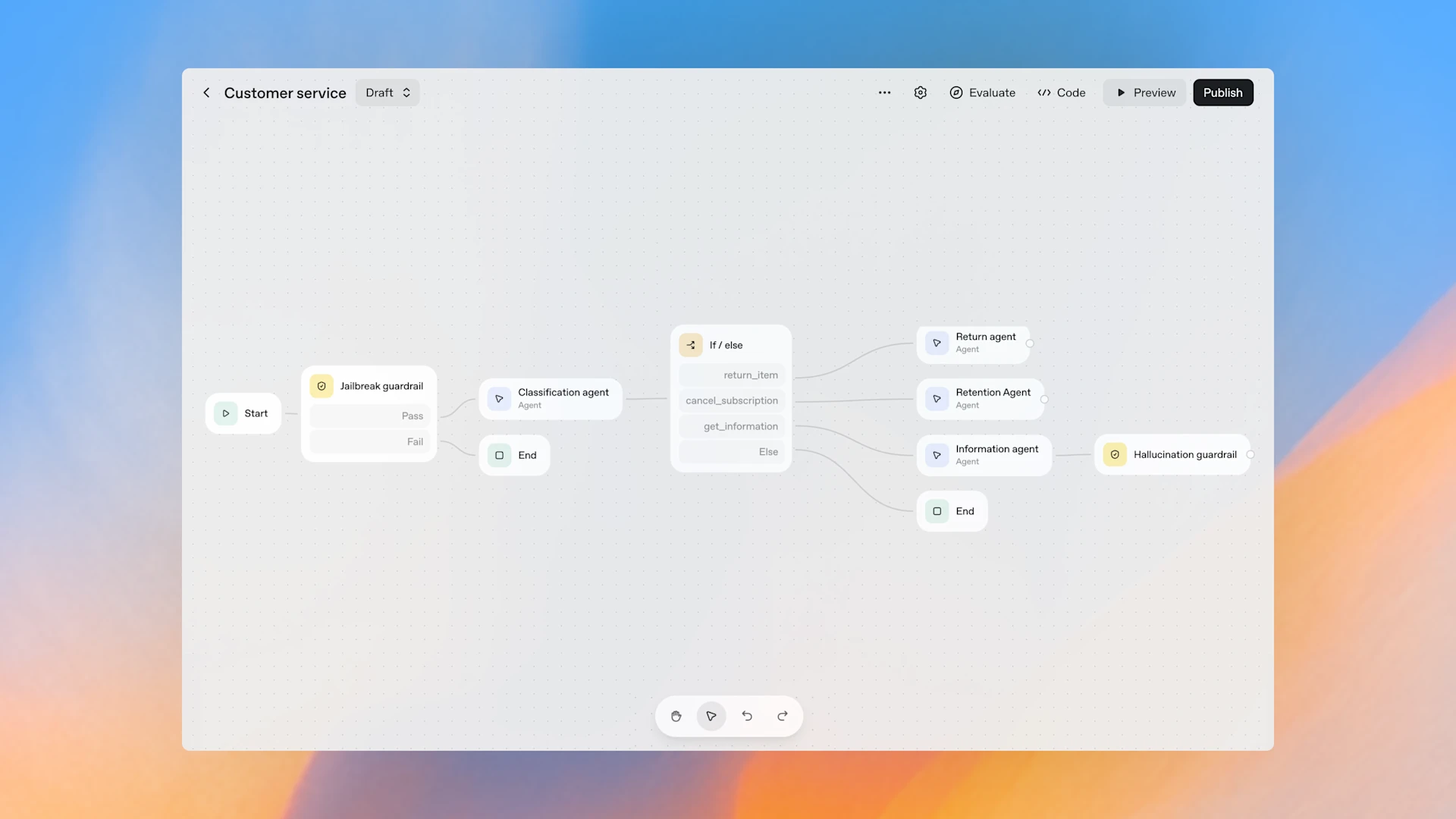
OpenAI is making a decisive move to own the entire AI agent development stack. The company today launched AgentKit, a comprehensive suite of tools designed to eliminate the fragmented, DIY approach that has defined agent-building until now. Instead of developers juggling orchestration frameworks, custom connectors, and manual evaluation pipelines, AgentKit offers a unified, visual platform to build, deploy, and optimize agents.
The centerpiece is Agent Builder, a visual canvas that turns the complex logic of multi-agent workflows into a drag-and-drop experience. This low-code approach is designed to bring product managers and subject matter experts into the development process alongside engineers, a shift that early customer Ramp claims slashed its iteration cycles by 70%. The tool includes full versioning and inline evaluation, targeting the rapid iteration needed for production-grade AI.
Complementing the builder is ChatKit, a toolkit that solves the surprisingly difficult problem of embedding a polished chat UI into a product. It handles complexities like streaming responses and thread management, allowing developers to deploy agentic experiences that feel native to their app or website. Canva, an early user, reported saving over two weeks of frontend work on its support agent.
From messy code to managed platform
This launch isn't just about making life easier for individual developers; it's a strategic push into the enterprise. AgentKit is flanked by tools aimed squarely at governance and safety. The new Connector Registry gives administrators a central panel to manage data sources like Google Drive and Sharepoint across an entire organization, while built-in Guardrails offer a modular safety layer to protect against jailbreaks and PII leaks.
OpenAI is also beefing up its evaluation capabilities, a critical component for building reliable agents. The Evals platform now supports datasets for building tests from scratch, trace grading for end-to-end workflow assessment, and even automated prompt optimization. In a significant nod to the multi-model reality of enterprise AI, it now supports evaluating models from third-party providers.