

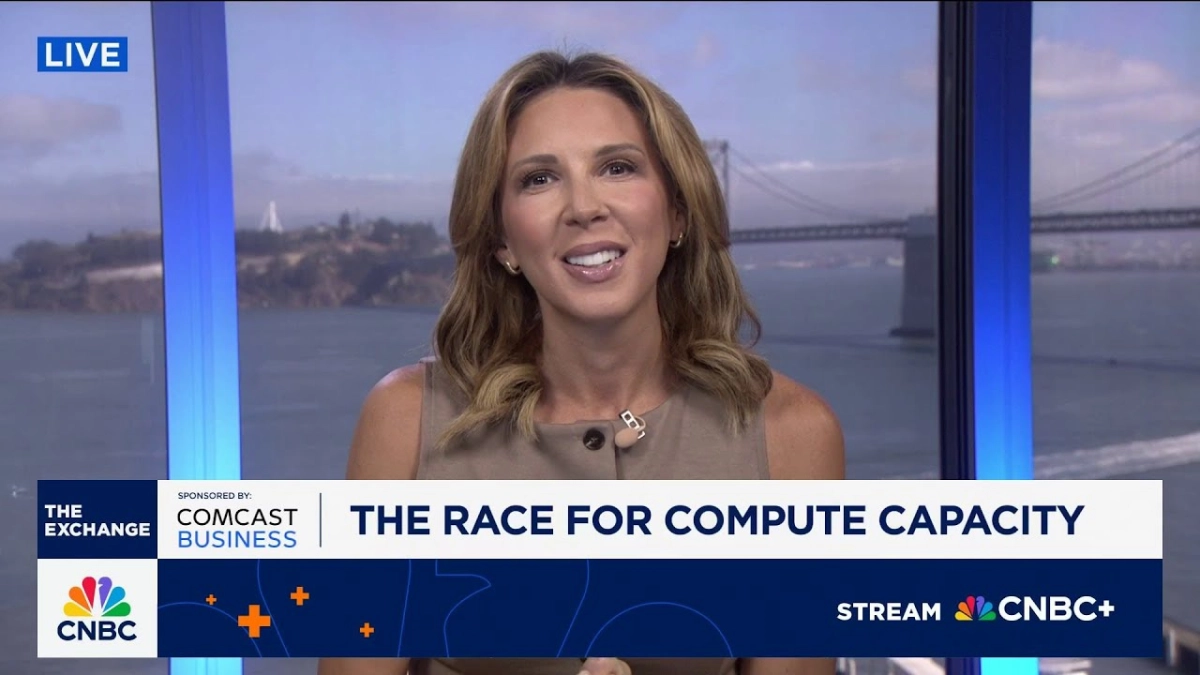
The artificial intelligence sector just witnessed a seismic shift as OpenAI, the architect behind ChatGPT, cemented a monumental $38 billion compute partnership with Amazon Web Services. This unprecedented alliance signals a profound strategic diversification for OpenAI, marking a deliberate move to expand its foundational infrastructure beyond its primary backer, Microsoft, and intensifying the already fierce competition among hyperscalers for the future of AI. The deal, announced by CNBC's MacKenzie Sigalos on "Tech Check," highlights not only the staggering capital requirements of advanced AI development but also AWS's robust position as a critical enabler in this burgeoning domain.
MacKenzie Sigalos, reporting live on CNBC, detailed how this substantial compute deal with Amazon Web Services is a first-time collaboration between the two tech giants. OpenAI will immediately commence running significant workloads on AWS, with Amazon committing to build out entirely new, dedicated infrastructure to support OpenAI’s demanding requirements. This partnership, which has been months in the making, serves as a pivotal moment, fundamentally altering the dynamics of cloud provision for leading AI entities.
A core insight from this development is OpenAI's calculated strategy to diversify its compute infrastructure. For years, Microsoft's Azure has been the exclusive cloud provider for OpenAI, a relationship underscored by a significant investment and a "right of first refusal" clause on future compute needs. However, as Sigalos reported, "Their right of first refusal expired last week, freeing up CEO Sam Altman to sign with Azure's biggest rival." This expiration provided OpenAI with the autonomy to seek additional partners, a move critical for resilience, scalability, and potentially, negotiating leverage. The $38 billion commitment to AWS demonstrates a clear intent to avoid vendor lock-in and to tap into a broader ecosystem of computational resources, ensuring that OpenAI can continue its rapid pace of innovation without being solely dependent on one provider.
This massive investment also throws into sharp relief the escalating compute arms race that defines the current AI landscape. Developing and deploying cutting-edge large language models like GPT-4 requires an astronomical amount of processing power, primarily driven by graphics processing units (GPUs). Sigalos emphasized that this AWS deployment is a "pure NVIDIA deployment, completely independent from the campus that it built to serve OpenAI rival Anthropic." This detail is crucial; it confirms OpenAI's continued reliance on NVIDIA's industry-leading GPUs and indicates that AWS is building specialized, high-performance clusters tailored specifically for OpenAI's needs, rather than repurposing existing infrastructure or pushing its own custom AI chips. The scale of this deal, alongside other recent partnerships OpenAI has forged with Broadcom, AMD, Samsung, Oracle, and NVIDIA itself for future compute and chip development, paints a picture of an organization voraciously acquiring computational capacity to sustain its ambitious AI development roadmap. The cost associated with this infrastructure is immense, consuming "nearly all of the capital from the financing round that it just closed," underscoring the capital-intensive nature of frontier AI.
For Amazon, this deal is a significant coup, reaffirming AWS's market leadership and strategic positioning in the fiercely competitive cloud industry. After a period where AWS's growth rates saw a slight dip, the partnership with OpenAI offers a powerful narrative of resurgence and renewed momentum. Sigalos aptly summarized the dual benefits for Amazon: "It's both capturing part of that OpenAI halo and it's proving that it remains the firm leader in the cloud." The "OpenAI halo" refers to the prestige and validation that comes from powering one of the world's most influential AI companies, attracting other innovative firms to its platform. Furthermore, this deal, along with its projected 20% growth in its AWS business, the largest gain since 2022, bolsters Amazon's narrative of being the go-to provider for demanding AI workloads. It signals to the market that AWS is not only capable of scaling to meet unprecedented AI demands but is also actively investing in and building the next generation of AI infrastructure.
Related Reading
- OpenAI’s $38 Billion AWS Deal Reshapes AI Cloud Landscape
- OpenAI Forges $38B AWS Alliance, Signaling Multi-Cloud Future
- Amazon's AI Investments Drive AWS Re-acceleration and Retail Innovation
This move by OpenAI to partner with Amazon for compute needs is a groundbreaking development. "OpenAI is teaming up with Amazon for the first time ever on compute."
The implications extend far beyond the immediate financial figures. This deal heralds a new phase in the cloud wars, where the ability to provide specialized, high-performance AI infrastructure will be a key differentiator. Cloud providers are no longer just offering generic computing resources; they are becoming strategic partners in the race to achieve artificial general intelligence. For founders and VCs, this highlights the necessity of securing robust, diversified compute resources, potentially through multi-cloud strategies, to scale their AI ambitions. For tech insiders and defense/AI analysts, it underscores the intense competition for computational supremacy and the pivotal role of hardware and infrastructure in shaping the future trajectory of AI development and deployment. The strategic landscape is shifting, and access to advanced compute is proving to be the ultimate currency.



