

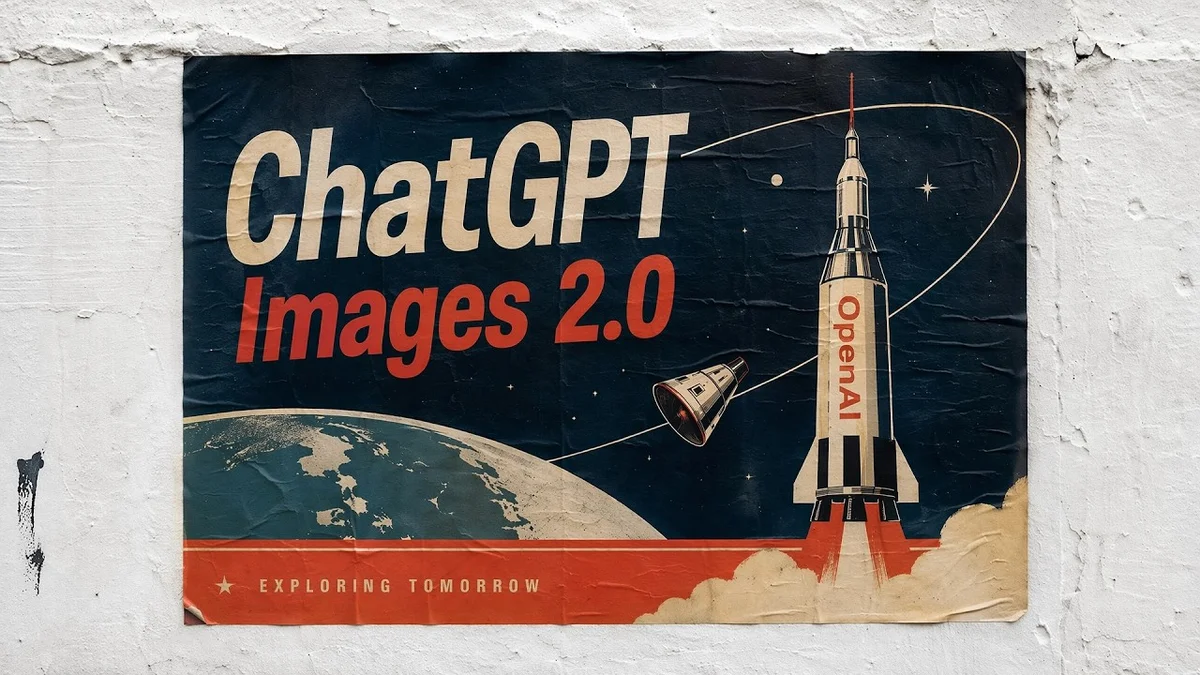
OpenAI's "Images 2.0" Promises Advanced AI Image Generation

OpenAI introduces "Images 2.0," an advanced AI image generator that "thinks" and "researches" to create sophisticated visuals with enhanced control and multilingual support.

4 min read
OpenAI logo on a white background
Image credit: OpenAI· OpenAI Youtube

OpenAI has unveiled "Images 2.0," a significant advancement in its artificial intelligence-driven image generation technology. This new iteration marks a departure from previous capabilities, aiming to provide users with tools that not only create visuals but also "think" and "research" to produce more nuanced and contextually aware imagery. The announcement suggests a leap forward in AI's ability to understand and translate complex ideas into compelling visual forms.

From Generation to Understanding

The core thesis behind Images 2.0 appears to be a shift from mere generation to a more sophisticated understanding of visual content. The system is described as not just creating images but engaging in a process akin to research and thinking. This implies a deeper level of comprehension of prompts, allowing for the generation of visuals that are not only aesthetically pleasing but also semantically relevant and potentially imbued with a narrative quality.

The full discussion can be found on OpenAI Youtube's YouTube channel.
Related startups

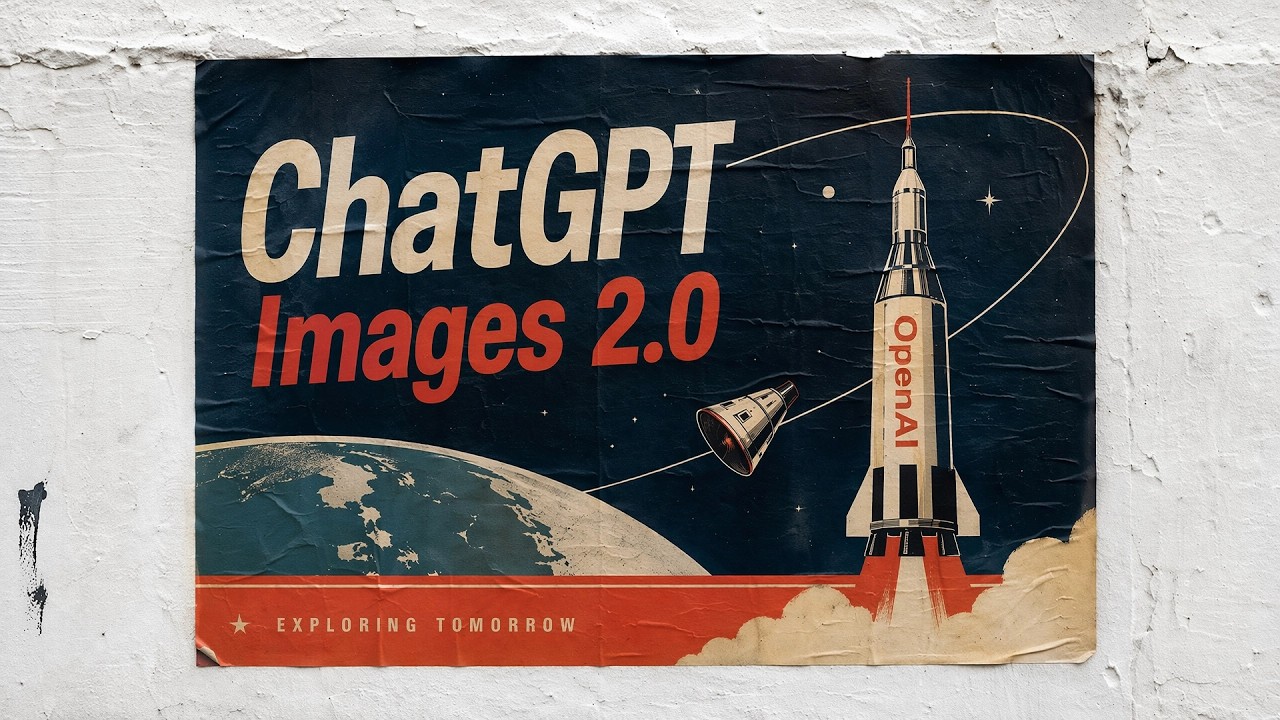
This is ChatGPT Images 2.0 - OpenAI Youtube
This is ChatGPT Images 2.0 — from OpenAI Youtube

The video showcases a progression from early forms of visual communication, such as cave paintings and ancient art, through the Renaissance and into the era of modern photography and digital design. This historical context frames Images 2.0 as the next logical step in humanity's long-standing endeavor to capture, interpret, and create visual representations of the world. The presentation highlights the evolution of image-making, suggesting that AI is now poised to play a pivotal role in this ongoing human pursuit.

Enhanced Capabilities and Control

Images 2.0 introduces several key improvements. A notable advancement is the ability to generate multiple distinct images simultaneously, a feature that streamlines creative workflows. Furthermore, the system offers enhanced control over aspect ratios and resolutions, allowing for greater flexibility in tailoring generated images for specific applications, from print media to digital displays.

The system's ability to generate "high-voltage visuals" with "smarter results" is emphasized. This suggests an improvement in image quality, realism, and the overall intelligence behind the generation process. The presentation draws parallels to scientific discovery and innovation, implying that Images 2.0 can be used to visualize complex concepts, from scientific data to intricate designs.

Multilingual Support and Creative Applications

A significant development highlighted is the expansion of language support. Images 2.0 is now equipped to generate visuals based on prompts in multiple languages, including Japanese, Korean, Chinese, Hindi, and Bengali. This broadens the accessibility and applicability of the technology for a global user base, enabling a more inclusive approach to AI-driven creativity. The system aims to produce visuals that resonate authentically across diverse cultural contexts.

The applications demonstrated span a wide creative spectrum. From generating detailed fashion illustrations and magazine layouts to creating realistic architectural blueprints and even producing animated storyboards and manga-style comics with recurring characters and evolving storylines, Images 2.0 showcases remarkable versatility. The system's capacity to generate images at resolutions up to 2K and across various aspect ratios further underscores its utility for professional creative endeavors.

The "Thinking" Image Generator

The concept of an AI model that "thinks" rather than just generates is a central theme. The video implies that Images 2.0 moves beyond simply executing commands to a more interpretive and research-driven approach. This is illustrated by the example of generating botanical illustrations with accurate information and creating infographics explaining complex systems like weather patterns and the water cycle. The system is presented as a tool that can not only visualize but also inform and educate.

The evolution from "generating images to marvel at" to "generating images to invent and build" signifies a profound shift. Images 2.0 is positioned as a tool for creators, designers, and innovators, empowering them to bring their ideas to life with unprecedented detail and accuracy. The ability to generate images with "extraordinary micro details" suggests a fine-tuned control over the output, aiming to create visuals that are not just seen but experienced.

© 2026 StartupHub.ai. All rights reserved. Do not enter, scrape, copy, reproduce, or republish this article in whole or in part. Use as input to AI training, fine-tuning, retrieval-augmented generation, or any machine-learning system is prohibited without written license. Substantially-similar derivative works will be pursued to the fullest extent of applicable copyright, database, and computer-misuse laws. See our terms.