

OpenAI IPO Race: Business Quality in Question

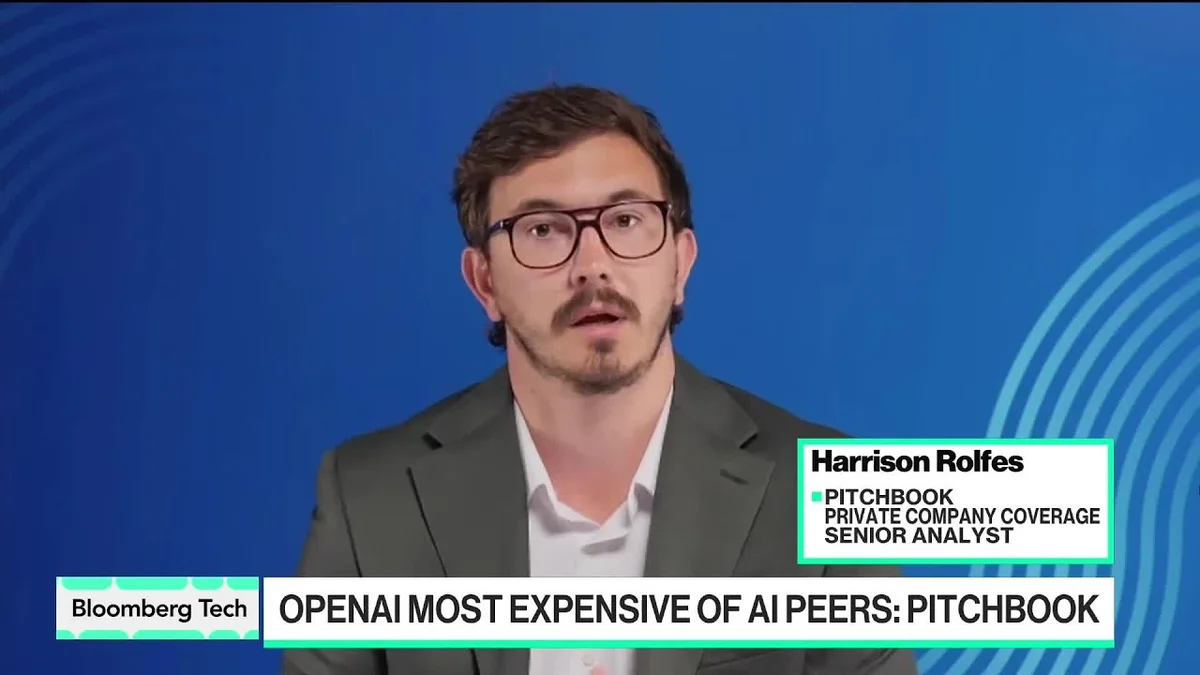
Pitchbook analyst Harrison Rolfes discusses the challenges in assessing OpenAI's business quality for a potential IPO, highlighting capital needs and its relationship with Microsoft.

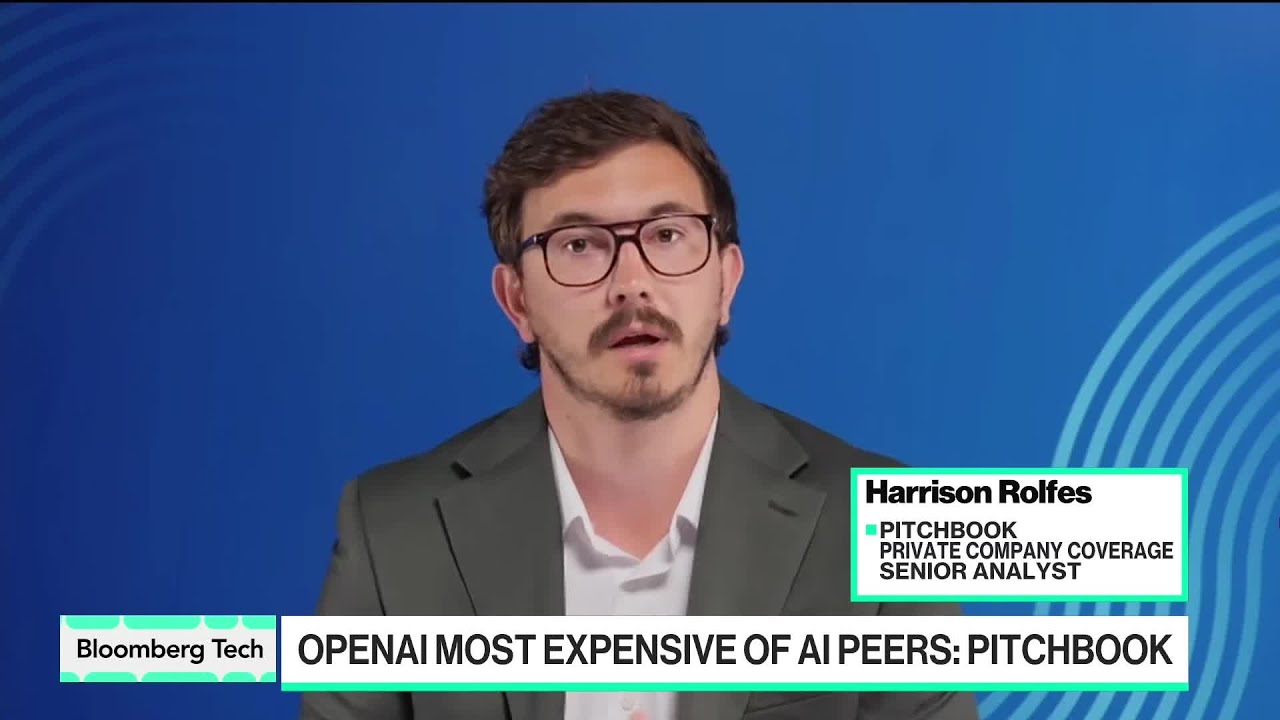
Harrison Rolfes discusses OpenAI's IPO prospects on Bloomberg Tech.
Bloomberg Technology
Visual TL;DR
AI IPO RaceDriver
AI companies like OpenAI seeking public market capital
From the article 2 mentionsAs the race for public market capital heats up, questions are emerging about the true business quality of these AI pioneers.
Harrison RolfesCore
From the article 7 mentionsHarrison Rolfes, Senior Analyst at Pitchbook focusing on private company coverage, shared insights into the financial and operational metrics that investors scrutinize when considering an IPO, particularly for AI companies.
Intensive Compute NeedsContext
AI companies require significant capital and compute resources
From the article 2 mentionsHe noted that companies like OpenAI, which rely heavily on capital and intensive compute resources, face unique challenges in demonstrating sustained profitability.
Microsoft DealContext
OpenAI's significant relationship and dependence on Microsoft
From the article 2 mentionsRolfes pointed out that OpenAI's financial structure, particularly its relationship with Microsoft, introduces complexities.
Future UncertaintyOutcome
Concerns about financial structure and IPO readiness
From the articleThe partnership with Microsoft, while providing significant resources, also raises questions about OpenAI's operational independence and future strategic direction.
OpenAI's Business QualityContext
Challenges in assessing sustained profitability and capital needs
From the article 4 mentions"I think by creating this framework that assesses AI business quality, we're looking at five different dimensions: revenue quality, compute independence, mode durability, governance optionality, and capital efficiency," he explained.
Contents(3)

The AI sector continues its rapid ascent, with companies like OpenAI attracting significant attention. As the race for public market capital heats up, questions are emerging about the true business quality of these AI pioneers. Harrison Rolfes, Senior Analyst at Pitchbook focusing on private company coverage, shared insights into the financial and operational metrics that investors scrutinize when considering an IPO, particularly for AI companies.

Assessing AI Business Quality

Rolfes highlighted that for AI companies, a crucial aspect of assessing their readiness for a public offering involves looking beyond the hype and into fundamental business metrics. He noted that companies like OpenAI, which rely heavily on capital and intensive compute resources, face unique challenges in demonstrating sustained profitability.

The full discussion can be found on Bloomberg Technology's YouTube channel.

OpenAI Joins Race for Public Market Cash - Bloomberg Technology
OpenAI Joins Race for Public Market Cash, from Bloomberg Technology

"OpenAI is essentially built the most widely used AI product in history, and their history but they rely on so much capital intensive compute," Rolfes stated. He elaborated on the metrics used to evaluate such companies, stating, "When looking at OpenAI, we want to see how the accounting works, we want to see how their enterprise revenue as a share total, and their net revenue retention, and the annual compute obligations and the related party disclosures to really figure out exactly where they stand as a true business as opposed to the hype that's surrounding them."

Concerns Over OpenAI's Financials and Structure

Rolfes pointed out that OpenAI's financial structure, particularly its relationship with Microsoft, introduces complexities. "I think by creating this framework that assesses AI business quality, we're looking at five different dimensions: revenue quality, compute independence, mode durability, governance optionality, and capital efficiency," he explained. He suggested that companies that don't demonstrate a strong performance across these metrics may struggle to attract investors.

"When you look at a company who really doesn't have a strong AI mine share but isn't focusing on the true business quality, it's going to be very hard for them to be a leading frontier AI model," Rolfes said. He further elaborated on the potential pitfalls, stating, "And they have to be able to adapt and adjust as they go forward. I think by filing last, it actually gives OpenAI the opportunity to learn from their competitors and see how they can adjust their own path."

The Microsoft Deal and Future Uncertainty

The partnership with Microsoft, while providing significant resources, also raises questions about OpenAI's operational independence and future strategic direction. Rolfes suggested that this relationship could influence how investors perceive the company's long-term viability and its ability to navigate the public markets.

"We're going to get a sliver of the AI aspect from OpenAI, however, that's not going to tell us enough about what it takes to run an AI business model. So, the public markets are going to be the ones to determine how much truly costs to run an AI business and they have SpaceX as a somewhat of a comparison even though they are space company, and they have their own sort of issues," Rolfes commented. He added, "I think by filing last, it gives OpenAI the opportunity to learn from their competitors and see how they can adjust their own path."

The conversation underscored the challenges in valuing and understanding the business models of leading AI companies as they prepare for potential public offerings. The market will be closely watching how OpenAI, in particular, addresses these concerns regarding its financial transparency and operational independence.

© 2026 StartupHub.ai. All rights reserved. You may not republish this article in full without a license. Search engines and AI research tools may crawl and summarize for reference. Bulk reproduction or model training requires a license. See our terms.
Daniel Singer

Written by

Daniel Singer

Editor, StartupHub.ai

Daniel Singer is the editor of StartupHub.ai, a technology expert and thought leader on AI and its applications across sectors, from fintech and healthcare to developer tooling and consumer software. He writes and tests the tools covered here thoroughly and regularly, and built StartupHub.ai to give founders, operators and buyers a clearer read on what they are actually being sold.