

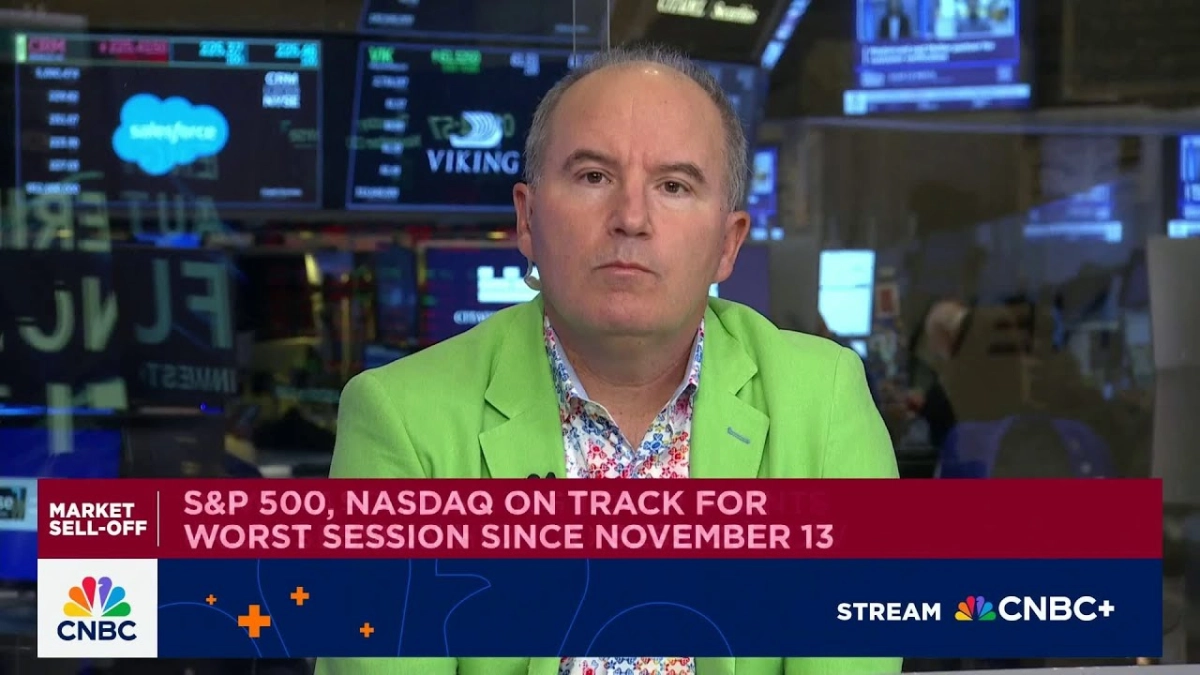
"That was a masterpiece quarter... any worries about the AI bubble were thrown out the window," declared Dan Ives, Global Head of Technology Research at Wedbush Securities, speaking on CNBC's "Closing Bell." His assessment, delivered with characteristic conviction, underscored a pivotal moment in the narrative surrounding artificial intelligence. The interview centered on Nvidia's latest earnings report, a performance Ives believes not only exceeded expectations but fundamentally recalibrated market perceptions of the AI sector's long-term viability.
Ives’s conversation with the CNBC host delved into why the broader market seemed hesitant to fully credit Nvidia for its stellar quarter, exploring themes of investor confidence in AI customers, the nascent stage of global AI adoption, and the unfolding "arms race" among tech giants. His analysis paints a picture of a technological transformation still in its early stages, far from any speculative bubble. The sheer scale of demand for Nvidia's specialized chips, he noted, suggests a foundational shift rather than fleeting enthusiasm.
One of the core insights from Ives is that the current investment in AI infrastructure is merely the prelude to a much larger, sustained wave of innovation and deployment. He posited, "We are still early. More money is going to be spent in the next two to three years than the last eight to ten years combined." This perspective challenges the notion of an overheated market, suggesting instead that the foundational build-out is just beginning. The global penetration of AI, particularly outside the US, remains remarkably low, indicating vast untapped potential for growth and further investment. Ives cited figures revealing only 3% of US companies have embarked on the AI path, with Europe at "zero" and Asia (excluding China) at a "minimal less than 1%," highlighting the expansive runway ahead.
The current landscape is characterized by an intense "arms race" among major tech players, all vying for dominance in the AI domain. This competitive drive, fueled by the imperative to integrate AI capabilities across products and services, translates directly into sustained demand for high-performance computing components. Nvidia, as the leading provider of these essential chips, finds itself at the epicenter of this technological expansion. The demand-to-supply ratio for Nvidia's chips, according to Ives, is an astounding "12 to 1," a clear indicator of the insatiable appetite for AI processing power. This imbalance points to a prolonged period of high revenue and margin potential for key infrastructure providers, extending well beyond immediate quarterly results.
The interviewer raised a critical question regarding the confidence investors can place in the customers of companies like Nvidia, particularly concerning their ability to realize returns on significant AI investments. Ives countered that the widespread use cases for AI, evident in companies like Palantir, MongoDB, and Snowflake, are "exploding." These are not speculative ventures but strategic deployments aimed at tangible business benefits, from enhanced data analysis to improved operational efficiencies. This widespread utility underpins the confidence in continued investment, transforming what might appear as a cost center into a strategic imperative for competitive advantage.
Alphabet's recent strides with its Gemini 3 Pro model, featuring Nano Banana, served as another point of discussion, illustrating the accelerating pace of AI development and the commitment of tech stalwarts. Ives sees this as "another major feather in the cap," signifying that the tech giant has "turned the corner big time on AI." The rapid evolution of these models and their integration into vast ecosystems underscore the strategic importance of AI for maintaining market relevance and driving future growth. This internal development by Alphabet, while potentially reducing reliance on external chip providers in the long run for some applications, also validates the broader AI market's trajectory and the need for cutting-edge processing power, regardless of its origin.
Related Reading
- Goldman Sachs: AI’s Transformative Path, Not a Bubble Yet
- AI Volatility: Resets, Not a Bubble, in a $3 Trillion Spending Cycle
- ABB CEO Sees No Slowdown in AI Spending, Electrification Driving Industrial Growth
Looking ahead, the discussion pivoted to Apple, a company notably less vocal about its direct AI investments compared to its peers. Ives firmly believes that "the consumer AI revolution will go through Apple and Cook." With 2.4 billion iOS devices and 1.5 billion iPhones globally, Apple possesses an unparalleled platform for monetizing consumer-facing AI. He anticipates an imminent partnership, potentially with Google's Gemini, that could unlock an additional $10 billion-plus per year for Apple. This strategic move, he suggests, could add $75 to $100 to Apple's stock price, highlighting the immense value creation still to come from the full integration of AI into everyday consumer technology.
The overarching sentiment conveyed by Dan Ives is one of profound optimism for the AI sector, driven by fundamental shifts in technology and business strategy rather than fleeting hype. The market is still in the nascent stages of a multi-year growth cycle, where companies like Nvidia, Microsoft, and Alphabet are not just participating but leading a transformation that promises to redefine industries. The current investment levels, while significant, are merely setting the stage for an even greater expansion of AI capabilities and monetization opportunities across the global economy.



