

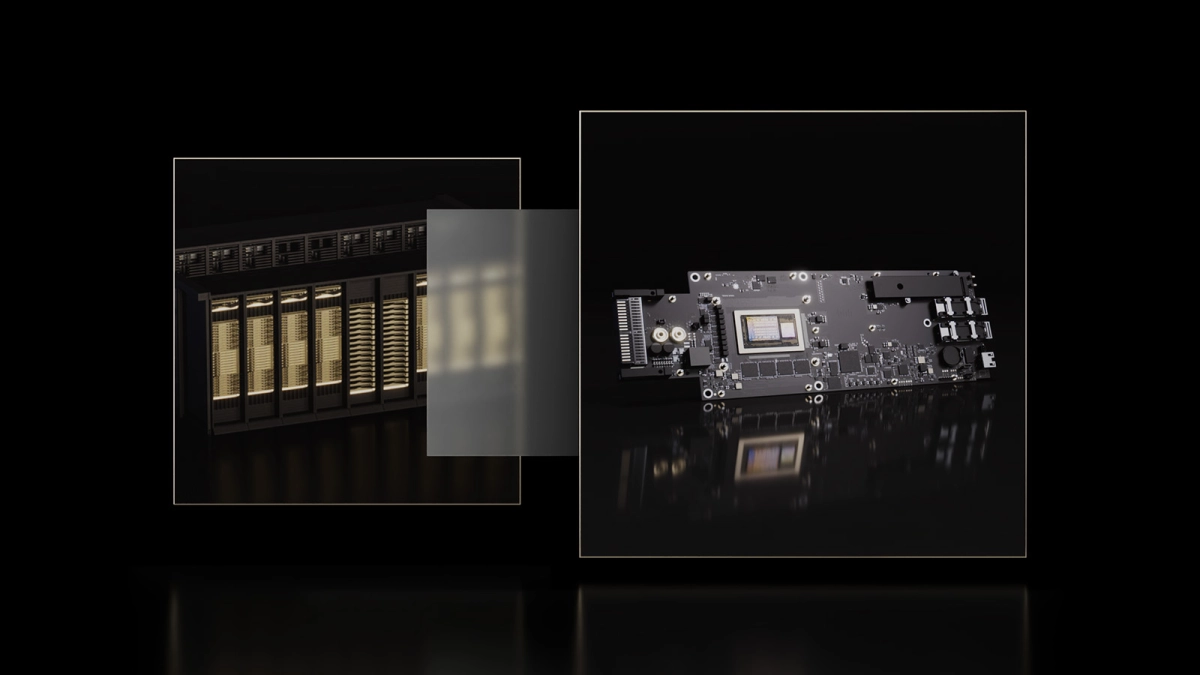
NVIDIA has unveiled BlueField-4, positioning it as the foundational processor for the "Operating System of AI Factories." This new data processing unit is engineered to tackle the exploding demand for trillion-token workloads and gigascale AI infrastructure. According to the announcement, it represents a significant leap in accelerating data centers into secure, intelligent AI environments.
BlueField-4 integrates an NVIDIA Grace CPU with ConnectX-9 networking, delivering a sixfold increase in compute power over its predecessor. This enables AI factories up to four times larger, supporting an impressive 800Gb/s throughput for high-performance inference. Its software-defined acceleration spans AI data storage, networking, and security, fundamentally transforming data processing pipelines.
The platform natively supports NVIDIA DOCA microservices, facilitating multi-tenant networking, rapid data access, and AI runtime security with cloud elasticity. This ensures seamless application migration from previous BlueField generations while delivering substantial performance gains. A broad ecosystem of server, storage, cybersecurity, and cloud providers are already adopting or planning to integrate BlueField-4, underscoring its industry-wide impact.
Securing the AI Factory
Security is a core tenet, anchored by the BlueField Advanced Secure Trusted Resource Architecture. This enables service providers to establish secure, bare-metal compute instances with zero-trust tenant isolation and comprehensive software-defined infrastructure control. BlueField-4's consistent performance, efficiency, and security extend across NVIDIA's entire AI infrastructure portfolio, from DGX systems to enterprise AI factory designs.
The introduction of NVIDIA BlueField-4 marks a pivotal moment for AI infrastructure, addressing the critical need for accelerated, secure, and scalable data processing. Its planned early availability in 2026 as part of NVIDIA Vera Rubin platforms signals a strategic move to future-proof AI development. This DPU is not just an upgrade; it's a foundational shift for the next generation of AI-driven data centers.