


Notion's Sarah Sachs on AI Agents and the Future of Work

Sarah Sachs, AI Lead at Notion, discusses the company's vision for flexible AI agents, iterative development, and balancing powerful features with user accessibility on the Latent Space podcast.

4 min read
Sarah Sachs, AI Lead at Notion, speaking into a microphone during a podcast interview.
Image credit: Latent Space· Latent Space

In a recent discussion on the Latent Space podcast, Sarah Sachs, AI Lead at Notion, shared insights into the company's approach to building AI agents and their vision for the future of work. Sachs emphasized Notion's commitment to creating AI tools that are both powerful and accessible, allowing users to integrate AI seamlessly into their existing workflows.
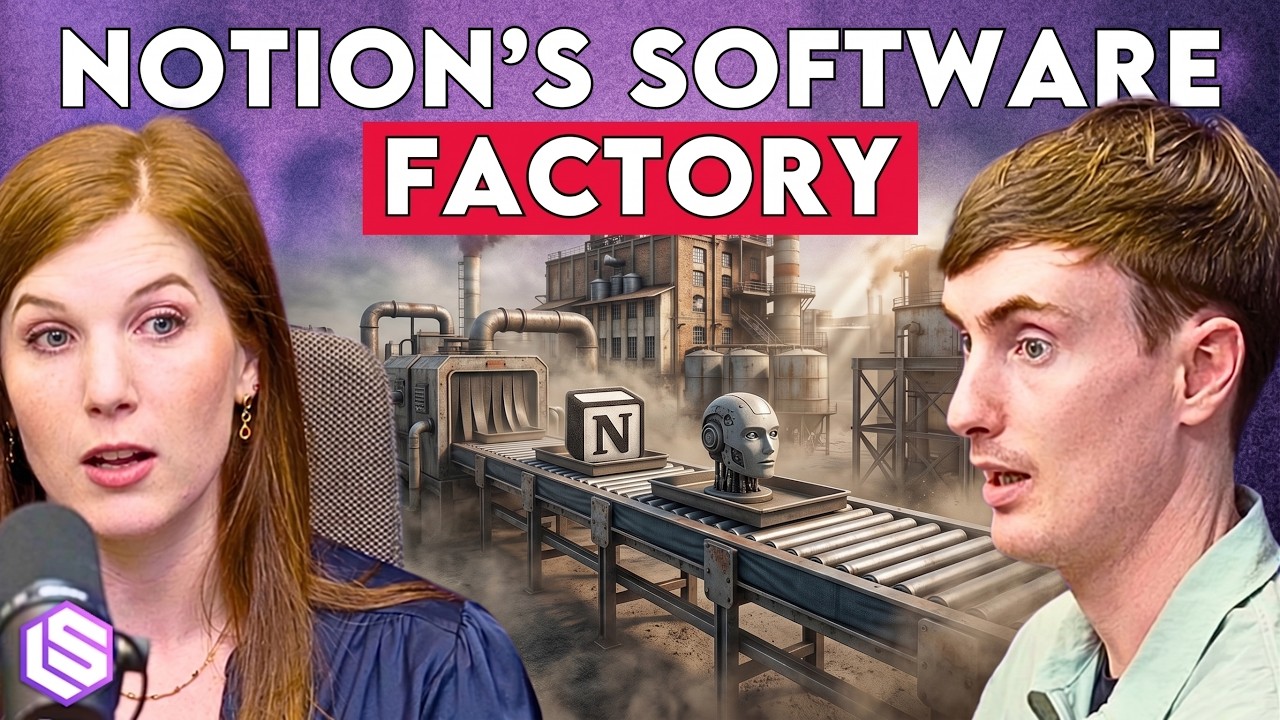
Notion's Sarah Sachs on AI Agents and the Future of Work - Latent Space
Notion's Sarah Sachs on AI Agents and the Future of Work — from Latent Space

Sarah Sachs: AI Lead at Notion

Sarah Sachs leads the AI initiatives at Notion, a popular all-in-one workspace application that combines note-taking, project management, and database functionalities. Her role involves guiding the development and integration of AI capabilities within the Notion platform, aiming to enhance user productivity and streamline complex tasks. Sachs's background in AI and her leadership at Notion position her as a key figure in shaping how AI is applied in productivity software.

The Vision for Notion's AI Agents

Sachs articulated Notion's strategy for developing AI agents, highlighting a focus on flexibility and user-centric design. The goal is not to create a single, monolithic AI, but rather a suite of adaptable agents that can serve diverse user needs. She explained that these agents are designed to be helpful across a broad spectrum of tasks, from content creation and summarization to data analysis and task management. The emphasis is on empowering users, regardless of their technical background, to harness the power of AI effectively.

"We want to build AI agents that are flexible enough to adapt to different user needs and workflows." — Sarah Sachs

Sachs detailed how Notion approaches AI development through iterative processes, prioritizing user feedback to refine and improve the capabilities of their AI tools. This iterative approach ensures that the AI features remain relevant and valuable to the user base. She also touched upon the concept of a "universal AI engine" within Notion, suggesting that the underlying technology is designed to be versatile and applicable to a wide range of functionalities.

Balancing Robustness and Flexibility

A key theme in Sachs's discussion was the balance Notion strikes between providing robust, reliable AI features and offering flexibility for users. While some AI capabilities are designed to work out-of-the-box, like automated summaries or content generation, Notion also aims to allow for customization. This approach acknowledges that different users and teams have unique requirements and workflows, and the AI should ideally adapt to them.

"We believe in empowering users to leverage AI tools without requiring deep technical expertise." — Sarah Sachs

Sachs highlighted that this balance is crucial for creating AI that is not only powerful but also genuinely helpful in everyday work. The goal is to make AI feel like a natural extension of the user's workflow, rather than an external tool that requires significant effort to integrate.

The Role of Prototyping and Feedback

Notion's development process heavily relies on prototyping and gathering user feedback. Sachs mentioned that the team often builds multiple prototypes of features and iterates based on how users interact with them. This is particularly true for more complex AI functionalities, where understanding user needs and identifying potential friction points is paramount. She noted that the company has a rigorous process for evaluating AI features, ensuring they meet high standards of quality and usability before broader release.

"We learn from user feedback to refine the capabilities of our AI tools." — Sarah Sachs

This iterative feedback loop is essential for ensuring that Notion's AI offerings align with the evolving demands of the productivity software market and the specific needs of its user base.

Leveraging Existing Infrastructure for AI

Sachs also touched upon how Notion leverages its existing infrastructure to support its AI initiatives. The platform's robust database capabilities and flexible interface provide a solid foundation for integrating AI features. She explained that the process of building and deploying AI agents involves not just the AI models themselves but also the surrounding infrastructure for data management, security, and user interface design. This holistic approach ensures that the AI is well-integrated and accessible within the broader Notion experience.

The conversation underscored Notion's strategic and user-focused approach to AI development, emphasizing its commitment to empowering users and continuously improving its offerings based on real-world application and feedback.

© 2026 StartupHub.ai. All rights reserved. Do not enter, scrape, copy, reproduce, or republish this article in whole or in part. Use as input to AI training, fine-tuning, retrieval-augmented generation, or any machine-learning system is prohibited without written license. Substantially-similar derivative works will be pursued to the fullest extent of applicable copyright, database, and computer-misuse laws. See our terms.