


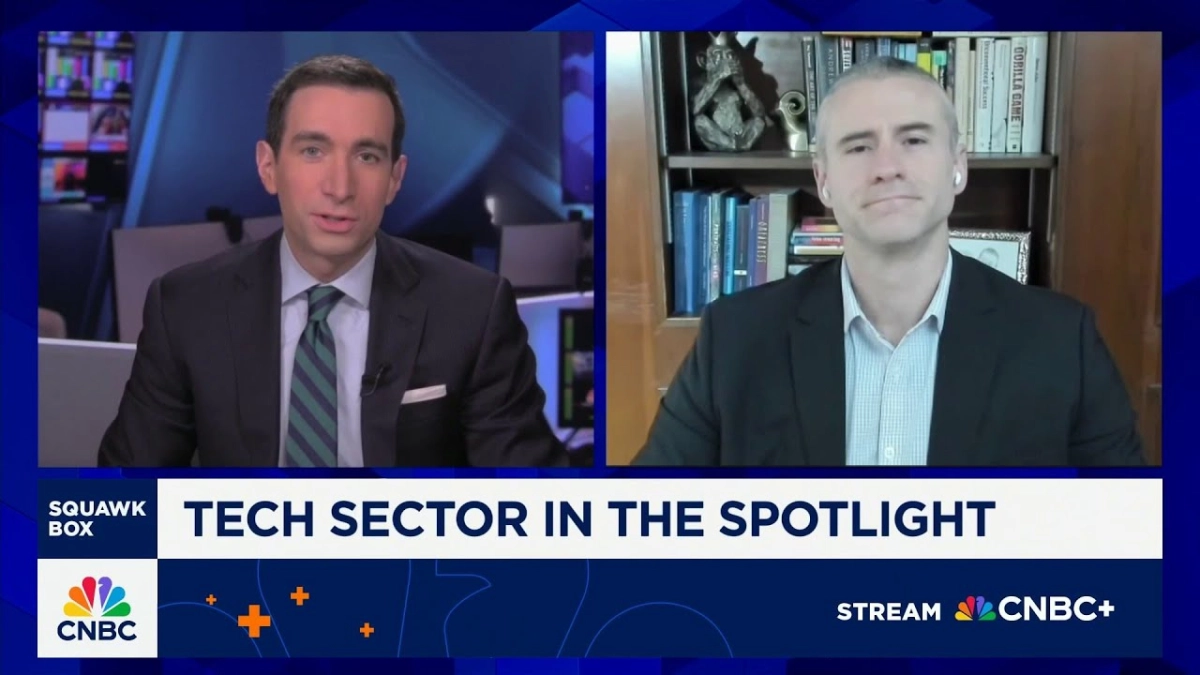
The current state of the artificial intelligence market, often shrouded in speculative fervor, is experiencing not a bubble burst but a "pretty healthy altitude adjustment," according to Doug Clinton, Founder and CEO of Intelligent Alpha. This nuanced perspective, shared during a recent appearance on CNBC's 'Squawk Box' with Andrew Ross Sorkin, challenges the prevailing narrative of an overheated sector poised for collapse. Clinton’s analysis delves into the psychological underpinnings of market movements, the evolving depreciation cycles of AI chips, and the strategic advantages emerging in the fierce competition among tech giants.
Clinton observed that while the NASDAQ has pulled back approximately 7% from its recent highs, and some "core AI trades" — companies like Coreweave, Nebius, and Tempus AI — have seen declines of 30-50%, this is largely a psychological recalibration of valuations, not a fundamental questioning of the AI trade itself. He likened the current market dynamic to historical resets, suggesting that such corrections are often healthy for long-term growth. This viewpoint offers a reassuring counterpoint to those who draw parallels to the dot-com bust, emphasizing the intrinsic value being created by AI technologies.
A critical point of contention in the AI investment landscape revolves around the rapid obsolescence of specialized chips. Sorkin raised the pertinent question of whether the swift pace of innovation, exemplified by NVIDIA’s frequent chip upgrades, complicates the financial math for companies investing heavily in these powerful semiconductors. Clinton offered a balanced perspective, stating that "in a weird way, both things are true." He explained that while NVIDIA indeed releases new, more efficient chips every 18 months, older generations, such as the NVIDIA A100s that are now five-plus years old, "still are very functional for different workloads... for inference." This suggests that the depreciation schedules and effective utility lifespan of these chips might be more extended and versatile than commonly assumed, underpinning continued value even as newer, more powerful iterations emerge.
The competitive race among hyperscalers to deliver leading AI models is intense, with Google's recent Gemini 3 generating considerable buzz. Mark Benioff, CEO of Salesforce, notably expressed profound excitement on social media, tweeting about his experience with Gemini 3: "Holy you know what, I just spent two hours on Gemini 3... I'm not going back. The leap is insane." When pressed on this, Clinton enthusiastically concurred, asserting, "I think they did. Yes, they did, Andrew." He pinpointed the release of Gemini 2.5 six months prior as a pivotal moment for Google, and with Gemini 3, he believes the company has seized "the pole position" in the generative AI race.
Related Reading
- Nvidia's Masterpiece Quarter and the Enduring AI Revolution
- Data Centers Fuel Freight Boom Amidst Economic Shifts
- AI Hardware Engineer: Flux Revolutionizes PCB Design with Autonomous Agents
The true battleground for AI dominance is shifting from raw model performance to widespread integration. Clinton articulated that the next phase of competition will hinge on "distribution and how can we get these models into tools we’re already using." Google, with its vast ecosystem encompassing Chrome, Android, and various other platforms, possesses an unparalleled advantage in embedding its AI capabilities directly into the daily lives of billions of users. This strategic leverage allows Google to bake advanced AI models into existing services, bypassing the need for users to seek out standalone AI applications.
This emphasis on distribution underscores a crucial insight for founders and VCs: technological superiority, while vital, is only one piece of the puzzle. The ability to seamlessly integrate AI into established user workflows and platforms will likely dictate market leadership. The current market recalibration, therefore, is not merely about asset valuation but also about identifying which players can effectively translate cutting-edge AI research into pervasive, user-friendly applications at scale.

