

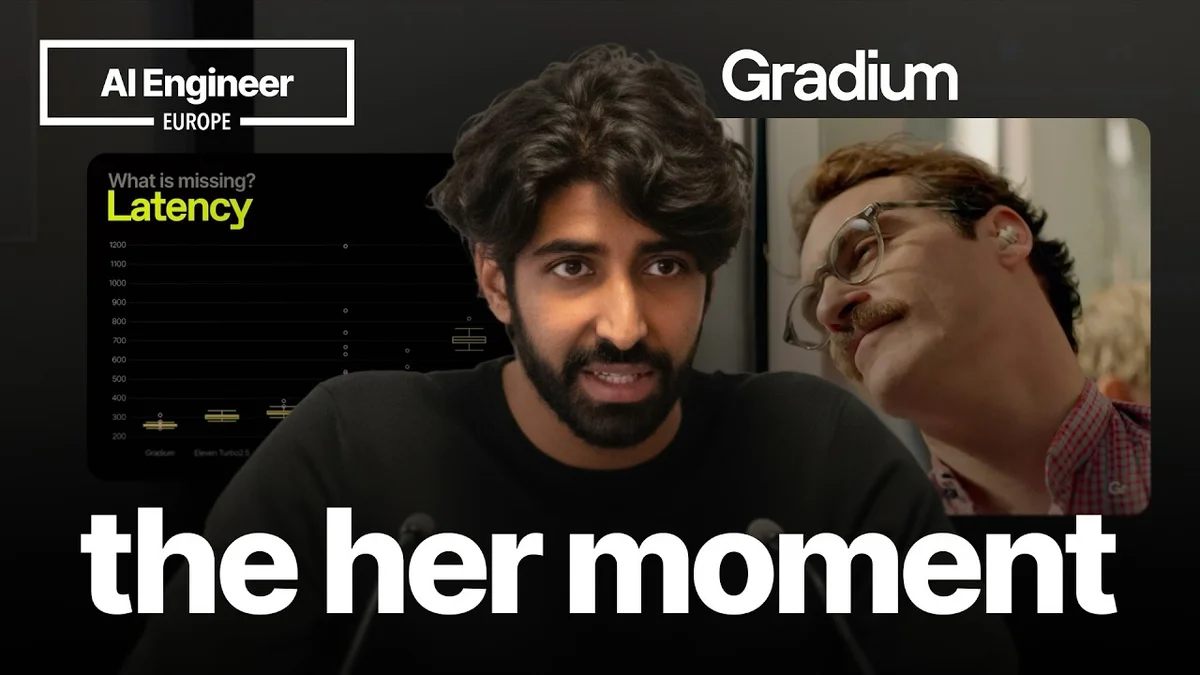
Neil Zeghidour, CEO and Co-founder of Gradium AI, recently discussed the evolution of voice AI and the long-anticipated "Her" moment, drawing parallels to the popular film where artificial intelligence achieves a deeply human-like conversational capability. Speaking at an AI Engineer event, Zeghidour explored the current state of voice AI, the challenges that remain, and the potential future advancements.
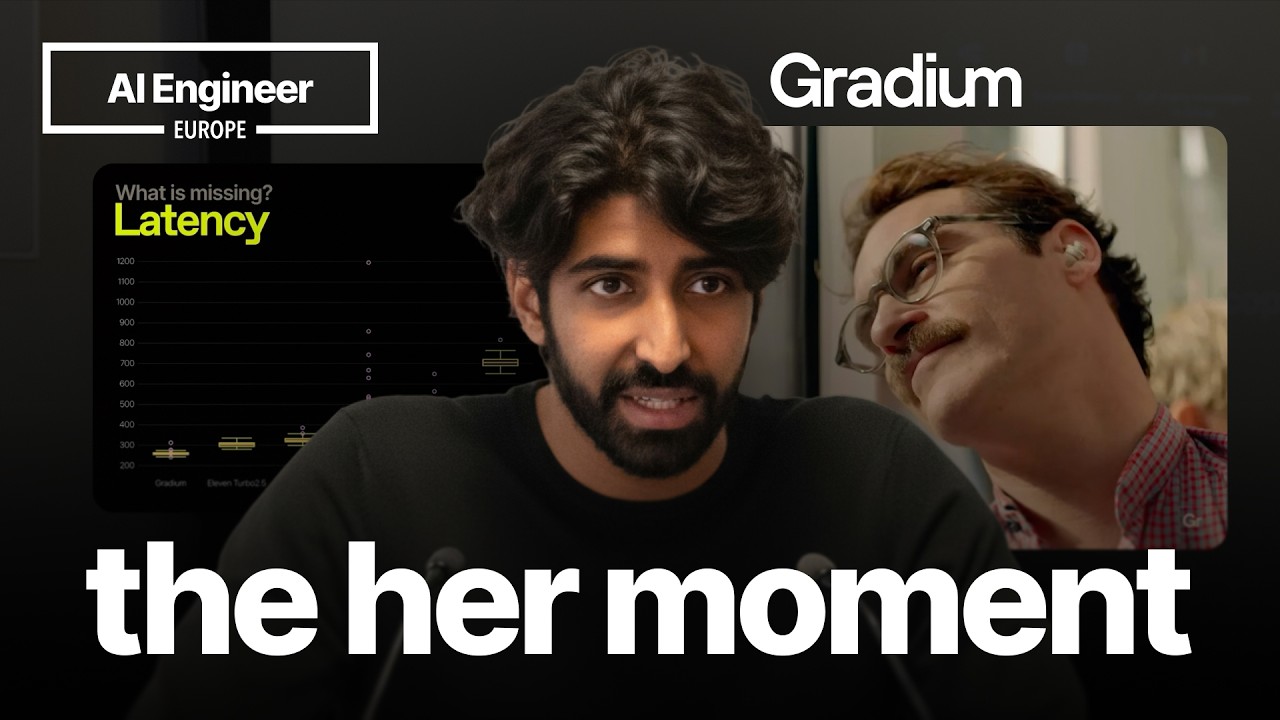
The "Her" Moment in Voice AI
Zeghidour opened by framing the discussion around the concept of a truly conversational AI, akin to the sentient operating system Samantha from the movie "Her." He highlighted that while significant progress has been made, the goal of achieving seamless, natural, and empathetic human-AI interaction is still a work in progress. The current state of voice AI, while functional, often falls short of the nuanced and fluid communication expected from human conversations.
Gradium AI's Mission and Technology
Zeghidour introduced Gradium AI's mission: to unlock the unrealized potential of voice AI by making fluid, natural voice the new interface for AI. The company focuses on training voice models for various applications, including speech-to-text (STT), text-to-speech (TTS), and speech-to-speech (S2S) translation. This involves building foundational blocks for voice agents and solutions that can be integrated into various products.
He elaborated on Gradium's approach, emphasizing the move from research to production. The company's work on "Moshi" was highlighted, which includes developing STT with semantic Voice Activity Detection (VAD), customizable LLMs for context, reasoning, and function calling, and streaming, multilingual TTS with voice cloning capabilities. This comprehensive approach aims to overcome the limitations of existing cascaded systems.
Challenges in Voice AI: Latency and Scalability
A significant portion of Zeghidour's talk focused on the persistent challenges in voice AI, primarily latency and scalability. He explained that current cascaded systems, which typically involve separate models for STT, LLM processing, and TTS, introduce inherent delays. The latency in these systems can hinder natural conversation flow, making interactions feel clunky and less human-like. He presented data showing that most current TTS models have latencies exceeding 200 milliseconds, which is a significant bottleneck for real-time conversations.
