


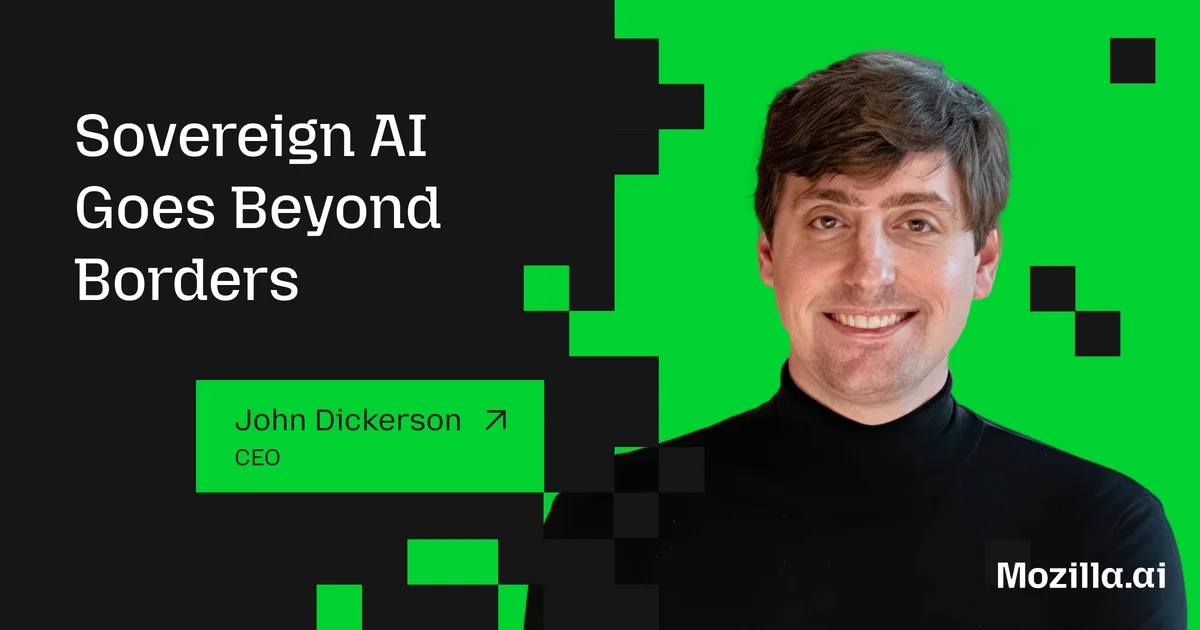
The conversation around sovereign AI often centers on national independence, a geopolitical framing that Mozilla.ai CEO John Dickerson believes is too narrow. True AI sovereignty, he argues, must encompass control and agency across all levels, from nations down to individuals. This broader perspective is crucial as AI systems become more deeply integrated into global infrastructure. Mozilla.ai is championing this vision.
Beyond Geopolitics: A Four-Tiered Approach
While geopolitical tensions drive discussions about nations building their own AI capabilities to avoid reliance on tech superpowers like the US or China, Dickerson sees this as only one facet. He outlines four critical levels of sovereignty:
- Nation-state: The geopolitical competition for AI independence.
- Enterprise and corporate: Companies seeking to own their AI processes, audit models, and avoid vendor dependency.
- Community: Local groups, cities, or organizations needing control over AI's impact and information flow.
- Individuals: Personal agency over data, access to information, and digital interactions.
"It all comes down to control, agency, resilience," Dickerson states, emphasizing that these principles apply universally, not just at the highest geopolitical echelons.
Lessons from the Early Internet
The foundational design of the internet offers a cautionary tale and a roadmap. ARPANET's emphasis on decentralization and robustness, though initially driven by military needs, fostered an open ecosystem.
Over time, the internet centralized, with a few major players now controlling significant infrastructure. Dickerson sees a parallel with the current AI landscape, warning against repeating the same mistakes of creating single points of failure.