

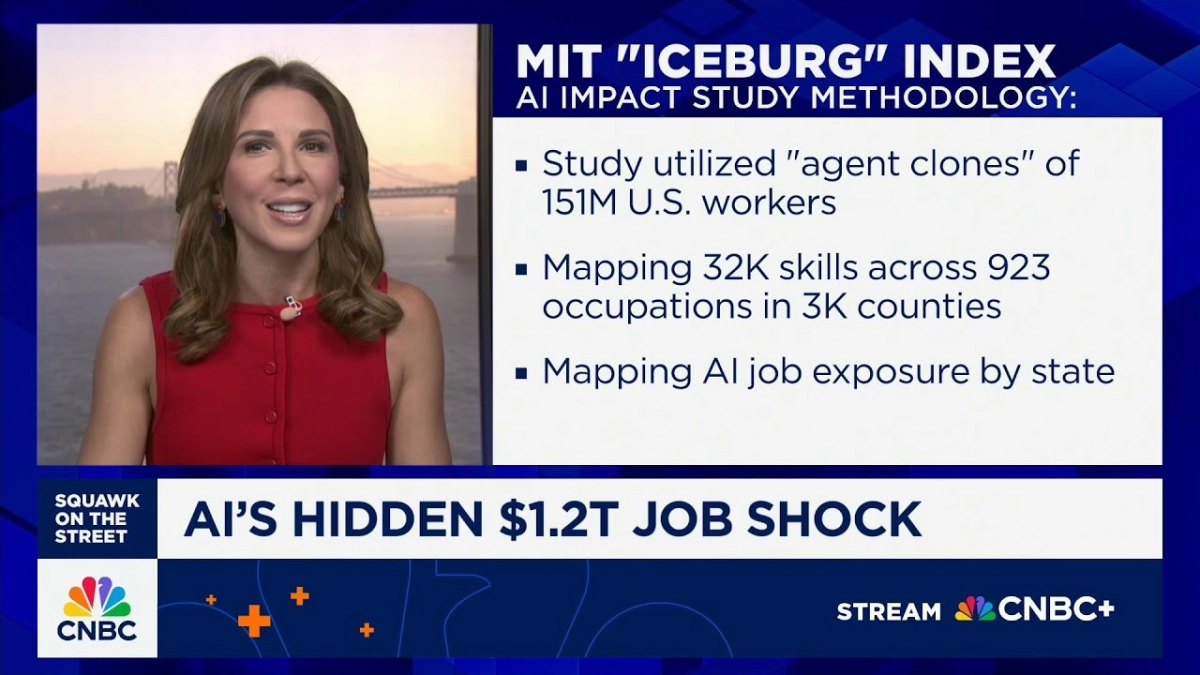
Artificial intelligence is poised to disrupt nearly 12% of the U.S. labor market, representing a staggering $1.2 trillion in wages, with its most significant impacts still largely unseen by the public. This sobering revelation comes from a new MIT study, highlighted in a recent CNBC segment, which introduces a predictive tool known as the "Iceberg Index." This isn't merely a speculative forecast; it’s a meticulously modeled blueprint of AI's impending transformation, offering a granular view of job exposure down to the zip code.
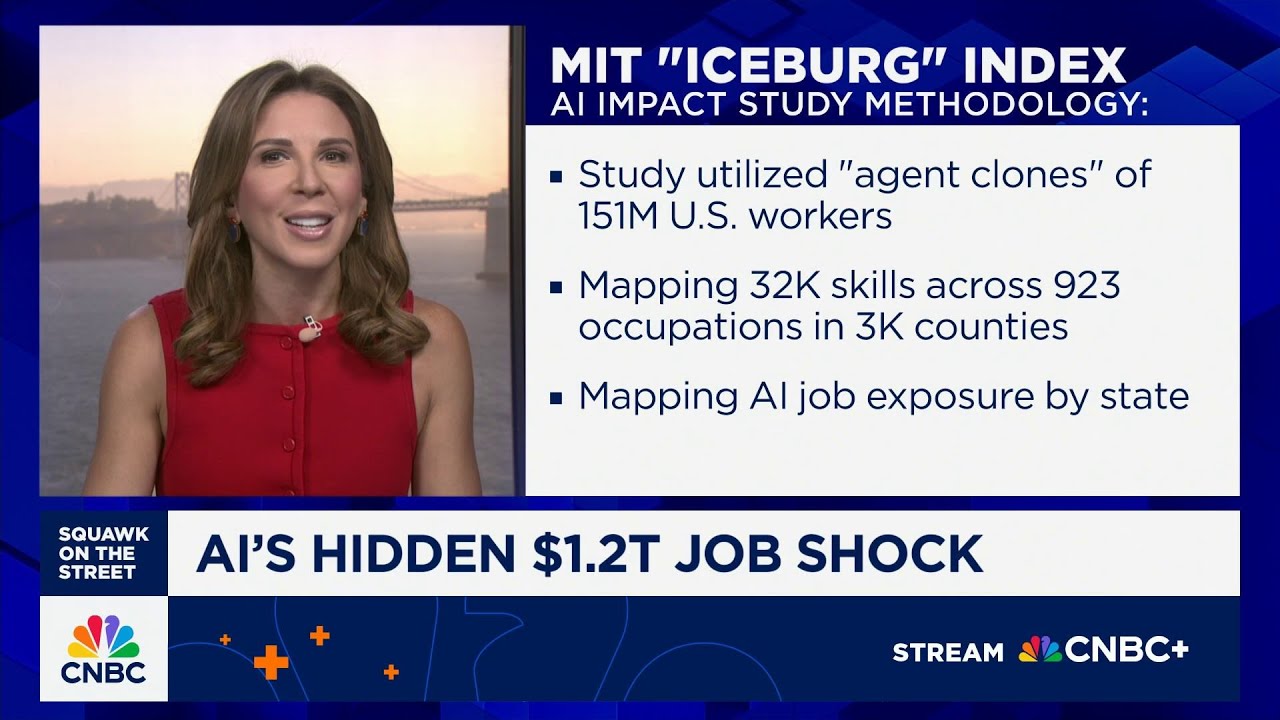
During a CNBC "Squawk on the Street" interview, MacKenzie Sigalos reported on this groundbreaking research from MIT, detailing how the study utilized "agent clones" of 151 million U.S. workers. This ambitious undertaking mapped over 32,000 skills across 923 occupations in 3,000 counties, aiming to identify which jobs are most vulnerable to AI displacement years before actual layoffs occur. The methodology is designed to provide an early warning system, allowing stakeholders to proactively address potential economic shifts rather than react to them.
The study’s nomenclature, the "Iceberg Index," is particularly apt. As Sigalos explained, "While only 2% of AI-driven wage disruption is visible in tech hubs today, there's actually a hidden layer of exposure that is five times larger than what we see today, cutting across industries and geographies." This insight underscores a critical misconception: the belief that AI's disruptive force is confined to the tech sector or coastal innovation hubs. Instead, the data reveals a broad, pervasive impact that will ripple through the entire national economy, affecting sectors traditionally considered insulated from technological upheaval. This hidden layer represents a profound challenge and opportunity for leaders in the startup ecosystem, venture capital, and AI development, demanding a re-evaluation of current strategies and future investments.
The quantifiable impact is striking. The research indicates that AI can already automate tasks corresponding to 11.7% of the U.S. labor market. This translates to an estimated $1.2 trillion in wages, with the disruption heavily concentrated in critical sectors such as healthcare, finance, and professional services. These aren't fringe industries; they are foundational pillars of the American economy. The implications for these sectors are immense, suggesting a future where core functions are increasingly augmented or replaced by AI.
This isn't merely a theoretical exercise. The Iceberg Index is being leveraged as a practical tool for policy formulation. Researchers stress that it is not "a countdown clock to layoffs, it's more of an early warning map so that policymakers can move money and training around before the shock hits." This proactive approach is vital for mitigating economic fallout and ensuring a smoother transition for the workforce.