

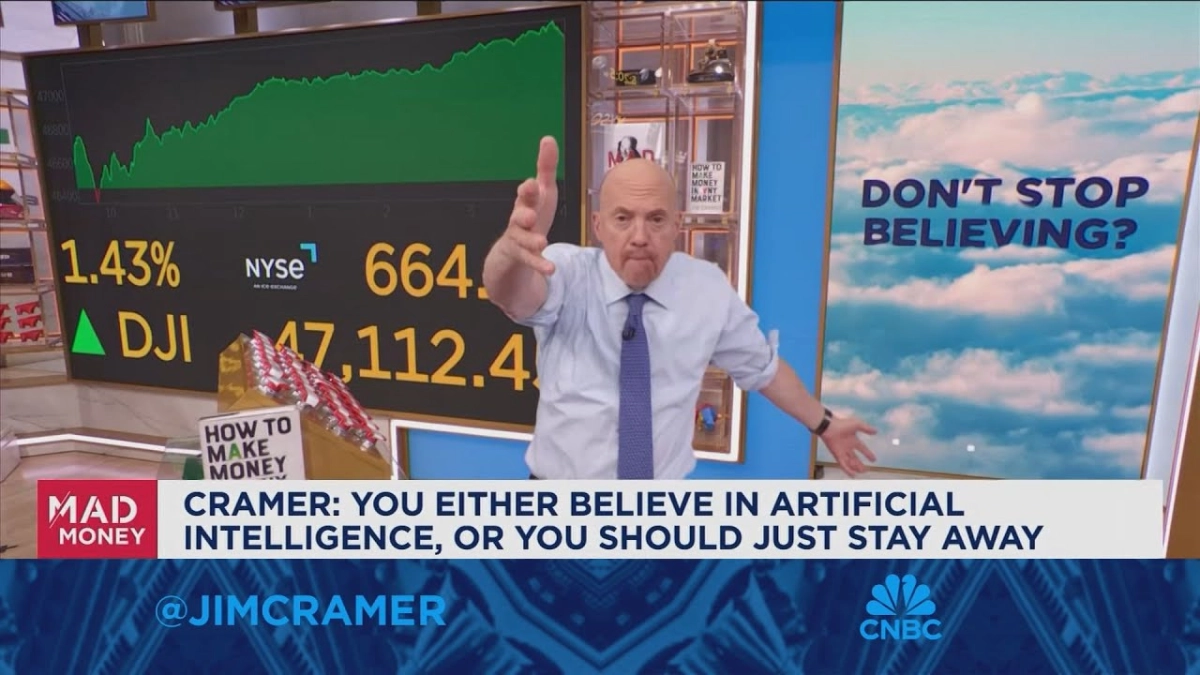
In the volatile landscape of modern finance, Jim Cramer, host of CNBC's Mad Money, offers an uncompromising ultimatum to investors eyeing the artificial intelligence boom: "You either believe in artificial intelligence, or you should just stay away." His recent commentary dissects the psychological barriers that prevent many from capitalizing on what he sees as an undeniable technological revolution, delivering a stark message about the conviction required to navigate this transformative sector.
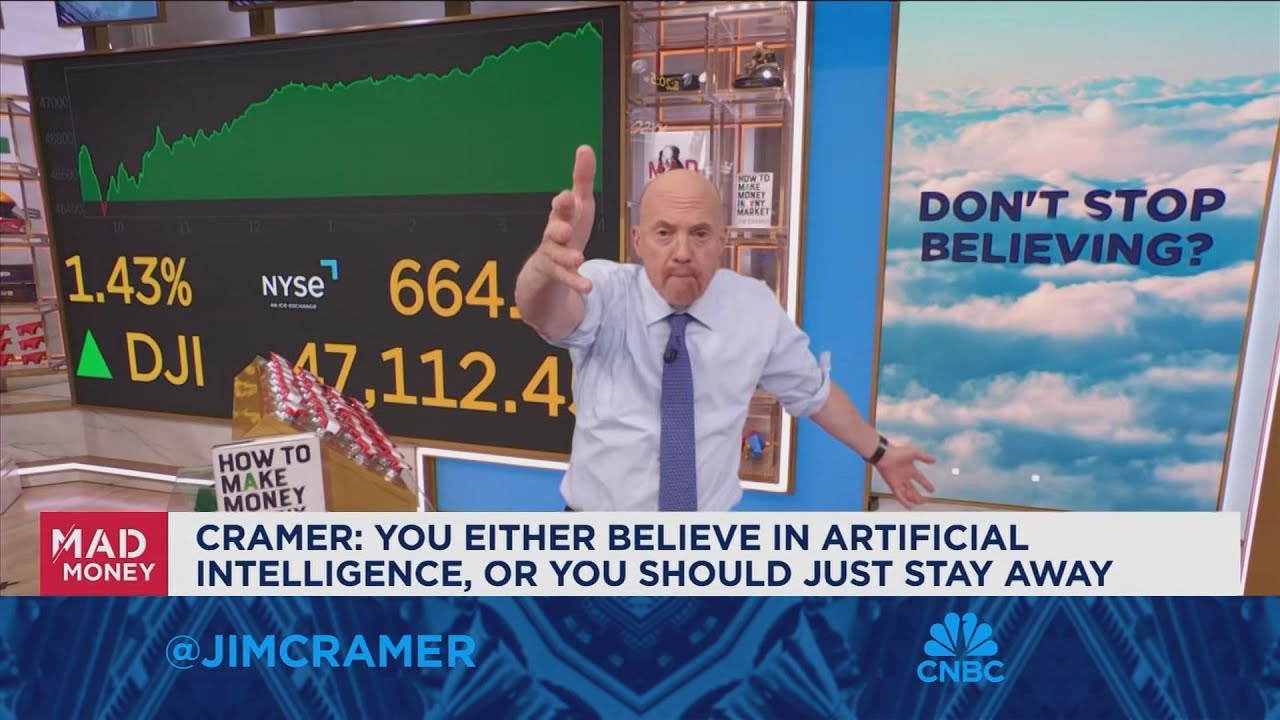
Cramer's monologue on Mad Money addressed the current state of the AI trade, emphasizing a binary choice for investors: full commitment or complete abstention. He argues that half-hearted engagement, driven by fear or skepticism, is a losing proposition in a market defined by rapid innovation and significant upside. For founders, venture capitalists, and AI professionals, this isn't merely stock-picking advice; it's a commentary on the prevailing sentiment and the strategic imperative of belief in the underlying technology.
Cramer posits that a "zero-sum investing logic" has historically "kept people from making millions upon millions of dollars because they live in fear." This fear, he suggests, blinds investors to the profound shifts occurring, leading them to miss out on substantial gains. He contrasts this with the bold, trust-based approach necessary to reap rewards from the current AI cycle, pushing back against the notion that all investments are inherently risky in a way that necessitates constant hedging.
The essence of his argument hinges on trust. He champions a philosophy where investors must implicitly trust the companies they back, particularly those at the forefront of AI innovation. This isn't just about market timing; it's about a deeper conviction in the leadership, technology, and long-term vision of these enterprises. "You should never buy anything if you don't trust enough to buy more on weakness," Cramer declares, adding that "Trust is how you benefit from stocks these days." This perspective resonates deeply within the startup ecosystem, where investor confidence in a founder's vision and team is often the bedrock of early-stage funding.
He challenges the notion that investors must obsess over every market fluctuation, instead advocating for a steadfast belief in the AI narrative. For those building or funding AI solutions, this implies that the market is currently rewarding genuine innovation and strong execution, rather than fleeting trends. The companies that are truly driving the AI revolution are not merely speculative plays; they are foundational shifts.