

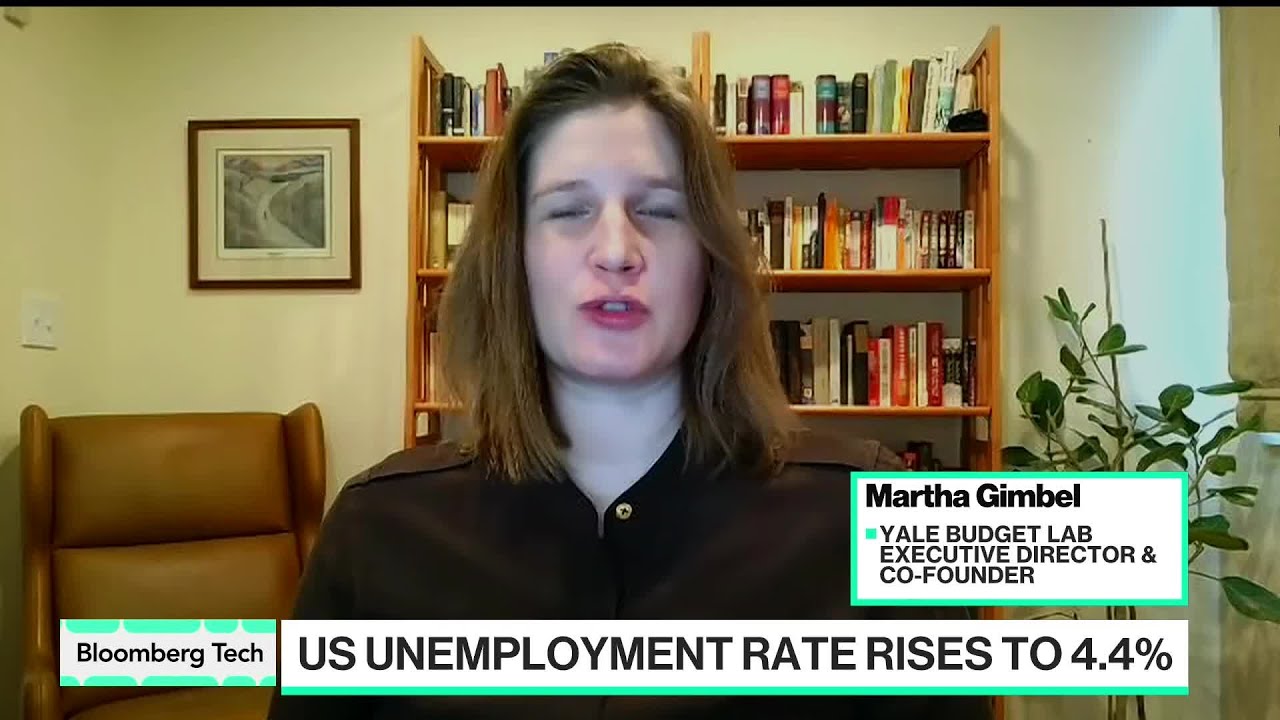
Martha Gimbel on AI's Labor Market Impact

Martha Gimbel of Yale Budget Lab discusses the limited direct evidence of AI's impact on recent US job market data, emphasizing the need for nuanced analysis.

4 min read
Martha Gimbel speaking on Bloomberg Tech about the US unemployment rate and AI's impact on the labor market.
Data Doesn’t Show AI Taking Jobs Just Yet — Bloomberg Technology on YouTube

In a recent appearance on Bloomberg Tech, Martha Gimbel, Executive Director and Co-Founder of the Yale Budget Lab, provided a nuanced perspective on the impact of artificial intelligence on the labor market. The conversation revolved around the question of whether current economic data, specifically the US jobs report, clearly indicates the influence of AI on employment trends. Gimbel emphasized the need for careful data analysis to avoid premature conclusions about AI's role in job displacement or creation.

The full discussion can be found on Bloomberg Technology's YouTube channel.
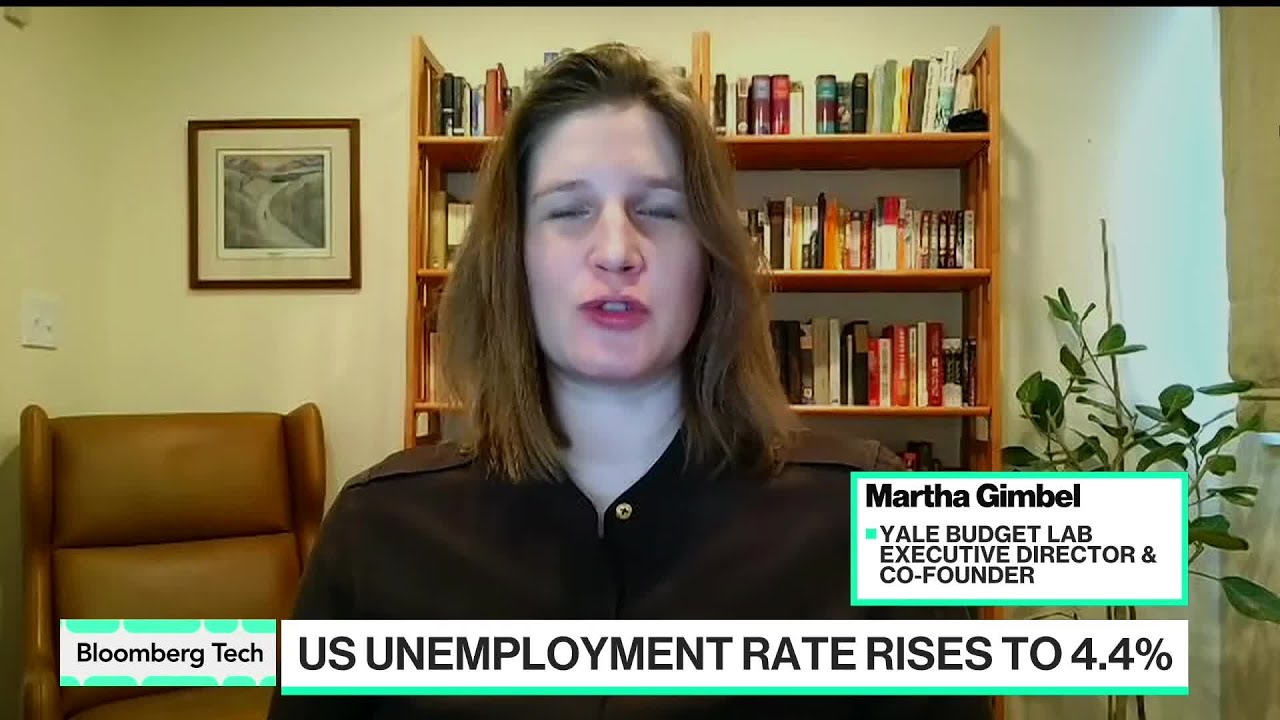
Data Doesn’t Show AI Taking Jobs Just Yet — from Bloomberg Technology

Gimbel, a recognized expert in labor economics and budget analysis, has been instrumental in leading research at the Yale Budget Lab, focusing on economic policy and its real-world consequences. Her work often involves dissecting complex economic data to provide actionable insights for policymakers and the public.

The discussion was prompted by the recent US jobs report, which showed an unexpected dip in job numbers. The host inquired whether the data provided a clear signal of AI's impact, to which Gimbel responded that she had not yet seen definitive evidence. She highlighted that the technology itself is remarkable, and its potential is vast, but the immediate link to job market shifts is not straightforward.

The Nuance of AI's Labor Market Impact

Gimbel stressed that the labor market is influenced by a multitude of factors. "I really haven't seen it yet," she stated, referring to clear evidence of AI's impact on job numbers. She elaborated that while the potential of AI is immense, the current economic landscape is shaped by a complex interplay of elements. "There are a lot of things that affect deployment of technology, IT policies, economic pressures, demographic changes, liability concerns, and so, the question isn't just what can technology do, but how quickly is society going to rearrange itself around it."

She further explained that while companies might be using AI to streamline operations and potentially reduce headcount, the broader economic context makes it difficult to isolate AI as the sole driver of job losses. "We're looking at the data, and it's not yet screaming that this is AI," Gimbel remarked, suggesting that other economic forces are likely playing a more significant role in the current employment figures.

Analyzing Job Data Beyond the Headlines

Gimbel pointed out that while the US jobs report indicated a loss of 92,000 jobs in February, only about 16% of that job loss was concentrated in sectors typically associated with technological disruption, such as manufacturing, construction, and mining. The majority of job losses were seen in the private services sector, which is less directly impacted by current AI capabilities.

She cautioned against drawing immediate conclusions, stating, "So that doesn't suggest that this is AI. It suggests that you may have impacts of tariffs, plus some general cyclical weakening." This distinction is critical for understanding the true drivers of economic change. Gimbel emphasized the importance of differentiating between the broad excitement around AI and the tangible evidence of its impact on the workforce.

CEO Statements and AI Investment

The conversation also touched upon the statements made by CEOs regarding layoffs and their potential connection to AI adoption. Gimbel noted that while many CEOs are vocal about their investments in AI and its potential to drive productivity, their statements about workforce adjustments might be influenced by other factors.

She observed, "CEOs have incentives to talk about things they're investing in, and they have incentives to talk about making AI investments and driving productivity." This suggests that while AI is a significant focus, attributing specific workforce decisions solely to AI might be an oversimplification. Gimbel added, "Shareholders want to hear that companies are making AI investments and driving productivity. And they may not even have a perfect sense of what hiring looks like in the absence of AI." This highlights the potential for narrative framing around AI to shape public perception of its economic impact.

The Importance of Data-Driven Analysis

Gimbel concluded by underscoring the importance of a data-driven approach to understanding AI's impact on the labor market. "It's really important to go back to the data and make sure we're taking a data-driven approach here rather than following the narrative." She stressed the need to analyze the composition of job gains and losses across different sectors to accurately assess the role of AI versus other economic factors.

She further elaborated, "We've seen job gains and losses all the time, and it's a standard part of an economy. And so, just because we lose jobs in one month or a couple of sectors that look like AI, it doesn't mean that this is AI-related job loss." Gimbel's insights serve as a crucial reminder to approach claims about AI's immediate effects on employment with a critical and data-informed perspective.