

Kitze's AI Agent Journey: From "Life OS" to "Wolf"

AI creator Kitze reflects on his decade-long quest for a 'Life OS' powered by AI agents, detailing his journey from early to-do apps to self-hosted solutions and his vision for the future of human-computer interaction.

4 min read
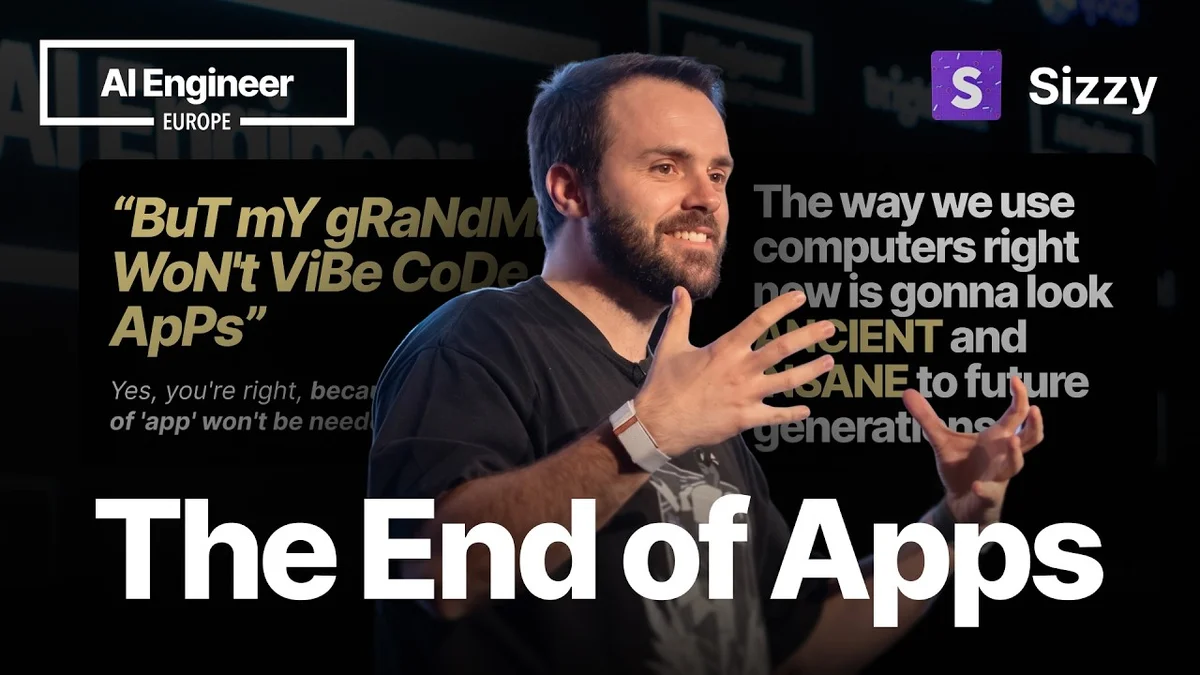
Kitze speaking on stage at AI Engineer Europe
Kitze speaking at AI Engineer Europe.· AI Engineer

At the AI Engineer Europe conference, developer, creator, and educator Kitze shared his personal journey in the pursuit of a truly effective AI agent, a quest that began in his childhood and has evolved through numerous iterations of software and ideas.
Kitze's AI Agent Journey: From "Life OS" to "Wolf" - AI Engineer
Kitze's AI Agent Journey: From "Life OS" to "Wolf" — from AI Engineer

Kitze's Vision: The "Life OS"

Kitze recounted his lifelong fascination with productivity and personal agents, tracing his efforts back to a childhood to-do list. This early fascination blossomed into a continuous effort to build a comprehensive system for managing life's complexities. He highlights that his goal was never just a simple to-do app, but rather a holistic 'Life OS' that could automate and organize everything.

Evolution of Personal AI Agents

Kitze detailed his progression through various attempts at creating personal AI agents. In 2016, he developed 'Tododo', a to-do app with an automatic prioritization system. This was followed by 'Better' in 2017, which aimed to integrate todos, habits, routines, and calendar events. These early projects, while not AI-powered, laid the groundwork for his later endeavors.

Related startups

The advent of large language models (LLMs) and tools like ChatGPT marked a significant shift. Kitze initially felt that the problem was solved, especially with the introduction of plugins. However, he soon found that the existing cloud-based solutions were too restrictive and lacked the privacy and customization he desired.

The "Wolf" Approach: Customization and Local Control

Frustrated with the limitations of cloud agents, Kitze pivoted towards building more personalized, self-hosted solutions. This led to the creation of 'Benji' in 2022, named after his dog, which he envisioned as an all-encompassing agent capable of managing a vast array of personal data, from finances and health logs to social media interactions and smart home devices.

He emphasized the importance of data ownership and control, moving away from cloud-dependent services towards local solutions. This involved migrating data from cloud storage like Google Drive and iCloud to self-hosted alternatives like Nextcloud and Immich, and converting notes into local markdown files. This approach, he argues, is crucial for creating agents that can truly understand and act on personal context.

Challenges and Limitations

Kitze was candid about the challenges encountered. He noted that while custom agents offer significant advantages, they are not yet suitable for the mass market due to the complexity of setup and maintenance. Furthermore, he identified that tools like Discord and Telegram, while useful workarounds for agent communication, are not ideal long-term solutions for a comprehensive 'Life OS' due to their inherent limitations in user interface and extensibility.

He also pointed out the unreliability of certain open-source frameworks like Openclaw in crucial areas such as cron jobs and multi-agent coordination, leading to unpredictable behavior. The shift from more capable models like Opus to less capable ones like Codex, as seen with Anthropic's changes, also diminishes the charm of these tools, as they become less responsive and adaptable.

The Future of AI Agents

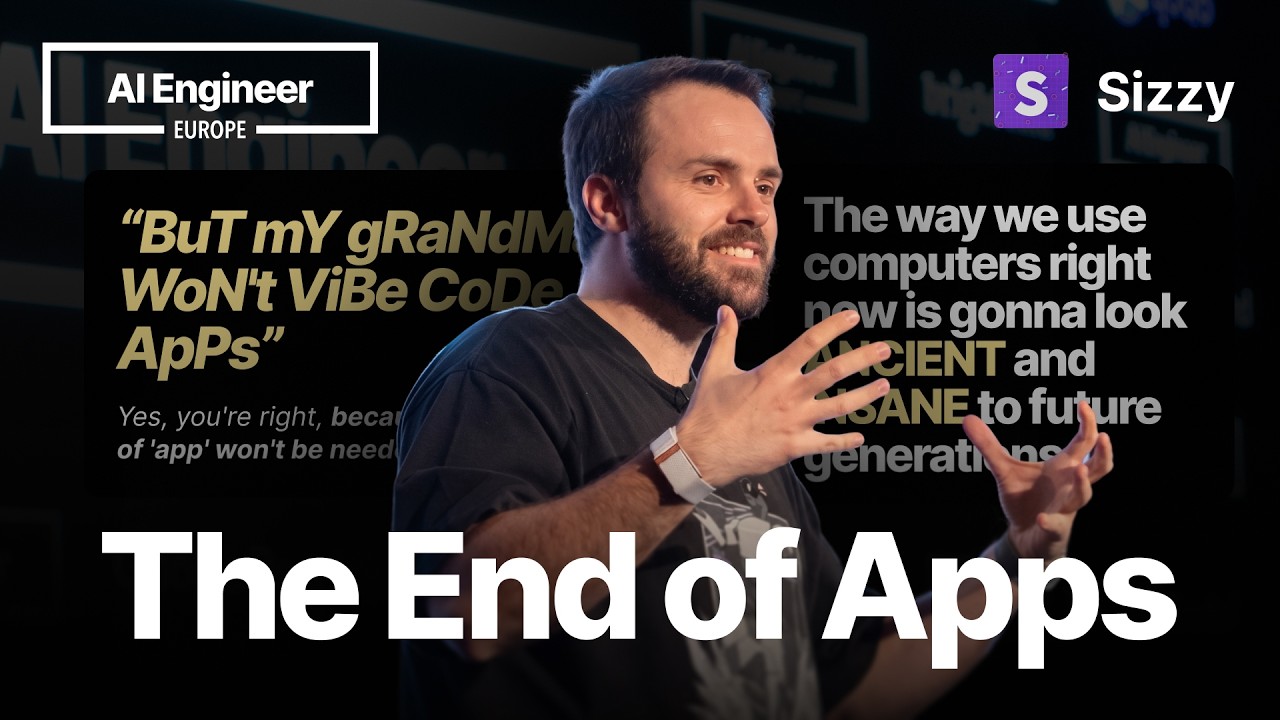
Looking ahead, Kitze predicts a significant shift in how humans interact with computers. The current app-centric model, with its constant updates and fragmented interfaces, will likely appear archaic to future generations. Instead, he envisions a more conversational interaction, where users simply talk to their computers, and the AI handles the underlying tasks without the need for specific apps.

He also believes that local models will become increasingly capable and sufficient for most people's needs, potentially leveling the playing field for companies like Apple, which can integrate AI capabilities directly into their hardware and operating systems. For the tinkerer, however, the journey continues, with the ongoing development of more sophisticated, personalized, and self-hosted AI agents.

Conclusion: The Agentic Future

Kitze concluded by highlighting that the role of AI is set to reverse: humans will become more productive by offloading the majority of work to AI, focusing their own efforts on higher-level tasks and creative prompts. This shift signifies a move towards a more integrated and intuitive human-AI collaboration, where the computer acts as a true assistant, anticipating needs and executing tasks seamlessly.

© 2026 StartupHub.ai. All rights reserved. Do not enter, scrape, copy, reproduce, or republish this article in whole or in part. Use as input to AI training, fine-tuning, retrieval-augmented generation, or any machine-learning system is prohibited without written license. Substantially-similar derivative works will be pursued to the fullest extent of applicable copyright, database, and computer-misuse laws. See our terms.