

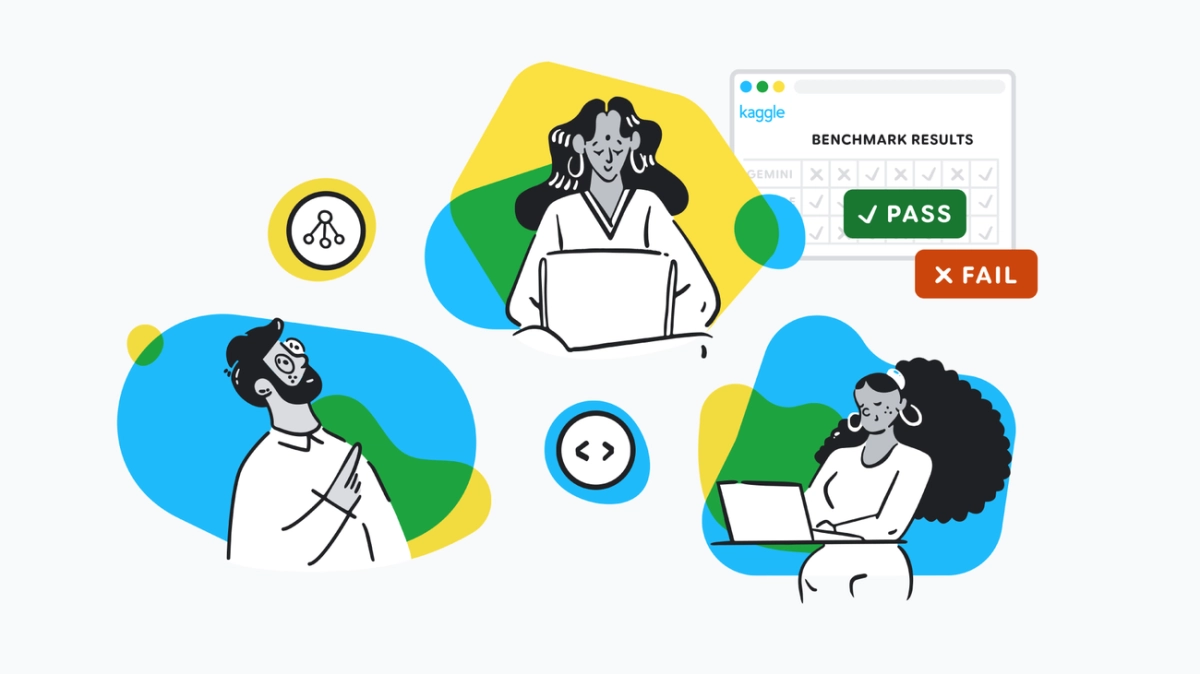
The era of relying on simple, static accuracy scores to judge large language models is officially over. Kaggle is addressing this critical evaluation gap by launching Kaggle Community Benchmarks, a system that hands the reins of model testing directly to the global developer community. This move acknowledges that real-world AI performance demands dynamic, use-case specific scrutiny far beyond standard academic leaderboards.
The rapid evolution of generative AI has rendered traditional evaluation methods inadequate. As LLMs transition from simple text generators to complex reasoning agents capable of code execution and tool use, a single metric fails to capture nuanced failures or successes. According to the announcement, these new benchmarks provide a transparent framework necessary to validate specific production use cases, bridging the gap between experimental code and deployment. This shift is crucial because the performance metrics that matter in a research paper rarely align with the robustness required in a production environment.
The structure of the new system is straightforward: users define specific "Tasks" to test capabilities like multi-turn conversations or multi-modal inputs, then group these into a "Benchmark." This framework guarantees reproducibility, capturing exact model outputs and interactions for auditing and verification. Crucially, Kaggle offers free access (within quota limits) to state-of-the-art models from labs like Google, Anthropic, and DeepSeek, democratizing access to rigorous testing environments previously reserved for well-funded research groups.
The Decentralization of Trust
This initiative represents a significant decentralization of AI evaluation authority. Historically, evaluation standards were often set by the same labs that built the models, creating inherent conflicts of interest and favoring generalized metrics. By empowering developers to design rigorous, real-world tests, Kaggle is forcing models to prove their utility under adversarial, practical conditions, rather than simply optimizing for a fixed dataset. This community-driven rigor is essential for building public trust and accelerating responsible deployment across specialized verticals.
The platform’s support for complex interactions, including code execution and tool use, is perhaps its most powerful feature. Static evaluations cannot test how an LLM handles external APIs or manages multi-step reasoning chains, which are fundamental requirements for modern AI agents. Kaggle Community Benchmarks allow for rapid prototyping and iteration on these complex tasks, ensuring that evaluation evolves continuously alongside model capabilities.