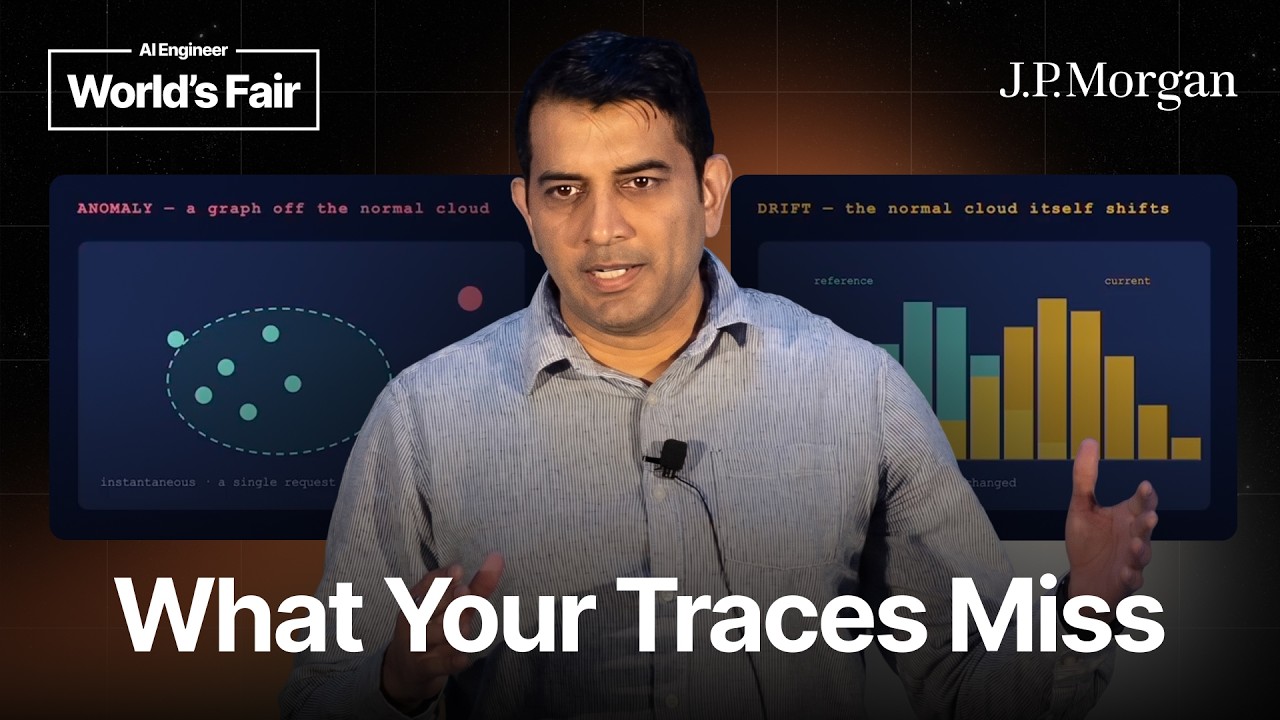
Visual TL;DR
API Monitoring ChallengesDriver
difficulty detecting real-time anomalies and drifts in complex API request flows
From the articleThe overall goal is to create a more automated and efficient system for monitoring and maintaining the health of complex API ecosystems.
Ritvik Pandya (JPMC)Core
leads payments team, presented on learned execution graphs for API monitoring
Execution GraphsContext
short-lived, acyclic graphs representing a single request's flow through services
From the article 9+ mentionsPandya distinguished these execution graphs from persistent or property graphs commonly used in knowledge representation.
Learned ApproachCore
leverages machine learning to understand normal API behavior from graph patterns
From the article 5 mentionsA key aspect of the proposed solution is the "learned" component, which emphasizes modeling the distribution of normal graphs rather than relying on predefined rules.
Anomaly DetectionEffect
identifies deviations from learned normal behavior in real-time API request processing
From the article 4 mentionsPandya explained a tiered approach to anomaly detection.
Drift ClassificationEffect
categorizes changes in API behavior patterns over time, indicating system evolution
From the article 4 mentionsRitik Pandya, who leads the payments team at JP Morgan Chase, recently presented a talk on "Learned Execution Graphs for real-time anomaly detection & Drift Classification in APIs." The core idea revolves around leveraging execution graphs, which are short-lived graphs representing the flow of a request through various services, to identify deviations from normal behavior.
Improved Issue ResolutionOutcome
faster identification and diagnosis of performance problems and service disruptions