

Artificial Intelligence

Iran Conflict Could Inflate Freight Costs, Lengthen Delivery

Bloomberg Intelligence analyst Lee Klaskow discusses how a potential conflict involving Iran could drive up freight costs and lengthen delivery times globally, impacting everything from oil to consumer goods.

Mar 3 at 7:15 PM4 min read
Lee Klaskow, Sr. Transportation & Logistics Analyst at Bloomberg Intelligence, speaking during a broadcast.

A widening conflict involving Iran poses a significant threat to global supply chains, potentially leading to increased freight costs and extended delivery times for a wide range of goods. Lee Klaskow, Sr. Transportation & Logistics Analyst at Bloomberg Intelligence, detailed these potential impacts, highlighting how geopolitical instability in the Middle East can ripple through international trade.

Lee Klaskow's Analysis

Lee Klaskow is a Senior Transportation and Logistics Analyst at Bloomberg Intelligence. His expertise lies in the complex world of shipping, air cargo, and trucking, making him a key voice in understanding the economic implications of global events on the movement of goods. His insights are crucial for businesses and consumers alike as they navigate the challenges of international commerce.

Impact on Freight Costs and Delivery Times

Klaskow explained that a conflict involving Iran could exert upward pressure on freight rates. This is primarily driven by the increased cost of fuel, as geopolitical tensions often lead to higher oil prices. "At the end of the day it's going to put upward pressure on rates," Klaskow stated, specifically noting the tanker industry. He further elaborated that "we've seen tanker rates get close to almost $500,000 a day. That is being driven by the fact that people want oil, they're going to have to pay to get it."

The full discussion can be found on Bloomberg Podcast's YouTube channel.
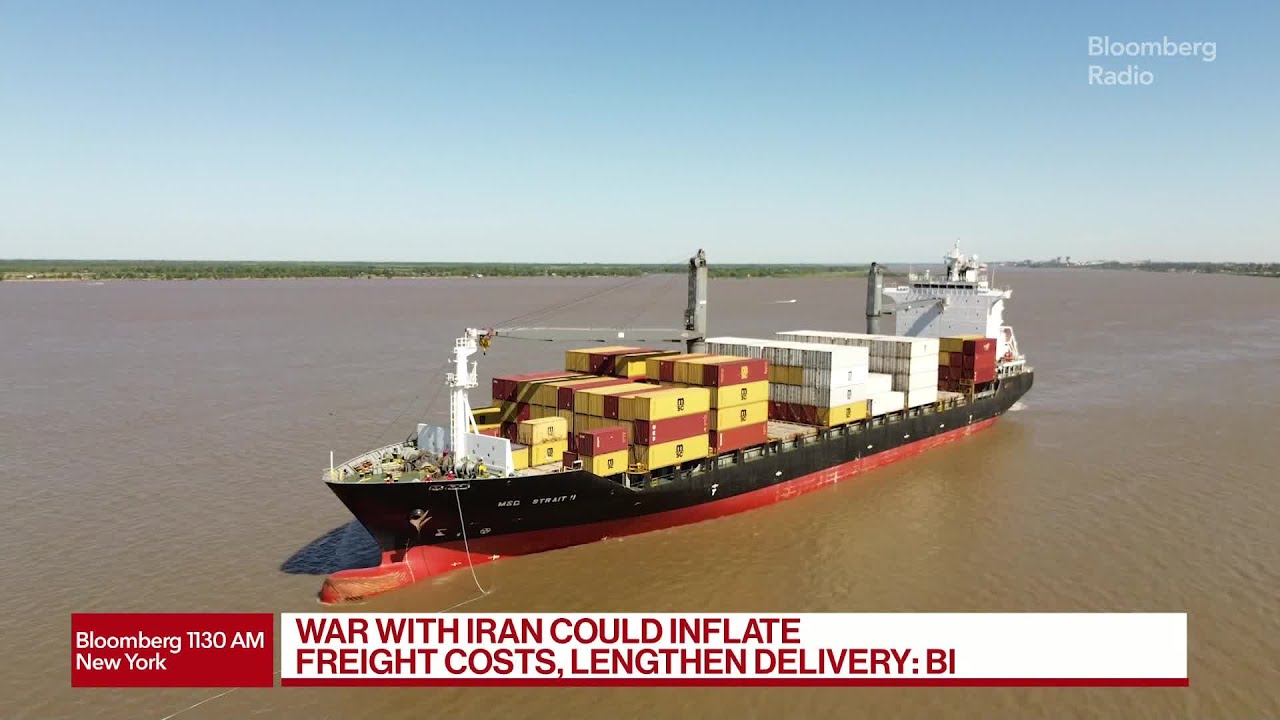
Freight Shipping Caught in the Crosshairs of Iran War — from Bloomberg Podcast

The analyst also pointed to a significant lag effect in the market. "The ripple effect really for my world, because I cover marine shipping, air freight guys, and also the trucking companies here in the US, is going to be the inflationary aspect," Klaskow said. He explained that higher fuel prices directly translate to increased operational costs, which are then passed on to customers. This inflationary pressure can be exacerbated by factors such as increased insurance premiums for vessels operating in or near conflict zones.

Strait of Hormuz and Airspace Disruptions

A critical point of concern for global trade is the potential disruption of the Strait of Hormuz, a vital waterway through which approximately 20% of global oil trade passes. Klaskow highlighted that any conflict impacting this region could lead to significant rerouting and delays. "The real question is how long does this go for, you know, is it going to be weeks, months?" he questioned, emphasizing that the duration of any conflict will directly correlate with the severity of the supply chain disruptions.

Beyond maritime shipping, Klaskow also addressed the impact on air cargo. He noted that in regions experiencing conflict, such as the Middle East, airspace closures are common. "What commercial airlines do is, you know, where we put our luggage, they also take cargo," Klaskow explained. "So, you know, the capacity is not available and, you know, what the commercial airlines do is they fly around it." This rerouting of flights inevitably leads to longer transit times and increased costs, as planes must take more circuitous routes to avoid affected airspace.

Impact on Major Logistics Providers

Klaskow specifically mentioned the potential impact on major logistics companies like FedEx, UPS, and DHL. Due to the rerouting of flights and the general uncertainty in the region, these companies face increased operational challenges. "DHL, Fedex, and UPS face transit snarl from Iran conflict," the headline from Bloomberg Intelligence indicated. Klaskow elaborated that these companies are more exposed to the Middle East and the associated risks. "They're going to have to fly around it, and that's going to impact transit times and costs," he stated. The analyst suggested that while the immediate impact might be less severe than during the pandemic-induced supply chain crises, the extended duration of any conflict could lead to more significant and prolonged disruptions.

Consumer Impact and Future Outlook

The combined effects of higher freight costs, longer delivery times, and reduced capacity will ultimately impact consumers. As businesses face increased expenses, these costs are likely to be passed on in the form of higher prices for goods. Klaskow's analysis suggests that the market is still assessing the full extent of these potential impacts, but the risk of inflationary pressures and delays is a clear concern. "We're not going to see what we saw during the pandemic, but the biggest impact is going to be the inflationary aspect and the higher diesel prices," he predicted, adding that the current situation is more about demand and the willingness of consumers to pay more for essential goods.