Visual TL;DR
Need for ControlDriver
increasing importance of stable, controllable AI environments
From the articleAs AI models become more powerful and integrated into complex workflows, the need for reliable, secure, and controllable harnesses will only increase.
Future of AIContext
exploring the ongoing evolution and potential of AI harnesses
AI Harnesses ExplainedContext
structured systems for managing and controlling AI models
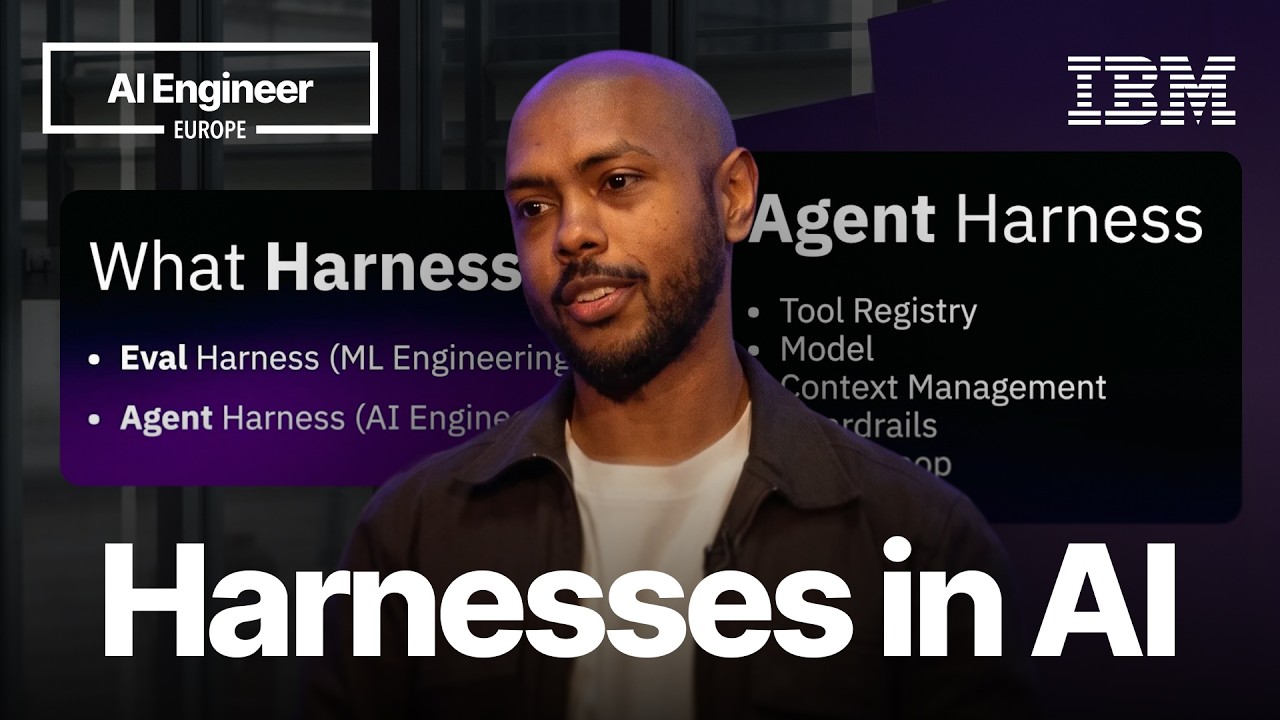
From the article 6 mentionsTejas Kumar from IBM recently delivered a deep dive into the concept of 'AI Harnesses' at an AI Engineer Europe event.
Two Harness TypesCore
Eval Harnesses and Agent Harnesses are the two categories
Agent Harness ComponentsCore
tools, models, context management, and guardrails are key
From the article 3 mentionsAgent Harnesses, on the other hand, fall under AI Engineering and are more complex, encompassing a broader set of components designed to manage and direct AI agents.
Practical ApplicationEffect
demonstrating real-world use cases and functionality
From the article 2 mentionsTo illustrate these concepts, Kumar presented a practical demonstration.
Reliable AI OutcomesOutcome
ensuring predictable and dependable results from AI operations
From the article 3 mentionsHe clarified that in the context of his presentation, an AI harness refers to a system designed to provide a stable and controllable environment for AI models, particularly for executing tasks and ensuring reliable outcomes.