

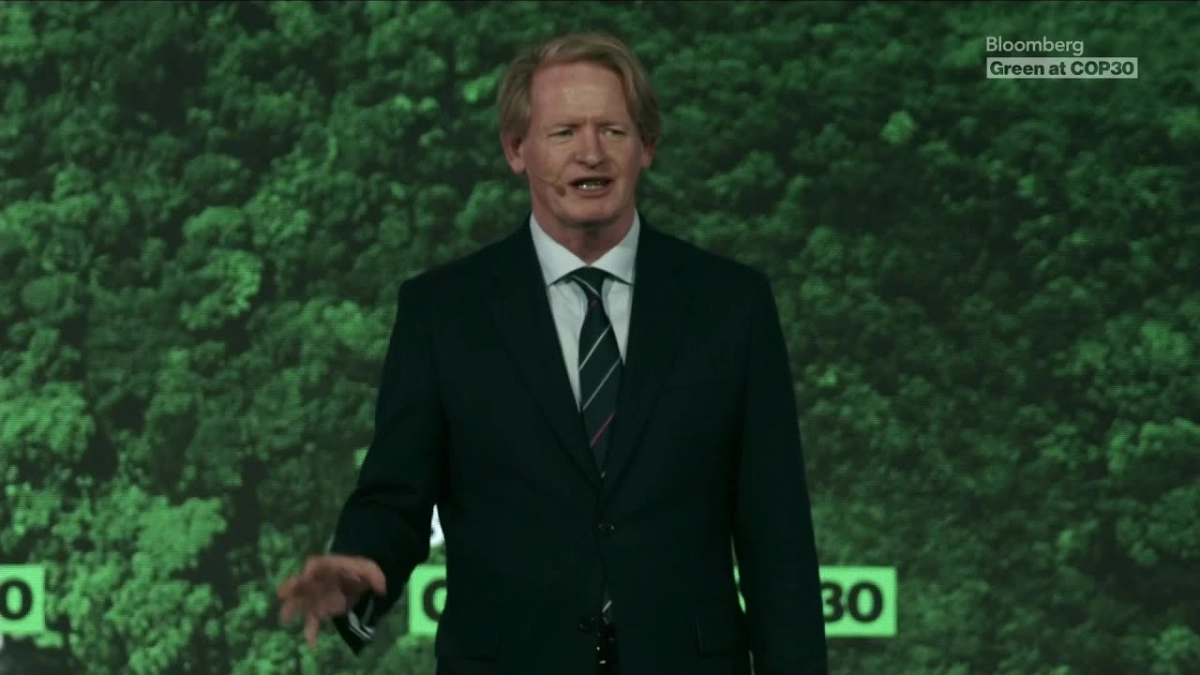
Moore began by highlighting the varied pace of energy transition investments worldwide. While global clean technology investment surged past $2 trillion for the first time, increasing by 11% last year, this growth was far from uniform. Asia saw a robust 21% increase, the Americas a modest 7%, while Europe experienced a decline of 1.7%. This geographic divergence is mirrored in technological adoption: 93% of the $2.1 trillion flowed into just four mature technologies – renewable energy, batteries, EVs, and grid infrastructure – leaving a mere 7% for other emerging sectors like clean industry and hydrogen. This stark allocation underscores a core insight: the energy transition is not a monolithic global movement but a complex mosaic of regional priorities and technological maturity.
The declining cost of clean technologies acts as a powerful, albeit slow-moving, catalyst. Solar module prices plummeted by 61% since 2023, and battery packs saw a 20% reduction in the last year alone. These steep drops make clean technologies increasingly competitive with traditional fossil fuels, even without policy support. This economic imperative, Moore suggests, is a "slow wave change" that is easy to overlook but fundamentally shifts the landscape.
In contrast to the gradual shift driven by technology costs, policy changes represent a "fast change" with immediate and often volatile impacts. Moore illustrated this with US import tariffs on non-EV lithium-ion batteries, which have seen rapid fluctuations. Policies act as either a "headwind or a tailwind," significantly altering investment flows. For instance, US investment in renewables dropped by 36% in the first half of 2025, while the EU, buoyed by large offshore wind deals, saw a 63% increase. However, a crucial insight Moore emphasized is that while policy can slow clean energy growth, it often cannot stop it entirely; the underlying economics of falling technology costs eventually override policy headwinds, as evidenced by the projected rebound in US renewable build-out despite initial policy-induced dips.
Temperature, another slow-moving but impactful factor, exacerbates the urgency for adaptation. Europe has experienced an average temperature increase of 2.3°C over the past three decades, a "massive increase" with tangible implications. The rising frequency and intensity of wildfires, like those seen in Europe in 2025, are stark reminders of these shifts. Bloomberg Intelligence data reveals that global annual climate damages reached an astounding $1.4 trillion in 2024. These costs, borne by governments (50%), insurers (25%), and uninsured parties (25%), highlight a growing financial burden that cannot be sustained indefinitely. This is a real area of concern.
The "fastest change of all this year," according to Moore, is the rise of artificial intelligence. Citing Dario Amodei, CEO of Anthropic, Moore underscored that "the single most important thing to understand about AI is how fast it is moving." This rapid advancement is translating directly into an unprecedented surge in electricity demand. US data centers, driven by AI, are projected to require as much power as electric vehicles in the coming decade, escalating from 3.5% to 8.6% of total US power demand. While BNEF's projections for data center electricity demand are on the more conservative side compared to other forecasts, the trend is undeniable. Globally, data centers, alongside air conditioning and electric vehicles, are expected to drive a 75% increase in global power demand by 2050, underscoring AI's role as a new energy demand giant.
The road transport sector, particularly electric vehicles (EVs), continues its record-breaking growth. Global EV sales are accelerating, with China and Europe leading the charge. The falling cost of batteries is a primary driver, making EVs increasingly affordable. China has already achieved cost parity for many EV segments compared to internal combustion engine vehicles, which explains its rapid adoption. Moore predicted that Chinese EV sales are set to overtake total US vehicle sales as early as next year, a clear illustration of the divergent speeds and market dynamics.
Related Reading
- OpenAI's $38 Billion AWS Compute Deal Reshapes AI Infrastructure Landscape
- OpenAI's Vertical Stack Ambition Signals AI's Industrial Evolution
- OpenAI’s $38 Billion AWS Deal Reshapes AI Cloud Landscape
In hard-to-abate sectors, particularly hydrogen, committed clean hydrogen capacity saw a significant 53% increase in 2024, with green hydrogen doubling. However, a crucial detail is that out of 13.4 million tons of low-carbon hydrogen offtake agreements, less than 2 million tons are binding. This indicates a gap between ambition and firm commitment. The primary offtakers are existing hydrogen users, shipping, and aviation. Policy also plays a decisive role in shaping the mix of "green" (electrolysis) and "blue" (gas with CCS) hydrogen, with the US favoring blue hydrogen and China leaning towards green, again demonstrating diverse national pathways.
Ultimately, Moore concluded by stressing that every geography is on a different pathway, moving at varying speeds, influenced by unique combinations of technology, policy, temperature, and AI. Understanding these country-specific nuances, through a "country lens," is vital for making meaningful progress in the global energy transition.



