

High AI Capex Demand a Multi-Year Cycle, Say Experts

Industry experts highlight a multi-year cycle of high AI capital expenditure demand, driven by Apple's cloud AI shift and the rise of specialized AI startups amid evolving market dynamics.

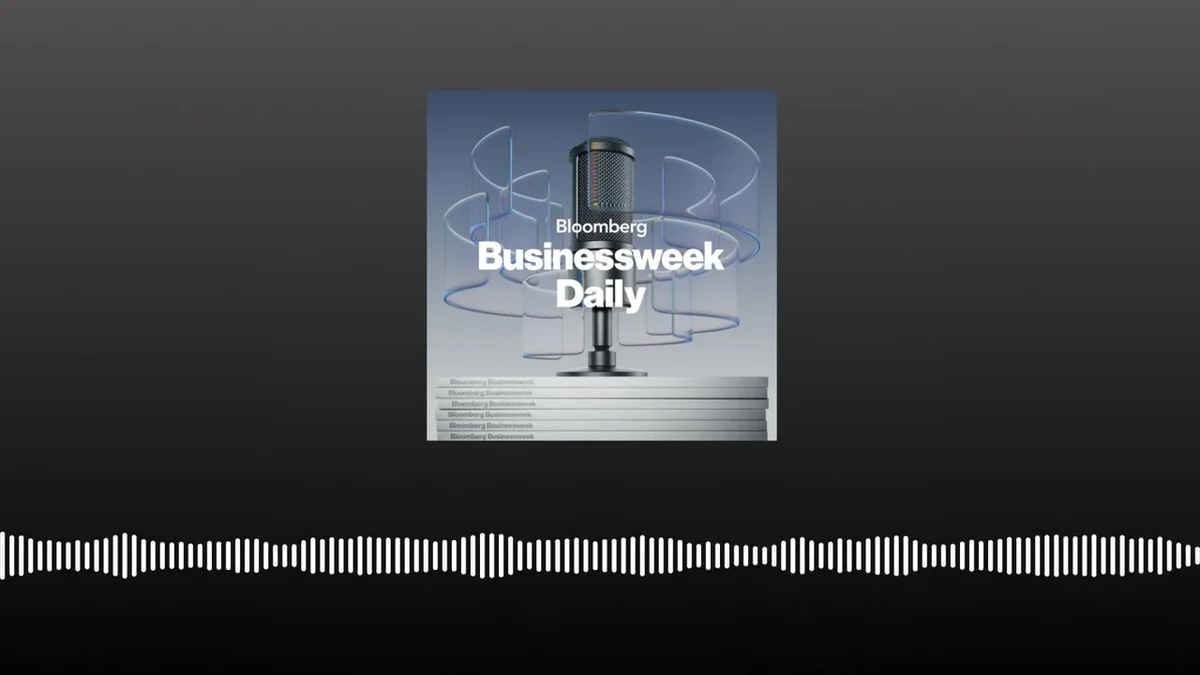
A sleek, modern microphone stands centrally with glowing blue digital circuits forming a dynamic background, symbolizing the intersection of media and advanced technology.
A microphone with a futuristic digital background, representing the Bloomberg Businessweek Daily podcast discussing AI capital expenditure.· Bloomberg Podcast
Visual TL;DR
Apple's Cloud AI ShiftDriver
From the article 5 mentionsMark Gurman highlighted a pivotal shift in Apple (NASDAQ:AAPL)'s artificial intelligence strategy, signaling a move towards more cloud-based processing for its advanced AI features.
AI Startups RiseDriver
emergence of specialized AI startups fueling market dynamics
From the article 3 mentionsFor investors, the critical question revolves around the "moat" or sustainable competitive advantage for startups against established incumbents.
Hyper-scalers & CompetitionContext
intense market competition among major tech players
From the article 5 mentionsThe discussion also touched upon the increasing competition between hyper-scalers and their customers.
Broadcom's RoleCore
key supplier of wireless components for Apple's strategy
From the article 4 mentionsThis next-generation chip is expected to offer four times the power of the M5 Ultra, with Broadcom playing a crucial role in developing its ASIC technology.
Evolving AI MarketContext
From the article 6 mentionsTheir collective analysis painted a picture of an evolving AI landscape, driven by technological advancements, shifting corporate strategies, and intense market competition.
High AI Capex DemandDriver
experts predict a multi-year cycle of significant investment
Multi-Year Investment CycleOutcome
sustained high demand for AI capital expenditure
From the article 3 mentionsIn a recent segment of Bloomberg Businessweek, industry experts delved into the escalating demand for AI capital expenditure, predicting a multi-year cycle of significant investment.
Contents(3)

In a recent segment of Bloomberg Businessweek, industry experts delved into the escalating demand for AI capital expenditure, predicting a multi-year cycle of significant investment. The discussion featured insights from Bloomberg News Managing Editor for Global Consumer Tech Mark Gurman, Glasswing Ventures Founder and Managing Partner Rudina Seseri, and Transversal Consulting President and Atlantic Council Senior Fellow Dr. Ellen Wald. Their collective analysis painted a picture of an evolving AI landscape, driven by technological advancements, shifting corporate strategies, and intense market competition.

Apple's AI Strategy Shift and Broadcom's Role

Mark Gurman highlighted a pivotal shift in Apple (NASDAQ:AAPL)'s artificial intelligence strategy, signaling a move towards more cloud-based processing for its advanced AI features. This strategic pivot has significant implications for Apple's long-standing partnership with Broadcom (NASDAQ:AVGO), a key supplier of wireless components for Apple products.

Historically, Broadcom has been a major revenue source for Apple, providing combined Wi-Fi and Bluetooth chips for iPhones, iPads, and Mac devices. However, Apple has been developing its own Wi-Fi and Bluetooth modules, such as the N1 chip found in its latest devices, gradually designing Broadcom out of these specific components. Yet, a new, expanded partnership between the two giants, extending to 2031, signals a renewed focus on AI infrastructure.

The full discussion can be found on Bloomberg Podcast's YouTube channel.

High AI Capex Demand a 'Multi-Year' Cycle | Bloomberg Businessweek - Bloomberg Podcast
High AI Capex Demand a 'Multi-Year' Cycle | Bloomberg Businessweek, from Bloomberg Podcast

Gurman revealed that this extended collaboration centers on Application Specific Integrated Circuits (ASICs), which are chips designed for a single, specific purpose. While not explicitly stated in their press release, these ASICs are intended to power Apple's AI servers in the cloud. Apple's current cloud AI infrastructure relies on its M2 Ultra chips, but the company is reportedly developing a new server chip, codenamed "Baltra," for deployment in 2027-2028. This next-generation chip is expected to offer four times the power of the M5 Ultra, with Broadcom playing a crucial role in developing its ASIC technology.

This move underscores Apple's recognition that while on-device AI models are important for processing, the real "goods" in advanced AI functionality will be powered by robust cloud infrastructure. Gurman anticipates a considerable increase in Apple's AI spending, although he notes it will likely not reach the levels of hyper-scalers like Alphabet Inc. (NASDAQ:GOOGL) or Meta Platforms, Inc. (NASDAQ:META) due to Apple's hybrid approach.

The Evolving AI Market and Investment Landscape

Rudina Seseri provided a venture capitalist's perspective on the evolving AI market, emphasizing that the overall demand for AI-related infrastructure and application layers remains strong. She highlighted a significant market shift towards vertically integrated players, who are developing their own chips and foundation models, rather than relying solely on external providers.

Seseri noted that while there might be some correction in the valuations of companies like Nvidia (NASDAQ:NVDA) due to an "overestimation of scarcity" along the value chain, the underlying demand for AI capital expenditure is a multi-year cycle. She pointed out that early-stage AI companies are achieving impressive revenue growth, scaling from zero to hundreds of millions in months, rather than years, indicating a rapid acceleration in market adoption.

For investors, the critical question revolves around the "moat" or sustainable competitive advantage for startups against established incumbents. Seseri argued that the value doesn't necessarily lie in the foundational models themselves, but in highly specific, niche data sets and applications that deliver superior outputs. She cited an investment in a company called Modern Industrial, which is developing an end-to-end demand planning solution for distributors of lumber and building materials. This highly specialized application, addressing a multi-billion dollar opportunity, demonstrates the potential for AI-native SaaS solutions with clear monetization strategies and demonstrable ROI for customers.

Hyper-scalers, Competition, and Global Dynamics

The discussion also touched upon the increasing competition between hyper-scalers and their customers. As major cloud providers like Alphabet (Google Cloud), Amazon.com, Inc. (NASDAQ:AMZN) (AWS), and Microsoft (NASDAQ:MSFT) (Azure) develop their own AI tools and services, they are increasingly competing with the very startups that build on their platforms. This dynamic raises important questions about where the lines of competition will be drawn and how it will impact the broader AI ecosystem.

Dr. Ellen Wald shifted the conversation to the global geopolitical implications of energy markets, particularly in the context of Saudi Arabia and its state-owned oil company, Saudi Aramco. While not directly about AI, her insights underscored the broader economic forces at play that can influence capital flows and strategic decisions within the tech sector. She explained that Saudi Arabia's recent price cuts for crude oil in Asia reflect a temporary situation of oversupply in the Middle East, driven by a backlog of oil needing to move out of the Persian Gulf and increased competition for buyers.

Wald emphasized that while Saudi Aramco is extremely powerful and has profited significantly from recent market dynamics, they prefer stable prices and reliable delivery to customers. The current price reductions are a strategic move to clear the backlog and ensure the smooth functioning of supply chains, rather than an indicator of a long-term oil glut. She also noted China's efforts to reduce its dependence on foreign oil, having cut imports significantly while maintaining economic function. This highlights a global trend where nations seek greater energy independence, which could indirectly influence investments in alternative technologies and AI-driven efficiencies across various industries.

The collective insights from Gurman, Seseri, and Wald paint a comprehensive picture of an AI industry undergoing rapid transformation. From Apple's strategic shift towards cloud-based AI, powered by new chip development, to the emergence of highly specialized AI startups and the complex interplay of global economic forces, the demand for AI capital expenditure is set to be a defining multi-year cycle.

© 2026 StartupHub.ai. All rights reserved. You may not republish this article in full without a license. Search engines and AI research tools may crawl and summarize for reference. Bulk reproduction or model training requires a license. See our terms.
Daniel Singer

Written by

Daniel Singer

Editor, StartupHub.ai

Daniel Singer is the editor of StartupHub.ai, a technology expert and thought leader on AI and its applications across sectors, from fintech and healthcare to developer tooling and consumer software. He writes and tests the tools covered here thoroughly and regularly, and built StartupHub.ai to give founders, operators and buyers a clearer read on what they are actually being sold.