

Helical has secured $10 million in seed funding to accelerate its mission of transforming pharmaceutical R&D with a virtual AI lab. The company's platform aims to make in-silico drug discovery reproducible and operate at a scale suitable for major pharmaceutical companies.
The Helical virtual AI lab for pharma acts as an application layer, converting biological foundation models into decision-ready, reproducible workflows. This $10 million injection, led by redalpine with participation from Gradient, BoxGroup, Frst, and notable angels, will fuel expansion into more top-20 pharma programs and bolster its science engineering team.
Bridging the Gap in Pharma R&D
The pharmaceutical industry faces a critical bottleneck: a lack of throughput. Despite thousands of diseases, only around 50 new drugs gain approval annually. This is largely due to the slow and costly nature of physical experimentation, a constraint that even promising hypotheses cannot escape.
While biological foundation models offer a new computational approach to testing hypotheses before wet lab commitment, their integration into pharma R&D remains fragmented. Emerging architectures and siloed teams of bench scientists and ML engineers often lead to the recreation of one-off, unreproducible analyses.
Helical aims to solve this by providing an application layer that transforms these powerful models into robust systems scientists can reliably run, trust, and defend.
A Unified Platform for Discovery
The Helical platform offers two distinct interfaces: the Virtual Lab for biologists and translational scientists, and the Model Factory for ML engineers and data scientists. Both are built on a shared foundation of data, models, and results, ensuring seamless collaboration.
This integrated approach closes the gap between computational predictions and biological decision-making, enabling teams historically working in silos to collaborate effectively on shared evidence.
"The models alone don’t discover drugs. The system does," stated Rick Schneider, co-founder of Helical. "Pharma teams need a system that turns foundation models into workflows scientists can run, validate, and defend. We built Helical to make in-silico science reproducible at pharma scale, so teams can go from hypothesis to decision in days instead of months."
Founded by Diverse Expertise
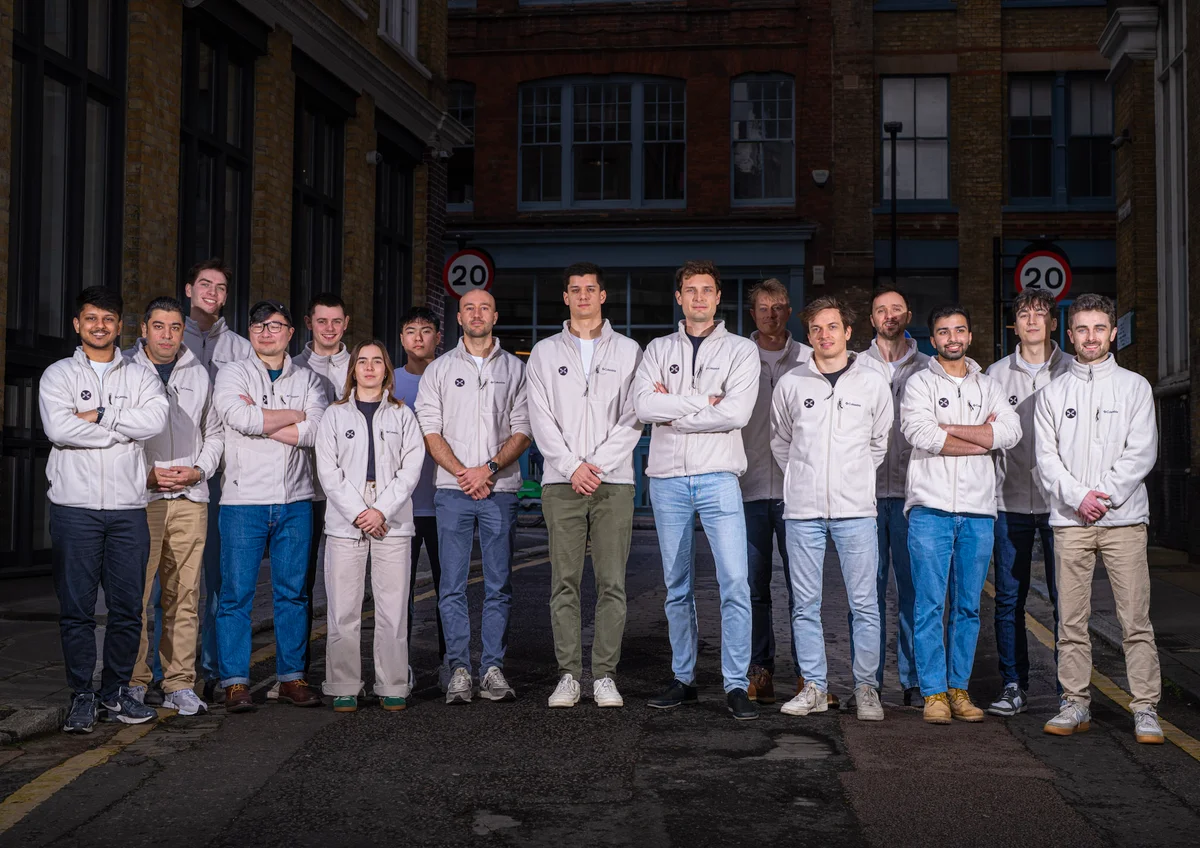
Helical was founded in early 2024 by three friends with complementary backgrounds: Rick Schneider (tech scaling at Amazon and Celonis), Maxime Allard (data science leadership and PhD in reinforcement learning), and Mathieu Klop (cardiologist and genomics researcher).
Their combined expertise positioned them to build the essential application layer needed to transition pharma from model experimentation to reproducible, production-level discovery.
Traction and Industry Context
The company is already engaged with multiple top-20 global pharmaceutical companies, including a public collaboration with Pfizer on predictive blood-based safety biomarkers. Deployments span target identification, biomarker discovery, and therapeutic design, reportedly compressing discovery timelines from years to weeks.
This progress comes as the broader industry faces escalating costs and failure rates in drug development, with R&D spending exceeding $300 billion annually and the average cost to market surpassing $2 billion.
"We are at a unique point in time where biological foundation models and general language reasoning models are converging," said Daniel Graf, General Partner at redalpine. "We backed Helical because we strongly believe they have what it takes to build the pharma AI orchestration platform that will drive this transition from siloed AI models to integrated virtual AI labs."
Helical plans to deepen its presence with existing clients, expand to additional major pharma organizations, and enhance its evidence layer to improve performance across diverse diseases. The company's ultimate goal is to empower every scientist to test hypotheses at inference speed, turning in-silico discovery into a reliable engine for R&D throughput, akin to the promise of virtual cells.
