

Gravis Robotics AG announced the closure of a $23 million funding round dedicated to scaling its artificial intelligence solutions for earthmoving equipment. IQ Capital and Zacua Ventures jointly managed this investment, signaling sustained investor interest in construction automation technology. Pear VC, Imad, Sunna Ventures, Armada Investment, and Holcim also participated in the financing.
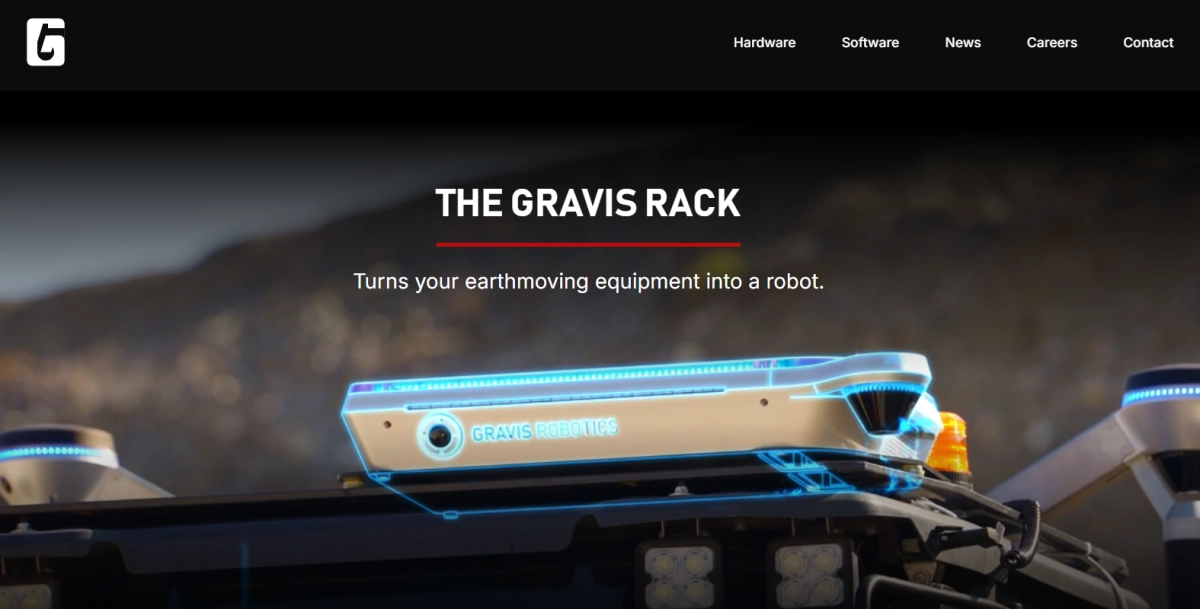
The company’s core offering is the Gravis Rack, a modular hardware system designed to retrofit excavators and similar machinery with partial autonomy capabilities.
This system integrates a computing appliance containing the necessary AI processing hardware, cameras, and LiDAR sensors, mounted typically on the vehicle roof.
Operators interface with the equipment through a proprietary tablet interface called Slate, enabling remote control or supervision of automated tasks. A key technological differentiator is the system's enhanced positioning accuracy, achieved through GNSS RTS technology integrated into rear masts alongside additional sensors. This method analyzes raw GPS radio signals to correct standard location errors, often achieving sub-inch precision crucial for detailed earthmoving operations.
Furthermore, these masts incorporate Wi-Fi transmitters necessary for synchronizing real-time data streams between the vehicle sensors and the operator’s Slate tablet. The Slate tablet provides operators with augmented supervision, overlaying crucial data like utility locations onto live sensor feeds, thereby minimizing the risk of infrastructure strikes during excavation. Users can execute complex actions, such as loading soil onto dump trucks, through simple touchscreen interactions or traditional joystick and pedal controls.