

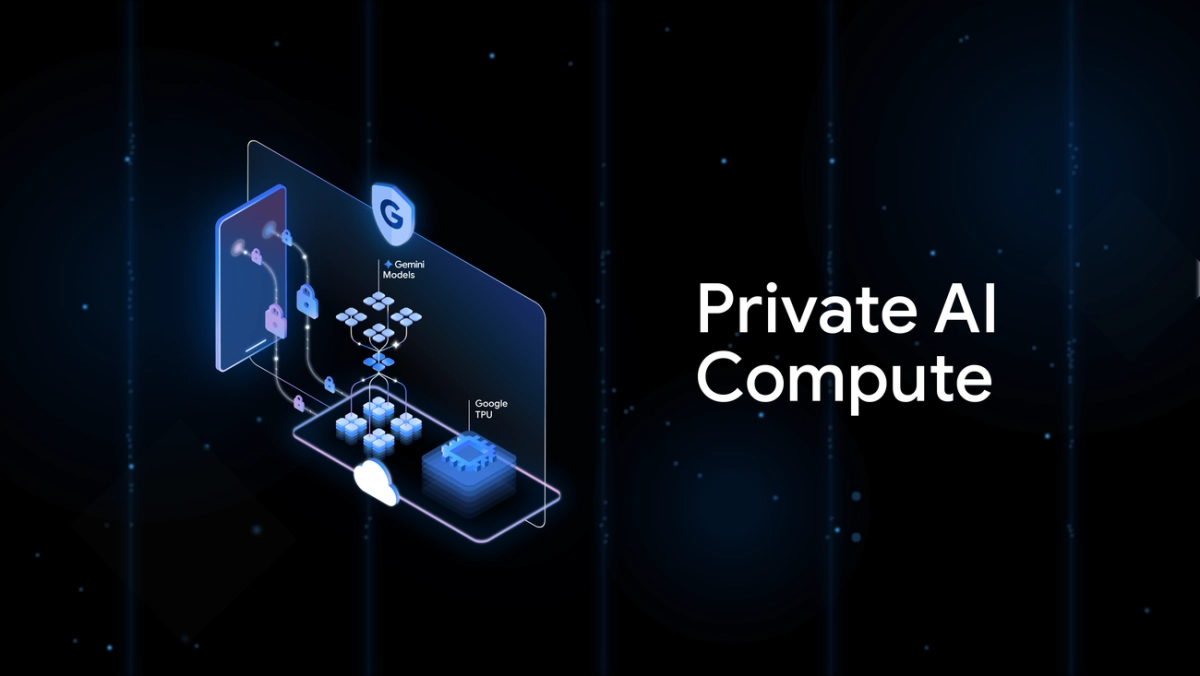
Google just introduced Private AI Compute, a significant step in delivering advanced AI experiences while upholding stringent user data privacy. This new platform merges the power of Gemini cloud models with the security and privacy assurances typically associated with on-device processing. It directly addresses the growing need for sophisticated AI capabilities that exceed local device limitations, without sacrificing user trust, marking a pivotal moment for responsible AI deployment.
For decades, privacy-enhancing technologies have been central to Google's AI development. Private AI Compute extends this commitment by creating a uniquely fortified cloud environment for sensitive data. According to the announcement, this platform ensures personal information, unique insights, and usage patterns remain isolated and private, inaccessible even to Google itself. This innovative approach tackles a critical industry challenge: how to leverage powerful cloud-based AI for highly personal tasks without compromising user data or control. It represents a proactive response to evolving user expectations around digital privacy.
The core of Private AI Compute lies in its multi-layered security architecture, designed from the ground up around core privacy principles. It operates on Google's integrated tech stack, utilizing custom Tensor Processing Units (TPUs) and Titanium Intelligence Enclaves (TIE). This robust design establishes a hardware-secured, sealed cloud environment, providing an extra layer of protection beyond existing safeguards. Remote attestation and encryption further secure the connection between a user's device and this protected space, ensuring sensitive data processed by Gemini models remains exclusively accessible to the user and no one else.
Bridging On-Device and Cloud AI Capabilities
This development fundamentally shifts the paradigm for AI processing. Previously, the choice was often between limited on-device AI for guaranteed privacy or powerful cloud AI with potential privacy trade-offs. Private AI Compute effectively bridges this gap, enabling on-device features to perform with extended capabilities while retaining their privacy assurance. Practical applications already include Magic Cue on Pixel phones offering more timely suggestions and the Recorder app summarizing transcriptions across a wider range of languages. These enhancements demonstrate how advanced reasoning and computational power can be applied to sensitive use cases without data exposure.
The implications for the broader tech industry are substantial. Private AI Compute sets a new benchmark for responsible AI development in the cloud, particularly for highly personalized and proactive AI. It demonstrates a viable, technically sophisticated path for deploying large, capable models for sensitive tasks without requiring direct data access from the service provider. This innovation could accelerate the adoption of more sophisticated AI features across various applications, as it directly addresses a major user concern about cloud AI with a robust, verifiable technical solution. It forces competitors to consider similar privacy-first architectures.