


Google's latest AI model, Gemini 3.0, marks a pivotal moment in the competitive landscape of artificial intelligence, signaling not just a leap in model capability but a profound shift in the underlying infrastructure that powers it. The announcement, as reported by CNBC's Deirdre Bosa, underscores Google's strategic advantage in custom silicon, specifically its Tensor Processing Units (TPUs), and its potential to reshape the dynamics of the AI chip market, long dominated by Nvidia. This development is not merely about a new model; it reveals Google's calculated move to leverage its deep technical stack for unparalleled performance and cost efficiency, positioning itself as a formidable, vertically integrated player.
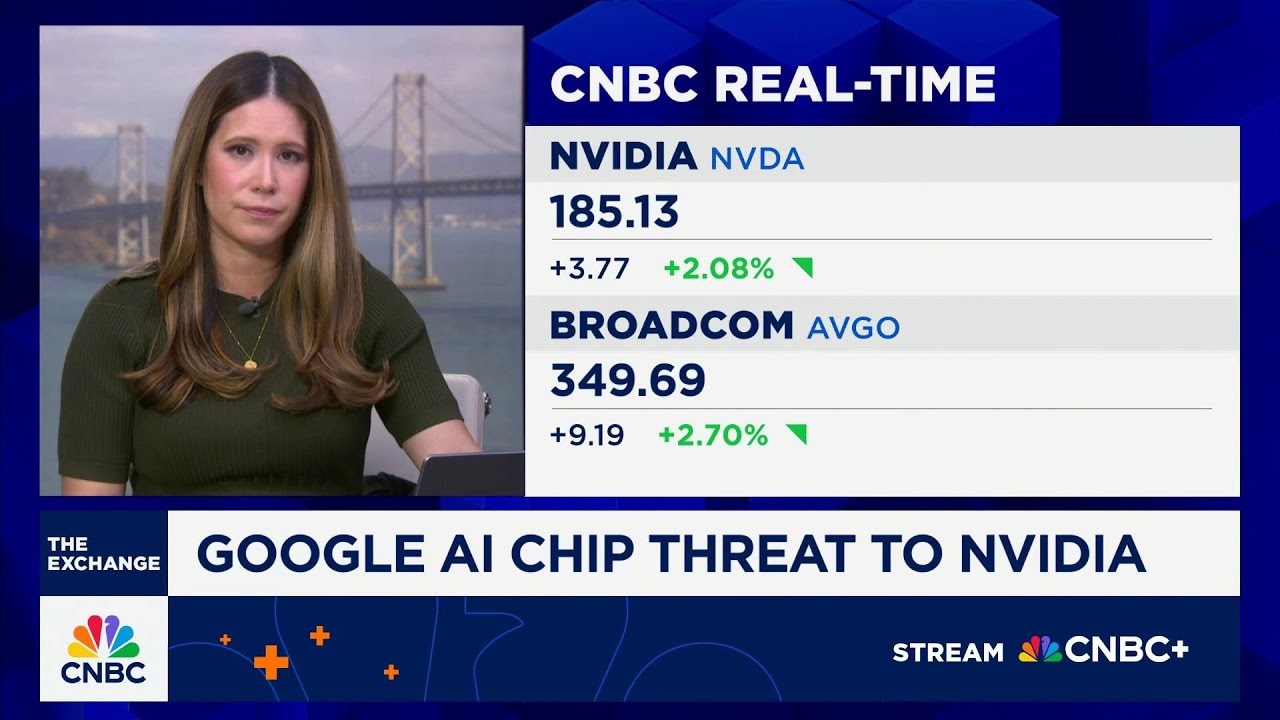
Deirdre Bosa, CNBC Business News TechCheck Anchor, spoke on "The Exchange" about Alphabet's recent stock highs following the Gemini 3.0 release, emphasizing the role of Google's custom AI chips. The core of her report centered on how Gemini 3.0, which has swiftly ascended third-party AI rankings, was "trained entirely on TPUs and not Nvidia’s GPUs," a significant departure and "a first at this level." This strategic choice highlights Google's conviction in its proprietary hardware and its commitment to an integrated approach that spans from silicon design to model deployment.
For years, TPUs were largely considered an internal asset, a powerful but specialized tool primarily utilized within Google's vast ecosystem. Bosa succinctly captured this perception, noting that TPUs "have been seen as a powerful but niche tool that only Google could really use." However, the successful training of Gemini 3.0 on this architecture demonstrates a maturation and scalability that transcends its former "niche" status. This model's ability to achieve frontier performance on TPUs validates Google's long-term investment in custom silicon, proving these chips are now capable of "training and serving a true frontier system at global scale." The implications for inference costs, a critical factor in deploying large language models, are substantial, giving Google greater control over these expenses and potentially enabling more aggressive pricing or wider model accessibility.
The narrative around TPUs is further bolstered by their expanding adoption beyond Google's direct operations. While Gemini 3.0's internal training on TPUs is a statement of intent, the broader market's increasing interest in Google's custom chips is even more telling. Notably, Anthropic, a prominent AI model builder and a direct competitor to OpenAI, is already expanding its use of TPUs, committing to a multi-billion dollar cloud deal. This commitment, reportedly worth "tens of billions of dollars" over the next few years for "as much as a million" TPUs, signifies a clear endorsement of their capabilities and cost-effectiveness from an external, leading-edge AI developer.
This external validation extends beyond Anthropic. Other major tech players, including Apple, OpenAI, and Meta, are also reportedly "using or testing TPU infrastructure in some capacity." This widespread adoption, even among companies that might otherwise rely on Nvidia's dominant GPUs, suggests a growing recognition of TPUs' efficiency and performance characteristics for specific AI workloads. It indicates a potential diversification in the AI chip supply chain, moving beyond a near-monopoly to a more competitive landscape where custom silicon plays an increasingly vital role.