

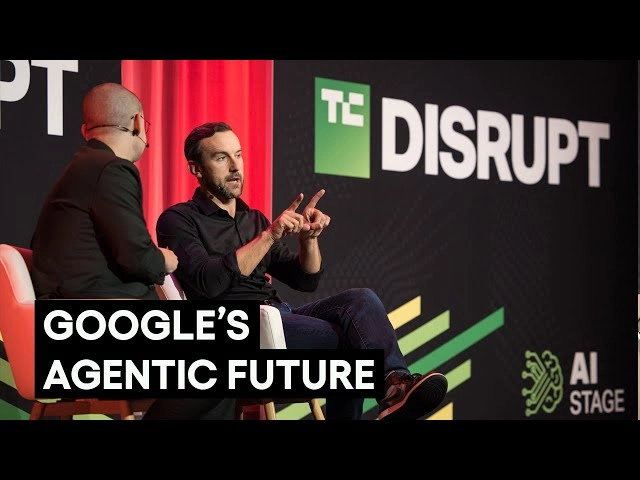
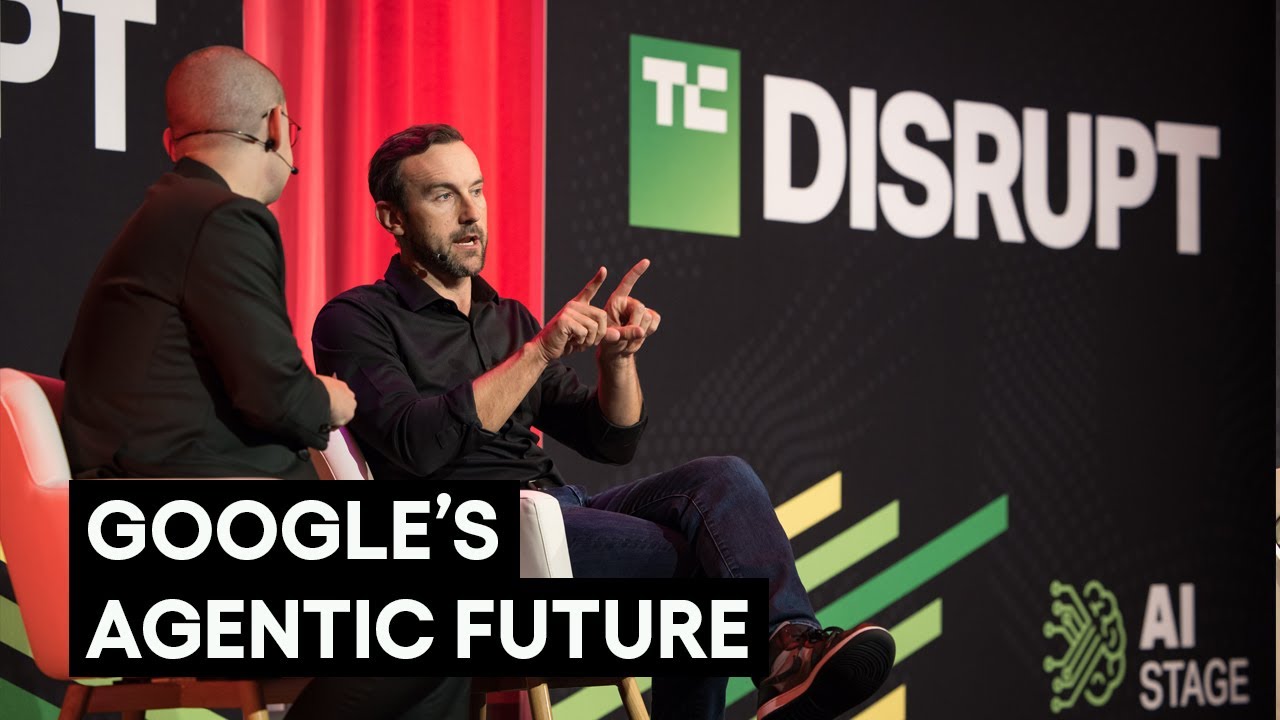
The future of digital interaction, as articulated by Will Grannis, CTO of Google Cloud, and Russell Brandom, AI Editor at TechCrunch, hinges on a fundamental shift towards an "agentic cloud." This paradigm, discussed at TC Disrupt’s AI Stage, promises to empower users and businesses with intelligent agents capable of autonomous action, fundamentally reshaping how we interact with technology and commerce. Google’s strategy is not merely an incremental upgrade but a foundational restructuring of cloud capabilities to support this new era.
Google is actively constructing the underlying infrastructure for this agentic future, offering developers two distinct pathways for engagement. For those seeking deep customization and fine-grained control, a code-first approach leveraging an Agent Development Kit (ADK) provides the tools for intricate agent building, offering robust observability, debugging, and tool management. This path is for developers who want to truly refine and optimize the agents themselves. Conversely, for users focused on rapid application development, Gemini Enterprise offers an "easy button" solution. This UI-driven platform comes equipped with pre-built connectors to external data sources like calendars and CRMs, allowing users to define an objective and let the agent proactively gather context and propose actions, such as automatically preparing for meetings or compiling research. This dual approach signifies Google’s commitment to democratizing agentic AI development, making it accessible across the spectrum of technical proficiency.
Central to this vision is the concept of "agentic commerce," a new frontier where AI agents facilitate and even execute transactions. Grannis detailed Google’s new payments protocol, which enables agents to perform actions ranging from adding items to a shopping cart to completing purchases autonomously. He outlined two primary mechanisms: a "mandate" where a user sets parameters for an agent to monitor and then prompts the user for final approval, and a "trust mandate" where the agent is fully empowered to complete transactions within predefined guardrails. Imagine a personal agent that tracks sneaker releases based on your preferences and budget, notifying you when a match is found, or even executing the purchase on your behalf. This evolution of trust in AI marks a profound shift in how value is exchanged, potentially disintermediating traditional commerce layers.
The implications of agentic commerce extend beyond individual convenience. Grannis highlighted the irony of building "a bot for buying sneakers" to compete with existing, often exploitative, bots. His response was insightful: "Yes, but it is a precision bot that *you* control. And now *you* are on a level playing field with these aggregators that would go and take all this inventory and then they'd resell it and they'd jack the prices up." This perspective frames agentic AI not as a threat to human agency but as a tool for empowerment, leveling the playing field in a digital economy increasingly dominated by automated systems. In a B2B context, this could mean shipping companies automating the processing and payment of millions of invoices daily, dramatically increasing efficiency.
However, this future is not without its complexities, particularly concerning security and governance. As agents become more prevalent, the traditional cybersecurity mindset of "bots are bad" must evolve to one where "bots are your customer." This necessitates developing sophisticated tools that can reason about and manage an inbound "flood of agents" into an organization's digital infrastructure. Grannis emphasized the critical role of open protocols and robust, scalable infrastructure in navigating this challenge. Google Cloud’s long-standing commitment to open standards, exemplified by projects like Kubernetes and TensorFlow, provides a foundation where developers can integrate diverse models, fostering a vibrant ecosystem rather than a walled garden.