

Google Search VP on AI's Role in Information Discovery

Google's VP of Search, Elizabeth Reid, discusses how AI is transforming search, moving beyond keywords to understand intent and provide direct, synthesized answers.

3 min read
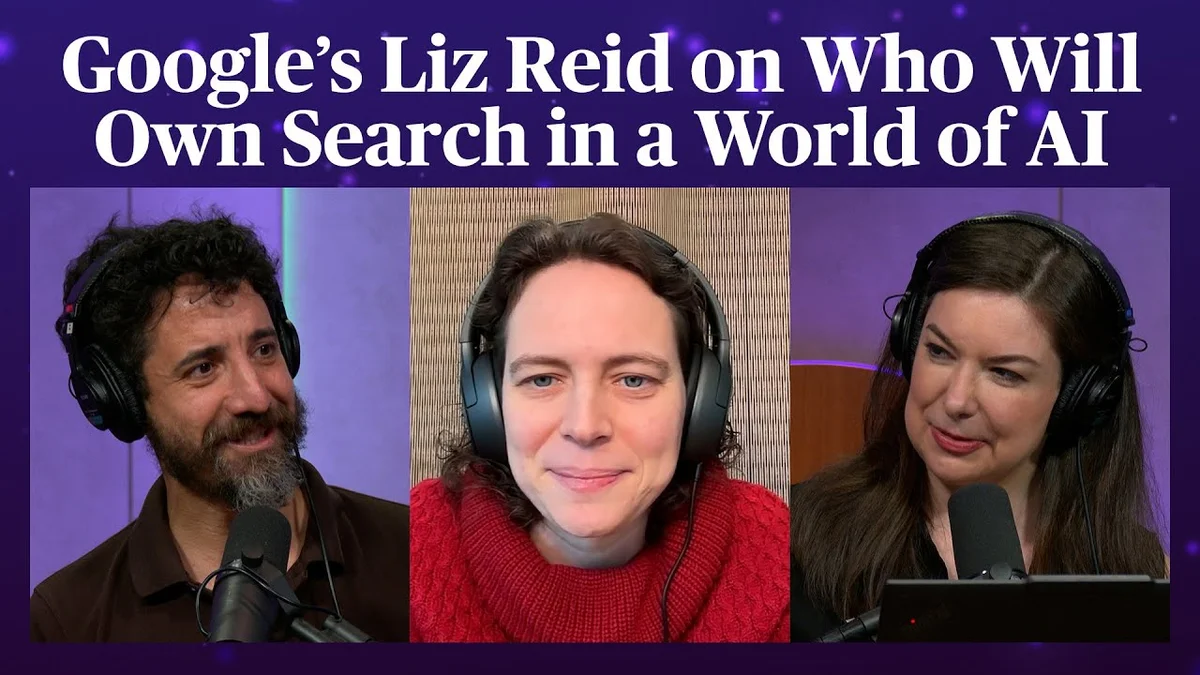
Elizabeth Reid, VP of Search at Google, speaking in a podcast studio.
Image credit: Bloomberg Podcasts· Bloomberg Podcast

In a recent "Odd Lots" podcast episode, Joe Weisenthal and Tracy Alloway sat down with Elizabeth Reid, VP of Search at Google, to discuss the evolving role of artificial intelligence in information discovery. Reid, who has been at Google for over 20 years and has been instrumental in shaping search for a significant portion of that time, offered insights into how AI is not just changing the search experience but also the fundamental way users interact with information.

Elizabeth Reid's Perspective on Search

Reid, a veteran at Google, highlighted the profound shift occurring in search. She explained that the traditional approach of matching keywords to web pages is giving way to a more nuanced understanding of user intent. This evolution is driven by advancements in AI, particularly in natural language processing and large language models.

The Rise of AI overviews in search

One of the key topics discussed was the introduction of AI overviews in search results. Reid elaborated on how these summaries are designed to provide users with direct answers to their queries, drawing information from multiple sources and synthesizing it into a concise format. This represents a significant departure from the older model where users were presented with a list of links and had to sift through them to find the information they needed.

Related startups

The full discussion can be found on Bloomberg Podcast's YouTube channel.
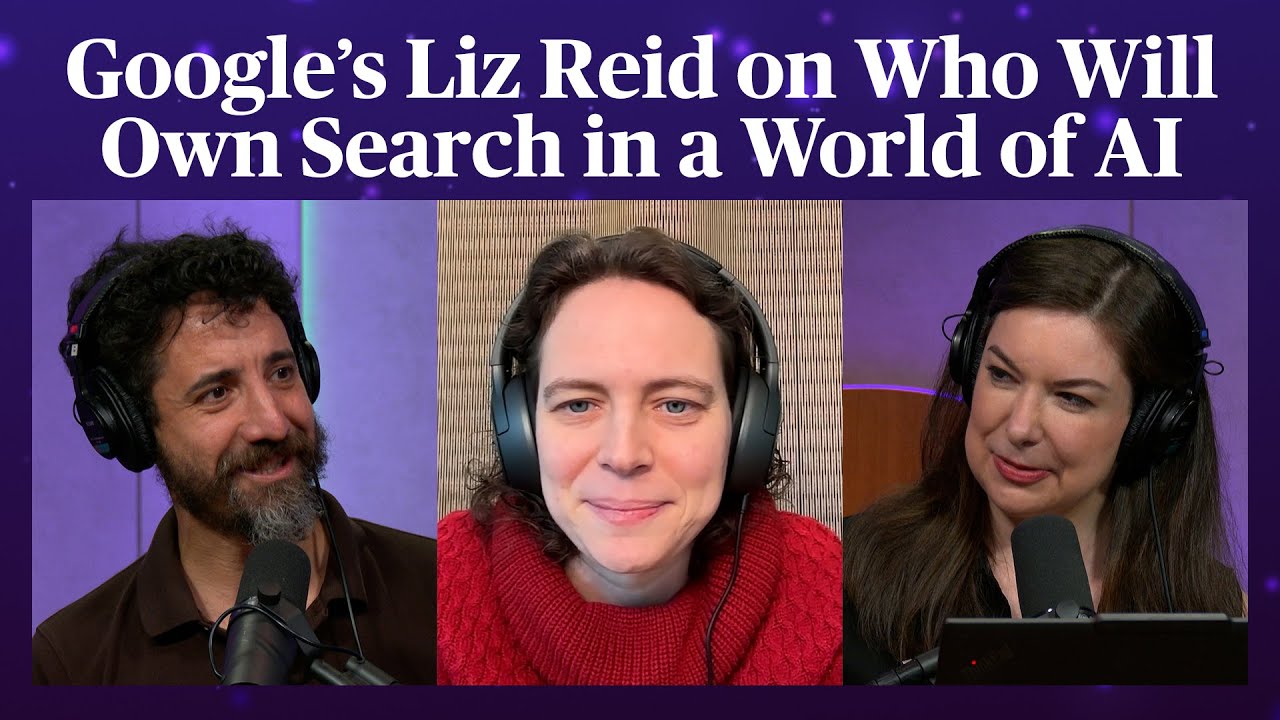
Google's Liz Reid on Who Will Own Search in a World of AI | Odd Lots - Bloomberg Podcast
Google's Liz Reid on Who Will Own Search in a World of AI | Odd Lots — from Bloomberg Podcast

Reid noted that the transition to AI-driven search is not without its challenges. She acknowledged that the accuracy and relevance of AI-generated summaries are crucial, and Google is continuously working to refine these models. The goal, she stressed, is to provide genuinely useful and reliable information that meets the user's underlying need.

User Behavior and AI Integration

The conversation also touched upon how user behavior is adapting to these new AI-powered search capabilities. Reid observed that users are increasingly comfortable with receiving direct answers and are looking for more comprehensive information upfront. This shift, she believes, is a testament to the effectiveness of AI in making information more accessible and digestible.

However, she also pointed out that the nature of search queries is evolving. Users are asking more complex and conversational questions, which requires AI models to be more sophisticated in their understanding and response generation. The challenge for Google is to ensure that the AI not only understands the question but also provides a helpful and relevant answer that is also safe and ethical.

The Future of Search and AI

Looking ahead, Reid expressed optimism about the future of AI in search. She suggested that AI will continue to play an increasingly important role, enabling more personalized and context-aware search experiences. The focus, she emphasized, will remain on delivering value to users by making information more accessible and understandable.

The discussion also highlighted the ongoing debate about the potential impact of AI on content creators and the broader internet. While AI-generated content and summaries can be beneficial, there are concerns about originality, attribution, and the potential for misinformation. Google is actively working to address these concerns and ensure that AI is used responsibly in its search products.

Ultimately, Reid conveyed that the integration of AI into search is not just about technological advancement; it's about fundamentally improving how people find and interact with information in an increasingly complex digital world.

© 2026 StartupHub.ai. All rights reserved. Do not enter, scrape, copy, reproduce, or republish this article in whole or in part. Use as input to AI training, fine-tuning, retrieval-augmented generation, or any machine-learning system is prohibited without written license. Substantially-similar derivative works will be pursued to the fullest extent of applicable copyright, database, and computer-misuse laws. See our terms.