

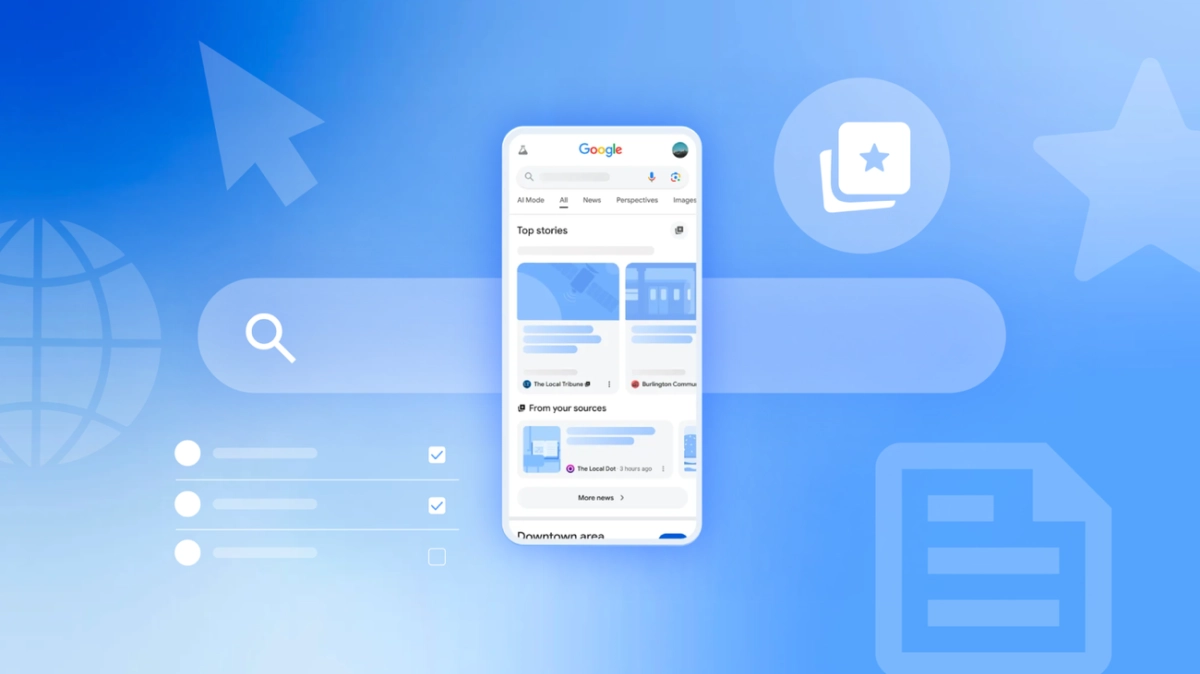
According to the announcement, Google is rolling out significant updates to its Search platform, aiming to redefine how users interact with information and how publishers monetize their content in the burgeoning AI era. These changes signal a strategic pivot, emphasizing user control over preferred sources while simultaneously attempting to strengthen Google’s relationship with content creators. The move acknowledges the growing tension between AI-driven summarization and the imperative to drive traffic back to the open web.
Central to these updates are new user-centric controls designed to personalize the search experience. Preferred Sources, now launching globally, allows users to explicitly prioritize content from their favorite outlets within Top Stories, a feature already showing a twofold increase in clicks to selected sites. Similarly, Google will highlight links from news subscriptions in the Gemini app and future AI Overviews, making it easier for users to access trusted, paid content. These features represent a tangible effort to empower users and direct traffic to specific, valued sources, moving beyond purely algorithmic discovery.
Beyond direct source preferences, Google Search AI features are evolving how information is presented within AI-generated responses. The company is increasing the number of inline links in AI Mode and enhancing their design for greater utility. Crucially, these embedded links will now include contextual introductions, short explanations detailing why a specific link is relevant or helpful. This refinement aims to provide necessary context and encourage deeper exploration, addressing concerns that AI summaries might reduce click-through rates by presenting information without sufficient pathways to original sources.
Rebuilding Bridges with Publishers Through AI
Perhaps the most impactful shift lies in Google’s renewed commitment to commercial partnerships with content creators. The company is piloting a new AI partnership program with major news publishers globally, including The Guardian and The Washington Post, to explore new models for audience engagement. This program involves paying for extended display rights and experimenting with AI-powered article overviews and audio briefings within Google News, all with clear attribution and direct links back to the original articles. This initiative demonstrates a proactive approach to addressing long-standing publisher grievances regarding content monetization and the value exchange with search platforms.
These partnerships extend to real-time information, with collaborations like The Associated Press enhancing results within the Gemini app. By integrating trusted, timely content directly into its AI experiences, Google aims to improve the accuracy and freshness of its AI-generated responses. This strategy underscores a recognition that high-quality, human-generated content remains indispensable, even as AI capabilities advance. The goal is to leverage AI to enhance discovery and engagement, rather than to replace the foundational role of original journalism.