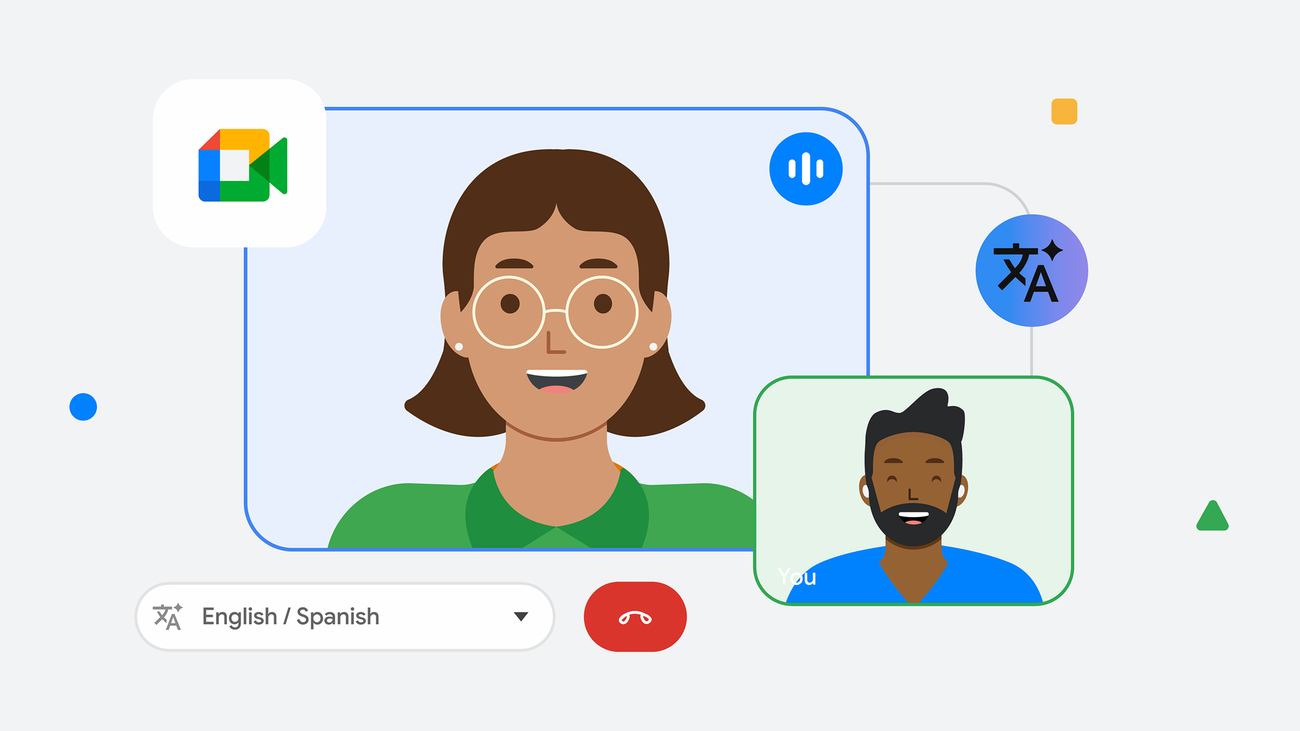
The promise of a truly global, frictionless digital workplace has long been hampered by one fundamental barrier: language. While video conferencing has brought us closer, the need for interpreters or the friction of translation apps has always been a speed bump. Enter Google Meet AI translation, a feature that isn't just an incremental update, but a significant leap towards dissolving those linguistic divides in real time.
Google Meet AI translation isn't magic, but it certainly feels like it. At its core, this capability relies on a sophisticated orchestration of artificial intelligence models working in concert. It begins with advanced Automatic Speech Recognition (ASR), which accurately transcribes spoken words into text, even amidst diverse accents, background noise, and varying speech patterns. This isn't a simple dictation; it's a nuanced understanding of human speech.
Once the speech is converted to text, it's immediately fed into a Neural Machine Translation (NMT) engine. Unlike older, rule-based translation systems, NMT models leverage deep learning to understand context, idioms, and nuances, producing far more natural and accurate translations. The challenge here is immense: performing these complex operations with near-zero latency, ensuring that translated captions or audio don't lag behind the speaker, disrupting the flow of conversation. According to the announcement, Google has engineered a pipeline that optimizes for both speed and accuracy, a critical balance for real-time interaction.
This intricate dance of AI models is a testament to years of research in natural language processing and machine learning. It requires massive datasets for training, robust computational infrastructure, and continuous refinement to improve accuracy across an ever-expanding roster of languages. The system must also intelligently handle speaker identification, ensuring translations are correctly attributed, and adapt to the dynamic nature of live conversations.
Beyond the Buzzwords: Real-World Impact
The implications of robust Google Meet AI translation extend far beyond convenience. For businesses, it unlocks truly global collaboration, allowing teams scattered across continents to engage in meaningful dialogue without the overhead of professional interpreters or the awkwardness of language barriers. This democratizes participation, ensuring that valuable insights aren't lost due to linguistic limitations. Imagine a product development meeting where engineers in Tokyo can seamlessly discuss designs with marketing teams in New York, all in their native languages.