

"It is so easy to 10x yourself. 100x-ing, that's the hard part." This assertion by Taylor Mullen, the creator of the Gemini CLI, encapsulates the profound potential of Google's latest command-line interface. The tool is poised to redefine developer workflows, offering unprecedented efficiency and a seamless integration of AI directly into the terminal.
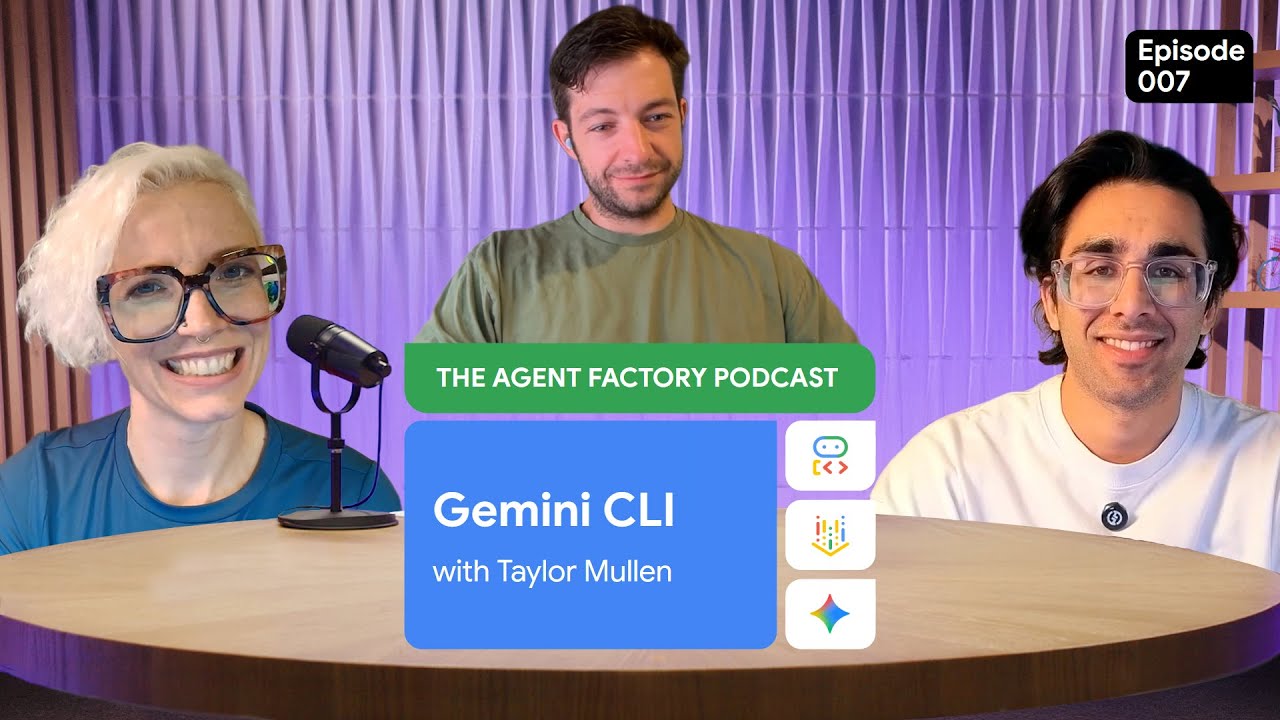
Mollie Pettit and Amit Maraj, both from Google Cloud's Developer Relations team, host "The Agent Factory" podcast. In this episode (Episode 7), they speak with Taylor Mullen about the Gemini CLI's functionalities, underlying philosophy, and future roadmap, while also demonstrating its practical applications. The discussion highlighted how this powerful AI agent aims to become an indispensable component of everyday development.
A primary pain point for many developers, particularly new team members, is the arduous process of onboarding onto an unfamiliar codebase. Traditionally, this involves sifting through extensive documentation and manually piecing together the project's architecture. Mollie Pettit candidly admits, "I’m not very good at like sitting down and reading a huge amount of documentation to be quite honest." This common sentiment underscores the value of a tool that can rapidly synthesize complex information.
The Gemini CLI addresses this directly by leveraging its massive 1 million token context window. This capability allows the agent to ingest and reason over an entire directory, providing a holistic understanding of a project's purpose, technology stack, and core dependencies. As Amit Maraj explains, "that's kind of the difference between asking questions about a single file versus maybe the entire architecture all at once." This multi-layered analysis empowers developers to quickly grasp the intricacies of a new project, drastically reducing the time spent on initial setup and increasing the speed of contribution.
Beyond onboarding, the Gemini CLI excels in supercharging various developer tasks. It can perform high-level code health checks, identify areas for refactoring, and even analyze Git history to infer contribution styles and development themes. This level of comprehensive analysis, previously a time-consuming manual effort, is now automated and delivered in a concise, actionable format.