

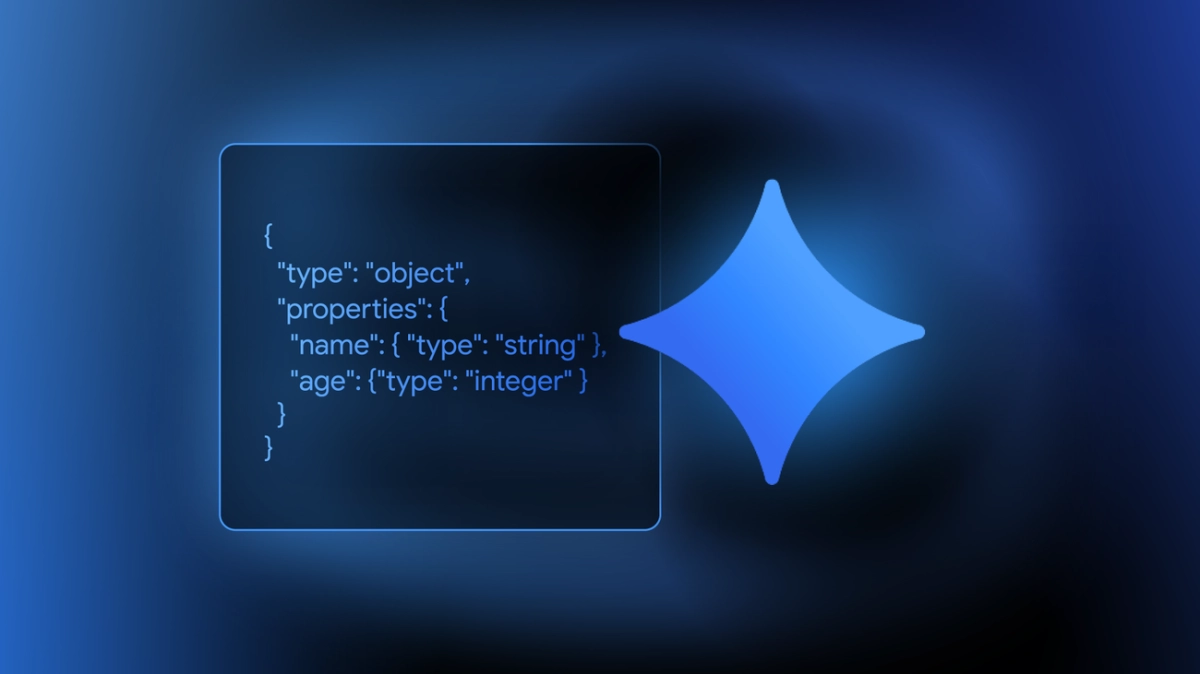
Google has significantly enhanced Gemini API Structured Outputs, introducing expanded JSON Schema support and ensuring property ordering in generated responses. These updates address key developer pain points, making AI model outputs more reliable and easier to integrate into complex systems. The improvements are crucial for tasks demanding precise data formatting, from extraction to multi-agent communication.
The expanded JSON Schema support is a game-changer for developers. It now integrates seamlessly with popular libraries like Pydantic for Python and Zod for JavaScript/TypeScript, building on existing OpenAPI 3.0-based Schema object support. According to the announcement, this includes frequently requested keywords such as anyOf for conditional structures, $ref for recursive schemas, and minimum/maximum for numeric constraints. This broadens the scope for defining intricate data structures, reducing the need for post-processing and validation.
Another impactful update is the implicit property ordering. Gemini 2.5 models and beyond will now preserve the exact order of keys as defined in the schema. This seemingly minor detail is vital for predictable output, especially in scenarios where order conveys semantic meaning or is expected by downstream systems. It also applies to the OpenAI compatibility API, ensuring consistency across different integration paths.
Real-World Impact and Developer Empowerment
These enhancements to Gemini API Structured Outputs are not theoretical; they directly impact real-world AI applications. Early access partners like Agentic Users leverage Pydantic and responseJsonSchema for critical data extraction, achieving significant cost savings by reliably pulling attributes from diverse inputs. This demonstrates the immediate value of guaranteed schema adherence in production environments.
Similarly, Alkimi AI utilizes JSON Schema to ensure reliable data flow within their multi-stage LLM pipelines. This capability automates the configuration of their AI assistants, "Agent Wizard," for various partners, streamlining complex workflows. The ability to pass data through a guaranteed schema eliminates translation layers and reduces potential errors, accelerating development and deployment.