

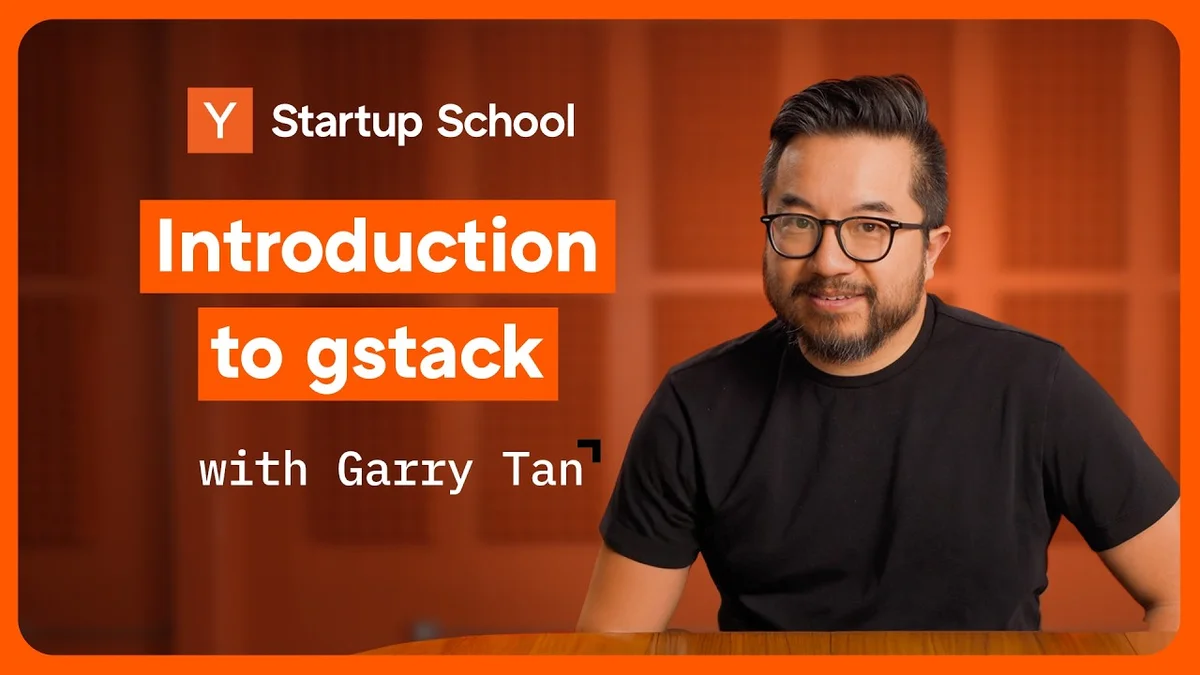
Garry Tan on Building with AI Agents

Garry Tan, CEO of Y Combinator, discusses the emerging era of AI agents in software development, showcasing his G stack tool and the 'conductor pattern' for efficient, AI-assisted development.

3 min read
Garry Tan speaking about AI agents and software development
Image credit: Y Combinator· YC

Garry Tan, President and CEO of Y Combinator, shared his insights on the emerging era of AI agents in software development during a recent "Startup School" session. Tan, an engineer by background with experience building companies like Posterous and Bookface, highlighted how AI agents can transform the way we build software by automating complex tasks and providing structured workflows.

The Agent Era of Software Development

Tan introduced G stack, a tool he developed that aims to create an AI engineering team, capable of handling tasks from product scoping to deployment. He emphasized that while AI models themselves are powerful, their effectiveness in real-world software development hinges on structured processes, defined roles, and rigorous review, much like human teams operate.

Related startups

The full discussion can be found on YC's YouTube channel.
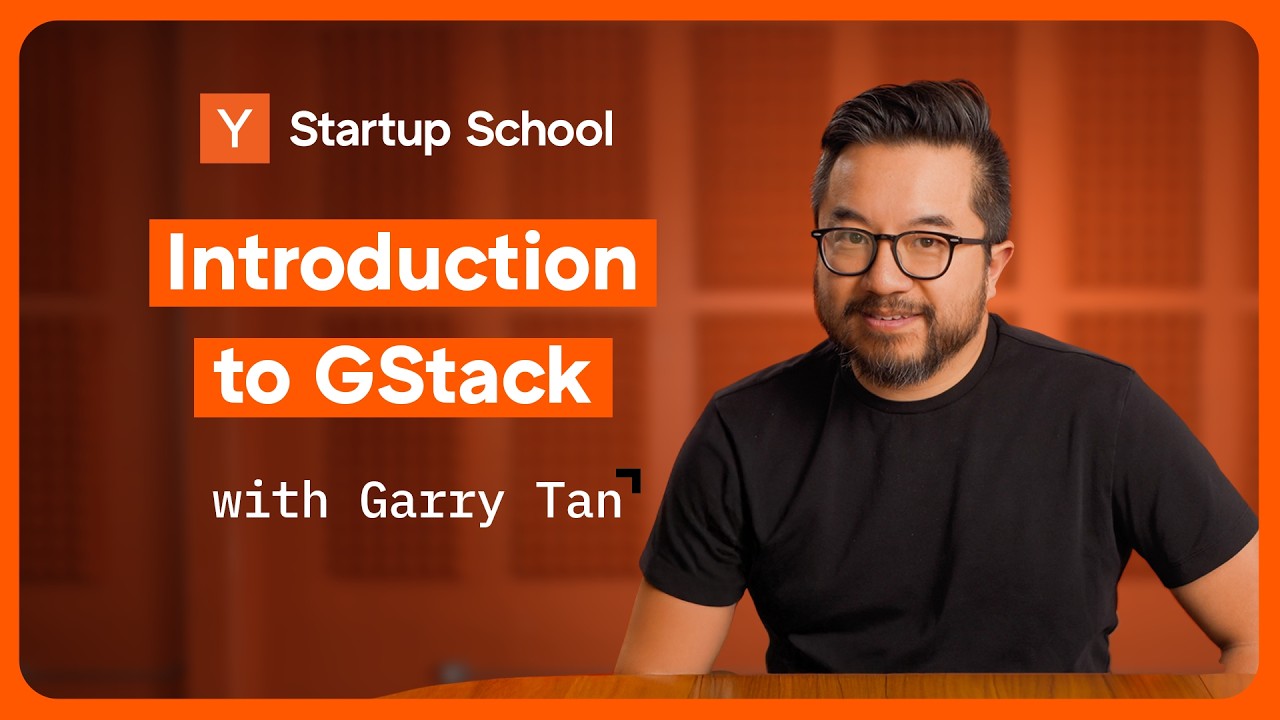
Inside Garry Tan's Claude Code Setup - YC
Inside Garry Tan's Claude Code Setup — from YC

G Stack's 'Office Hours' for Idea Validation

A key component of G stack is the '/office-hours' skill, which Tan described as a simulation of Y Combinator's rigorous founder evaluation process. This skill guides users through a series of forcing questions to help them reframe their product ideas and validate market demand before significant development begins. Tan explained that this process is crucial for ensuring that the time and resources are invested in projects that truly solve a problem.

Browser Automation with AI Agents

Tan demonstrated how AI agents, powered by tools like G stack, can navigate complex web interfaces, such as bank portals, to automate tasks like finding and downloading tax documents. Unlike traditional API integrations, this approach leverages AI's ability to understand visual cues and interact with websites as a human user would, overcoming the need for pre-mapped patterns or extensive API configurations. This browser automation is particularly powerful for tasks that involve unstructured data or sites with limited programmatic access.

The Conductor Pattern for Parallel Development

Tan also shared his personal workflow, which he calls the "Conductor Pattern." This involves running 10-15 parallel Claude code sessions simultaneously, each in its own isolated workspace. This allows him to work on multiple tasks, ideas, or features concurrently, dramatically increasing productivity and efficiency. Tan noted that this approach helps manage the complexity of AI development by keeping different workflows separate and manageable.

The Importance of Review and Iteration

Throughout the session, Tan stressed the importance of review and iteration in the AI-assisted development process. He highlighted how tools like G stack can integrate with human oversight to catch bugs, refine designs, and ensure that the AI's output aligns with the intended product goals. The ability to get multiple design variants and iterate based on feedback is a critical advantage of using AI agents in development.

The Future of AI in Software Engineering

Tan's demonstration provided a glimpse into a future where AI agents can act as a significant extension of engineering teams, handling repetitive and complex tasks, thereby freeing up human developers to focus on higher-level strategic thinking and problem-solving. He concluded by encouraging viewers to try G stack and explore the possibilities of building with AI agents.

© 2026 StartupHub.ai. All rights reserved. Do not enter, scrape, copy, reproduce, or republish this article in whole or in part. Use as input to AI training, fine-tuning, retrieval-augmented generation, or any machine-learning system is prohibited without written license. Substantially-similar derivative works will be pursued to the fullest extent of applicable copyright, database, and computer-misuse laws. See our terms.