

Flow Engineering has raised $23 million in Series A funding to transform the way modern hardware products are designed and developed. The round was led by Sequoia Capital, with participation from Odyssey Ventures, Unity founder David Helgason, and Stripe co-founders Patrick and John Collison.
Founded in 2023 by Pari Singh, Flow Engineering is building a collaborative hardware design platform aimed at speeding up development for complex, software-driven physical products. Singh, a former product leader in systems engineering, launched the company after recognizing that traditional hardware design tools had not kept pace with the increasing complexity of products, a challenge impacting builders in industries from electric vehicles to advanced satellite communications, such as next-generation tiny tactical SATCOM.
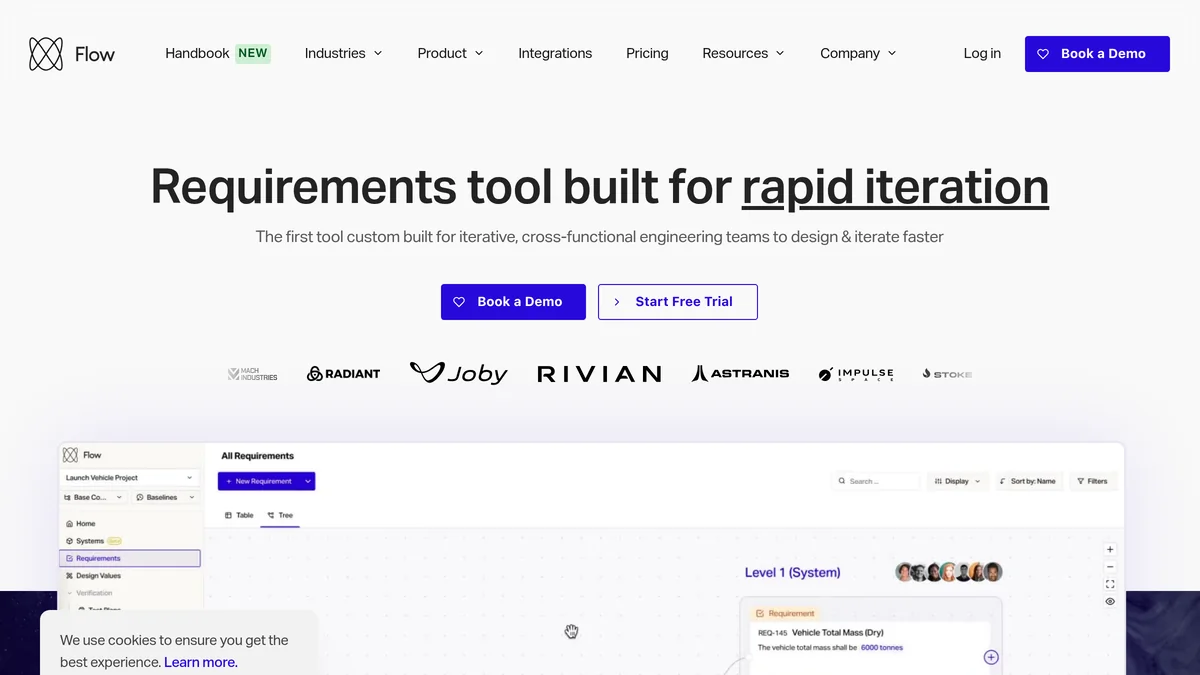
Flow’s cloud-based platform is already used by companies including Rivian, Joby Aviation, and Astranis to manage the full lifecycle of hardware projects. Unlike static specification tools, Flow treats product requirements as dynamic, evolving systems, enabling engineering teams to rapidly adapt to changes while maintaining traceability across mechanical, electrical, and software components.
Roelof Botha, managing partner at Sequoia, will join Flow’s board of directors. Botha draws parallels to how software teams built dedicated tools like GitHub to improve collaboration and velocity, and sees Flow creating the same transformation for hardware engineering workflows.
The funding comes amid a broader industry trend: the convergence of hardware and software development. As physical products increasingly rely on embedded software and integrated electronics, traditional siloed design processes have given way to cross-disciplinary collaboration. This shift has created a new market opportunity for unified platforms that merge product requirement management, version control, and change tracking into a single workflow.