

Demis Hassabis on AI's Future: Beyond Current Models

Demis Hassabis, CEO of Google DeepMind, discusses the current limitations of AI, the path to AGI, and the future of AI in scientific discovery.

4 min read
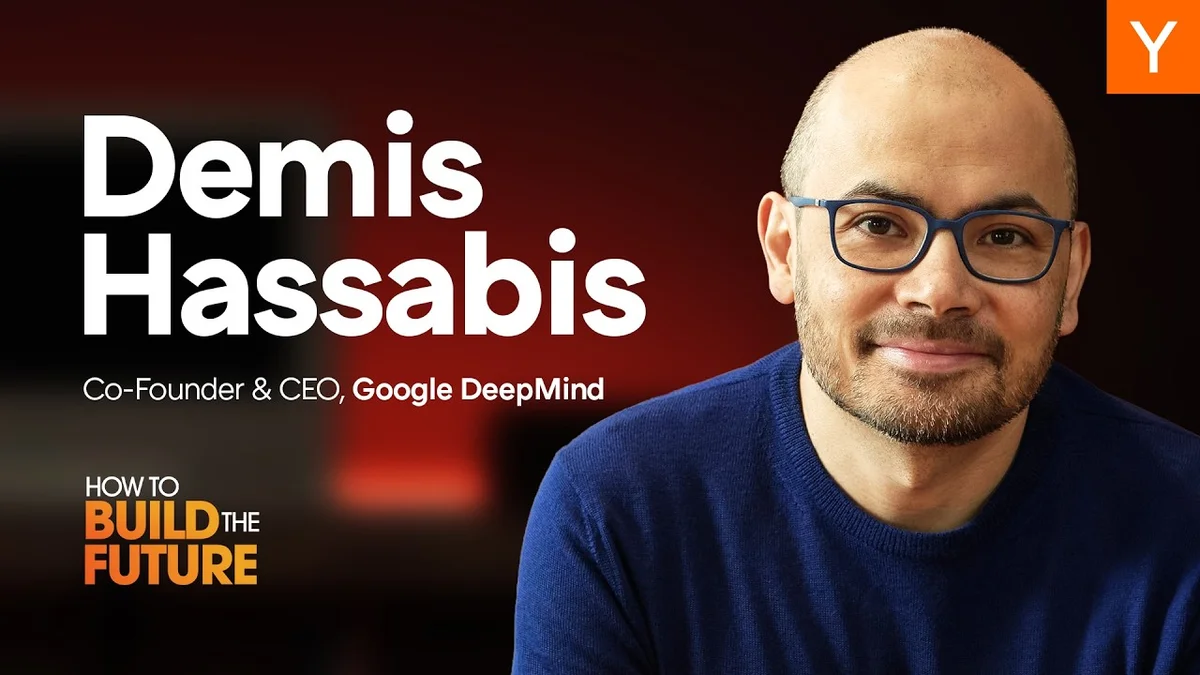
Demis Hassabis speaking on stage at YC x Google DeepMind Startups Day
Image credit: StartupHub.ai· YC

In a candid discussion at the YC x Google DeepMind Startups Day, Demis Hassabis, co-founder and CEO of Google DeepMind, shared his insights into the future of artificial intelligence, emphasizing the areas where current models still fall short of achieving true general intelligence (AGI).

Hassabis, a renowned neuroscientist and AI researcher, has been at the forefront of AI development for over a decade. His journey into the field is as unique as his achievements, starting from a prodigious chess talent as a child to designing hit video games like Theme Park, before pivoting to a PhD in cognitive neuroscience. His work in understanding memory and imagination has directly informed the development of DeepMind's advanced AI systems, aiming to solve fundamental scientific challenges.

The full discussion can be found on YC's YouTube channel.
Related startups

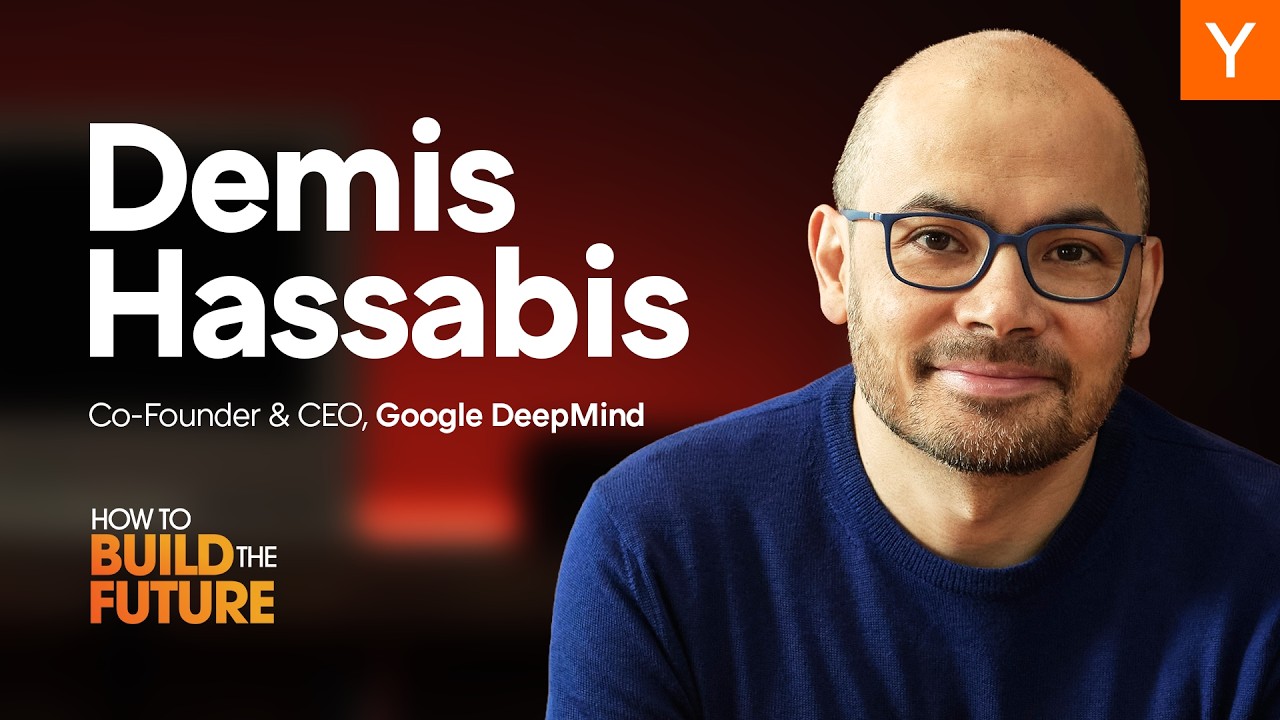
How to Build the Future: Demis Hassabis - YC
How to Build the Future: Demis Hassabis — from YC

The Path to AGI: Unsolved Challenges

Hassabis outlined several critical components that are essential for achieving AGI, which he believes are still not fully realized in today's AI systems. He pointed to the need for continuous learning, where AI can adapt and improve over time without catastrophic forgetting. Long-term reasoning and the ability to plan sequences of actions are also crucial, as is a more sophisticated understanding of memory and imagination.

He noted, "I think all of these are still unsolved. It's not bad, necessarily, but you have to take that into account. You have to have an active system that can actively solve problems for you to get to AGI." Hassabis emphasized that while current models are impressive, they are akin to "brute force" approaches, often requiring massive datasets and computational power without necessarily embodying true understanding or adaptability.

DeepMind's Scientific Ambitions

Hassabis highlighted how DeepMind's work is not just about creating intelligent machines, but also about using AI as a tool to accelerate scientific discovery. He referenced AlphaFold's groundbreaking success in predicting protein structures, a problem that had puzzled scientists for decades. He also mentioned AlphaGo's ability to master complex games like Go, which provided insights into strategy and planning.

"We've been able to do things that most people thought were decades away," Hassabis stated, referring to DeepMind's achievements. He believes that AI can be a powerful partner in scientific research, helping to uncover new knowledge and solve complex problems across various fields, from biology to climate science.

The Importance of Learning and Reasoning

Hassabis stressed that the current AI paradigm, largely based on large-scale pre-training and reinforcement learning, has been effective but still has limitations. He elaborated on the need for systems that can generalize better and learn more efficiently, drawing inspiration from the human brain.

"We're still very much in the phase of learning and scaling," Hassabis explained. "We have to learn how to make systems more efficient, more generalizable, and how to imbue them with better reasoning capabilities." He suggested that the future of AI will involve hybrid approaches, combining the strengths of deep learning with symbolic reasoning and other cognitive architectures.

The Future of AI Startups

For startups looking to build in the AI space, Hassabis offered advice rooted in his own experience. He emphasized the importance of focusing on fundamental scientific problems and developing models that are not only performant but also robust and reliable.

"I think if you start off thinking about AI appearing in the middle of that journey, you have to consider what your AI does," Hassabis advised. "You have to have an active system that can actively solve problems for you." He also pointed out that while large models are powerful, there's a growing need for smaller, more efficient models that can be deployed on edge devices and operate with less computational overhead.

Hassabis concluded by expressing his optimism about the future of AI and its potential to transform society. He believes that by focusing on fundamental research and fostering collaboration, the AI community can unlock new frontiers and create technologies that will benefit humanity.

© 2026 StartupHub.ai. All rights reserved. Do not enter, scrape, copy, reproduce, or republish this article in whole or in part. Use as input to AI training, fine-tuning, retrieval-augmented generation, or any machine-learning system is prohibited without written license. Substantially-similar derivative works will be pursued to the fullest extent of applicable copyright, database, and computer-misuse laws. See our terms.