


Defense AI absorbed $6.2 billion this week. Strip it, and the rest of the market shrank by half.

Defense AI absorbed 44% of venture capital in the week of May 11-17, 2026. Strip Anduril and Helsing, and non-defense funding shrank 53%. Five signals from a split market week.

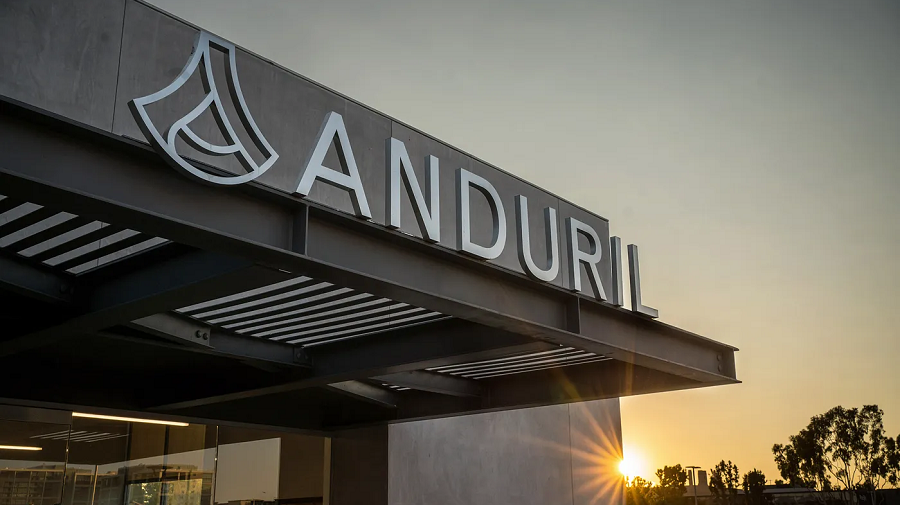
Anduril Industries defense AI headquarters and hardware
Anduril Industries raised $5 billion at a $61 billion valuation on May 13, 2026, in one of the largest venture rounds in defense technology history. Source: SiliconAngle.

The week of May 11 produced a $14.2 billion headline. That number conceals a split market. Two defense-technology companies, Anduril favicon Anduril Industries ($5 billion, Series H) and Helsing favicon Helsing ($1.2 billion, Series D), account for 44% of all disclosed capital deployed across 74 rounds. Strip those two from the total and the remaining 72 funding events represent roughly $8 billion, against last week's $17 billion. The broader market, measured by everything except defense AI, shrank by more than half in a single week.

That contraction shows up clearly in the stage breakdown. Series A rounds fell 38% week-over-week, from 13 to 8. Growth-stage and late-stage rounds dropped 31%, from 13 to 9. Median check size fell 40%, from $24.9 million to $15 million. The capital that does exist is concentrating at the very top: a handful of conviction bets at the billion-dollar level, surrounded by a large number of small seed rounds in the $1 million to $10 million range. The middle of the market, the $20 million to $100 million Series A and B range where most companies actually live, is the quietest it has been in recent weeks.

Three other stories ran parallel to the defense surge and deserve separate treatment. Cerebras favicon Cerebras Systems went public this week at a $56.4 billion fully diluted valuation, completing the largest US tech IPO since 2020. A company called Recursive Superintelligence emerged from stealth with $650 million, backed by NVIDIA and GV, and became the first funding story in years where the word "superintelligence" appeared not as vision-document rhetoric but as the actual company name. And a micro-cluster of infrastructure companies quietly named the problem that nobody has formally named yet: they call it "Power Acceleration for AI," and at least three separate startups received funding this week to solve some version of it.

The numbers

MetricMay 11-17May 4-10Change
Total rounds7490-18%
Total capital (disclosed)$14.2B*$17.0B-16%
Median check size$15M$24.9M-40%
Defense AI share44%<1%n/a
Non-defense total$8.0B~$17.0B-53%
Seed/pre-seed rounds2124-13%
Series A rounds813-38%
Series B rounds68-25%
Growth/late rounds913-31%

*Adjusted for a duplicate Anduril entry in the database. The raw sum from our investment_rounds table for this week was $19.2B.

Anduril and Helsing both raised in the same week, and this has not happened before

The United States and Europe's two largest privately held defense-AI companies announced funding within two days of each other. Anduril favicon Anduril Industries disclosed a $5 billion Series H on May 13, led by Thrive Capital and Andreessen Horowitz, which doubled the company's valuation from $30.5 billion to $61 billion in eleven months. Revenue reportedly more than doubled to $2.2 billion in 2025. The company simultaneously announced a potential $20 billion, ten-year government contract vehicle. Helsing favicon Helsing, the Munich-based defense AI startup backed by Spotify founder Daniel Ek, is closing a $1.2 billion Series D led by Dragoneer and Lightspeed at an $18 billion valuation, a round that would make it Germany's most valuable startup. The company's valuation has grown from roughly $5 billion in 2024 to $18 billion today.

Both companies describe their core thesis in nearly identical language: the convergence of artificial intelligence, autonomy, and advanced sensing is reshaping warfare, and software-defined systems built on commercial AI development cycles can outpace traditional defense procurement. Anduril's press release used those exact words. Helsing's positioning is the European expression of the same thesis. The fact that Lightspeed, a firm with deep roots in consumer and enterprise software, co-leads a $1.2 billion defense round says something about how the category has moved from specialized to general tech-investor territory.

Twin Prime favicon Twin Prime, a UK-based pre-seed company, raised $10 million this week to build frontier AI models for defence and security, according to Tech.eu. This is the stage-zero end of the same funding stack. The week produced defense-AI bets at $5 billion, $1.2 billion, and $10 million simultaneously. That distribution, spanning six orders of magnitude across pre-seed through Series H in a single week, suggests the category has stopped being a niche and started functioning like a mainstream technology sector with a full capital stack.

Related startups

Cerebras went public at $56 billion. AI chips finally have a public comparable.

Cerebras Systems priced its IPO above the expected range on May 13, raising $5.55 billion and opening with a $56.4 billion fully diluted valuation. By close of trading on its first Nasdaq session, the market cap had extended to approximately $95 billion, according to CNBC. That makes the Cerebras IPO the largest US technology initial public offering since 2020 by proceeds raised.

The company's Wafer Scale Engine 3 architecture processes AI inference workloads using a chip the size of an entire silicon wafer rather than individual GPU dies. Cerebras entered 2026 with a reported $510 million in revenue and a $20 billion supply agreement with OpenAI for 750 megawatts of computing capacity. Our database records Cerebras as an exit event at the $56.4 billion valuation, confirmed against multiple sources. The IPO matters for the startup ecosystem beyond its own story: prior to Cerebras going public, there was no listed AI chip company at scale competing with NVIDIA. The public market is now pricing what differentiated AI inference silicon is worth. That number, $56 to 95 billion depending on which session you measure, sets a floor and a ceiling for every private AI chip company currently raising, including Fractile favicon Fractile, the UK startup that raised $220 million Series B this same week to tackle what it calls the inference bottleneck.

The Clarifai acqui-hire by Nebius Group this same week, with no disclosed consideration, is the opposite bookend: a computer vision AI pioneer from 2013 that built its technology before foundation models arrived, absorbed by an AI cloud company at a fraction of its peak valuation. One AI chip company goes public at $56 billion. One early AI application company gets absorbed quietly. This is the infrastructure layer winning and the application-without-moat layer losing, visible in the same week.

"Superintelligence" is now on term sheets, not just blog posts

The terminology that the AI research community has used carefully for years is now appearing in company names and fundraising announcements as a direct signal to investors. Recursive Superintelligence favicon Recursive Superintelligence emerged from stealth on May 13 having raised $650 million at a $4.65 billion valuation, backed by NVIDIA, GV, and Greycroft, in a round described as heavily oversubscribed. The company was founded by Richard Socher (former chief scientist at Salesforce, formerly of DeepMind) and Tim Rocktaschel (UCL AI professor, former DeepMind scientist), along with colleagues from Meta AI, Google DeepMind, and OpenAI. The stated mission is building AI systems that autonomously discover knowledge, continuously optimize themselves, and evolve in an open-ended loop. The company plans to launch what it calls a Level 1 autonomous training system in mid-2026.

On the same day, Ndea favicon Ndea, a startup that our database classifies as a Frontier AI Lab with the ai_type field set to AGI Research, raised a $43 million seed round. Seed rounds for AGI Research companies did not exist as a category label three years ago. This week one appeared at $43 million, which is among the largest seed rounds in any sector in any week in our database. Recursive Superintelligence also received a separate $15 million investment from SUI Group the same week, bringing its combined disclosed capital to $665 million in three days. The language drift visible here is precise: self-improving AI, autonomous knowledge discovery, and AGI Research are no longer confined to academic papers. They are now in the metadata fields of funding announcements and, in one case, in the company name itself.

Whether these companies achieve what their names imply is a separate question. The observation here is narrower: the market has decided to fund these claims at $43 million seed and $650 million growth simultaneously, which means the term superintelligence has passed some threshold of investor credibility. The previous time a cluster of companies moved terminology from research-paper vocabulary to fundraising vocabulary at scale was around 2021 with web3 and decentralized. That comparison is not a prediction; it is a caution about what happens when a term becomes a category before it becomes a technology.

AI power infrastructure is forming as a named sector

GridCARE favicon GridCARE raised $64 million in a Series A this week from a group that included leading AI and energy investors. The company's press release introduced the category name Power Acceleration for AI. This is not in any taxonomy we track yet. The pitch is that the power procurement problem for AI data centers is now so severe that it requires dedicated infrastructure companies, not just energy utilities, to solve it. GridCARE focuses on accelerating the power interconnection process, which currently takes five to seven years for new large data centers in most US markets. On the same week, Iceotope favicon Iceotope Group raised $26 million Series B specifically to solve the thermal bottleneck at the heart of next-generation AI infrastructure, per its press release. The problem it targets: liquid immersion cooling for high-density GPU racks that air cooling can no longer handle. Zerops favicon Zerops raised $2 million seed this week to rebuild cloud infrastructure for the AI development era.

The $2 billion Solaris Energy Infrastructure financing that also closed this week (a power contract expansion and infrastructure build-out) is the upstream version of the same problem. The companies funded this week range from $2 million to $2 billion and are all solving different layers of the same constraint: AI training and inference requires more power, more cooling, and faster deployment of both than current infrastructure was built to provide. What is notable is not that infrastructure companies are being funded, which happens constantly, but that they are now explicitly framing their market definition around AI demand rather than around general data center or energy markets. Power Acceleration for AI as a category name implies a dedicated sector, not a slice of the existing data center infrastructure market.

If GridCARE's category label gets adopted by other companies and investors, this week will have been the week a sector was named. Three companies using similar language, across three different layers of the same bottleneck, in the same seven-day window, is how that process tends to begin.

A Robinhood co-founder is building data centers in orbit, and the pitch is not the physics

Cowboy Space favicon Cowboy Space closed a $275 million Series B this week, led by Index Ventures, with Breakthrough Energy Ventures, IVP, and defense contractor SAIC also participating. The company was founded by Baiju Bhatt, who co-founded Robinhood. The plan is to build AI data centers into the second stage of a proprietary rocket, generating 1 megawatt of power per satellite from solar panels in orbit to run roughly 800 onboard GPUs per node.

The technical claims are real but ambitious. First launch carrying a one-megawatt data center is targeted for 2028. What makes this a venture story rather than a science project is the framing in TechCrunch coverage: the real pitch is not the orbital physics. It is a seven-year waitlist for ground-based data center capacity that no amount of permitting reform or energy spending can fix in less than a decade. If you accept that the ground-based data center supply constraint is structural, then orbital compute begins to look less like a novelty and more like a bypass. Index Ventures, which has built substantial positions in Figma, Robinhood, and Revolut, is not known for science project bets. The $275 million at a $2 billion post-money valuation is a bet on the constraint, not on the orbit.

Also present this week in the voice AI layer: Vapi favicon Vapi raised $50 million to build human-quality voice AI infrastructure for B2B platforms. This follows ElevenLabs' $550 million Series D last week, which included BlackRock and NVIDIA. Voice AI infrastructure is being funded at the platform layer (Vapi) and the model layer (ElevenLabs) in consecutive weeks, which typically precedes a wave of application-layer rounds not yet visible in the data.

Microtrends worth watching

  • "Agentic OS" as a product category: Three companies this week used variations of operating system for X as their positioning. Nectar Social favicon Nectar Social raised $30 million Series A as the agentic operating system for modern marketing. Govineer Solutions favicon Govineer Solutions took a growth investment as an AI-powered operating system for local governments. n8n favicon n8n's valuation doubled to $5.2 billion following a strategic investment from SAP. Agentic OS is becoming a default positioning move in the same way that AI-powered became generic between 2022 and 2024.
  • World model data supply chain: Origin Lab favicon Origin Lab raised $8 million seed specifically to sell video game company data to world model builders. This is a niche market that did not exist as a phrase twelve months ago. Wirestock favicon Wirestock raised $23 million Series A to supply multi-modal data to AI labs more broadly. The upstream data supply chain for the next generation of foundation models is getting funded.
  • Judgment and evaluation infrastructure for AI agents: Judgment Labs favicon Judgment Labs raised $32 million in combined seed and Series A to build the continuous improvement layer for AI agents. The pitch is that agents deployed in production need ongoing evaluation and correction loops, which is a different product category from the initial agent-building platforms. As the agent application market matures, the quality measurement layer tends to become infrastructure.
  • Acqui-hires signal the casualty list from the foundation model wave: Clarifai, a computer vision AI company founded in 2013 that raised over $100 million and was valued at roughly $1 billion at its peak, was acqui-hired this week by Nebius Group, the AI cloud company spun out of Yandex. No consideration was disclosed. The exit came in the same week that Cerebras went public at $56 billion. The gap between those two outcomes illustrates the bifurcation between companies building infrastructure and companies that built applications on top of a previous technology generation.
  • AI in wholesale insurance brokerage: Novella favicon Novella raised $21 million to build Super Producers with AI agents in wholesale insurance brokerage. This is the third insurance-adjacent AI company to raise in three weeks (after Corgi's $160 million Series B the prior week), which suggests the sector has moved from scattered pilots to a funded wave.

What might happen next week

Two specific predictions, both of which could be wrong.

First, the Cerebras IPO will trigger acquisition conversations for private AI chip startups within the next two to three weeks. Cerebras' market cap reached $95 billion on day one. That creates a credible exit scenario for the private AI chip companies that have been uncertain about their path to liquidity. Groq, d-Matrix, and Untether AI are the most commonly cited names in the private chip conversation. At least one of those companies will be reported to be in acquisition discussions with a major cloud provider before the end of May. The cloud providers need leverage against NVIDIA pricing, and the Cerebras IPO just provided the clearest possible signal that the market will pay for that leverage.

Second, the European defense-AI funding wave is not done. Helsing's $1.2 billion round, led by US investors (Dragoneer, Lightspeed) rather than European defense or government funds, signals that US growth equity has identified European defense AI as an underpriced asset relative to the US equivalent. Expect at least one more European defense-AI company (the logical candidates are Saab-adjacent spinouts, Palantir European competitors, or drone autonomy companies from Poland, Estonia, or France) to announce a round above $200 million before June. The geopolitical context in Europe, combined with the Anduril and Helsing price signal from this week, makes the category visible to investors who were not previously tracking it.

© 2026 StartupHub.ai. All rights reserved. Do not enter, scrape, copy, reproduce, or republish this article in whole or in part. Use as input to AI training, fine-tuning, retrieval-augmented generation, or any machine-learning system is prohibited without written license. Substantially-similar derivative works will be pursued to the fullest extent of applicable copyright, database, and computer-misuse laws. See our terms.