

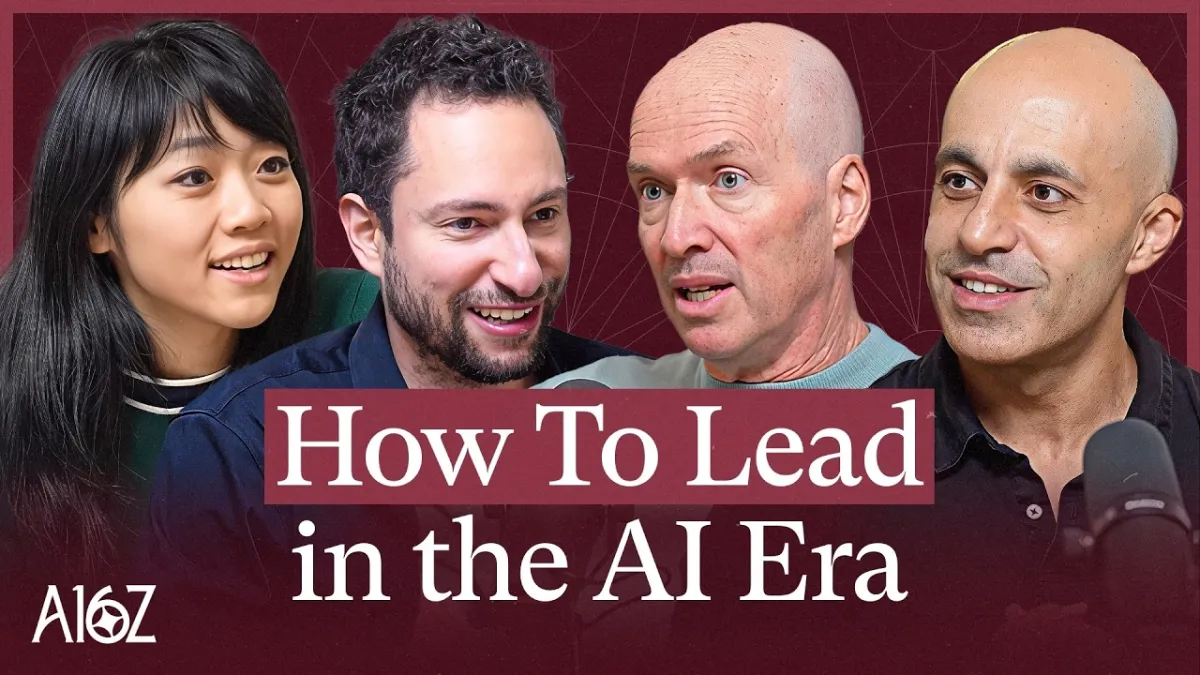
In the fiercely competitive arena of artificial intelligence, where innovation often outpaces monetization, Databricks CEO Ali Ghodsi and a16z co-founder Ben Horowitz offer a masterclass in scaling a vision into a multi-billion-dollar reality. Their recent "Boss Talk" conversation, moderated by a16z General Partners Sarah Wang and Erik Torenberg, peeled back the layers on the grit, strategic pivots, and relentless learning required to navigate the treacherous waters of the startup ecosystem. The discussion, held at a16z, traversed topics from initial product struggles to audacious deal-making and the cultivation of a high-performance culture.
One of Databricks’ foundational challenges, as Ghodsi candidly revealed, stemmed directly from its open-source roots. Apache Spark, the project that birthed Databricks, became a global sensation, accumulating millions of downloads. Yet, this widespread adoption inadvertently created a paradox: "Actually, your biggest enemy is your open-source project." The ease of downloading and deploying the free open-source version meant that converting users to paying customers for Databricks’ commercial offerings was an uphill battle. This necessitated a series of "very serious, aggressive pivots internally," a painful but essential strategic reorientation to differentiate and monetize their innovation.
Ghodsi’s ascent from academic technologist to the helm of a multi-billion-dollar enterprise underscores a core insight: effective leadership, especially in rapidly evolving tech domains like AI, demands perpetual learning and humility. Horowitz, who famously "babysat" Ghodsi through his early CEO years, instilled a critical mindset. Ghodsi recounted Horowitz’s powerful counsel when faced with an acquisition offer: "If you're like me, you're going to look back the rest of your life thinking, I missed that one shot. That was the one thing. I should have taken it all the way and now I'll never know how far I could have taken it." This ethos of striving for the ultimate potential, rather than settling for early success, became a guiding principle. Ghodsi explicitly stated his learning philosophy as a new CEO: "Number one, admit that you don't actually know everything about the job. And then number two, be a student and learn everything you can about it." This involved networking with top engineering and product leaders, devouring industry books and blogs, and extracting every possible lesson from mentors like Horowitz.
Beyond individual learning, the discussion highlighted the importance of a high-intensity, high-performance culture. Ghodsi believes in setting the tone from the top, where leaders are the hardest workers, demonstrating unwavering commitment. This isn't about fostering burnout, but rather about inspiring a collective drive. Horowitz praised Ghodsi’s exceptional leadership, noting a key "superpower": "He doesn't hesitate. He trusts his eye." This decisive nature, combined with a deep technical understanding of the product and market, enabled Databricks to make bold strategic moves, including crucial partnerships.
Related Reading
- AI Progress: Perception vs. Reality
- BlackRock CEO Fink: AI Investment Crucial for US Geopolitical Leadership
- AI Cycle's Long Runway: Why It's Not Your Grandfather's Tech Bubble
The pivotal Microsoft deal in 2017 serves as a testament to strategic timing and perseverance in deal-making. Databricks sought Microsoft for its vast distribution channel, a critical component for scaling. The challenge was aligning two very different entities: a nimble startup and a colossal tech giant. Horowitz shared that such large deals often fail multiple times before succeeding, and this one was no exception. The breakthrough came from a direct, unplanned interaction between Horowitz and Microsoft CEO Satya Nadella, which opened a door that had previously been closed by internal resistance within Microsoft. This initial connection leveraged a "give and get" dynamic: Microsoft needed a strong product to fill a gap in its cloud data offerings, and Databricks needed Microsoft's immense reach.