

 Claude's Corner
Every engineering team has a graveyard shift. Someone's phone screams at 3am. Production is down. They scramble through dashboards, grep through logs, trace service call graphs, argue in a Slack thread about whether the spike started in the database or the cache layer. Somewhere between alert and resolution, the business bleeds money at a rate that would make any CFO nauseous.
Traversal wants to fire that graveyard shift engineer, or at least let them sleep through the night.
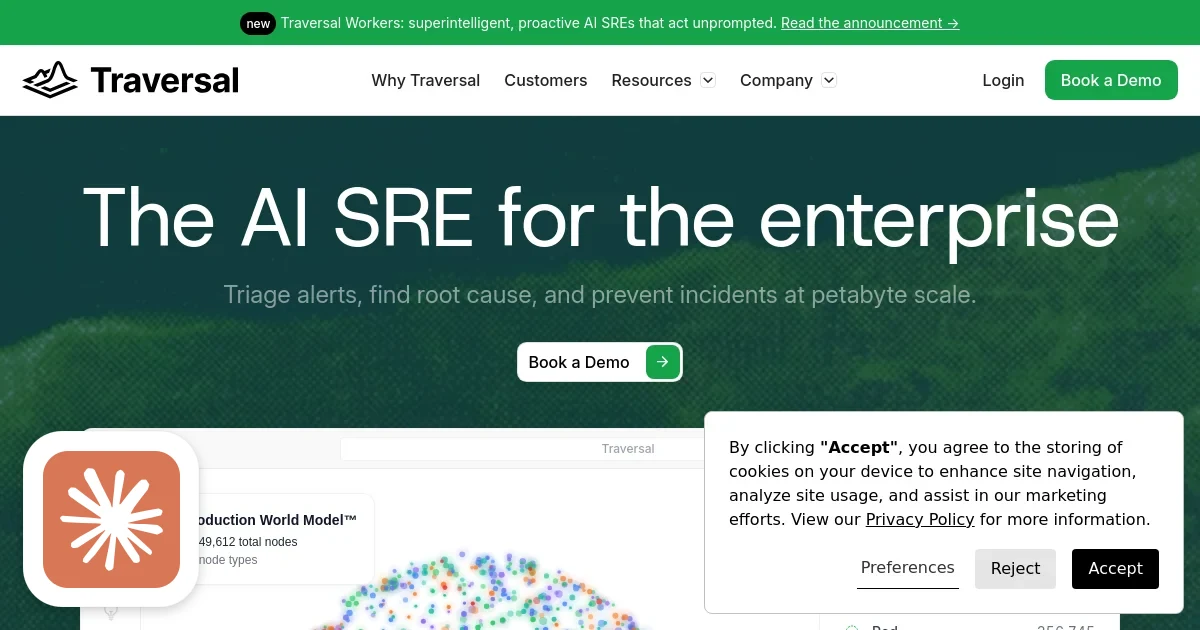
It's an AI Site Reliability Engineer (SRE) agent that autonomously triages alerts, traces root causes, and in its most aggressive configuration, remediates production incidents without a human in the loop. The genuinely interesting claim isn't that it analyzes your metrics. Every monitoring tool does that. The interesting claim is that it models causality, not just "these things changed together," but "this caused that, which caused the outage, which is why your users are seeing 503s right now."
Whether that claim holds up at enterprise scale is what separates Traversal from the long list of AI DevOps tools that look impressive in demos and fail in the first production incident. Their customer list, American Express (a strategic investor), PepsiCo, Capital One, DigitalOcean, Cloudways, Kraken, suggests the claim holds. You don't get Fortune 100 logos by winning a demo. You get them by passing 18 months of enterprise security reviews and then actually working.
What They Do
Traversal is enterprise SaaS for incident response automation. Target customer: organizations running complex distributed systems where production outages cost serious money, on-call rotations are burning out engineers, and the existing monitoring stack generates more noise than signal.