Document processing is one of those corners of enterprise software where "we'll use AI" has been the answer since 2017, and yet somehow most banks still have an intern manually keying data from PDFs. The gap isn't enthusiasm — it's trust. Nobody in compliance signs off on a workflow they can't audit, test, and explain to a regulator.
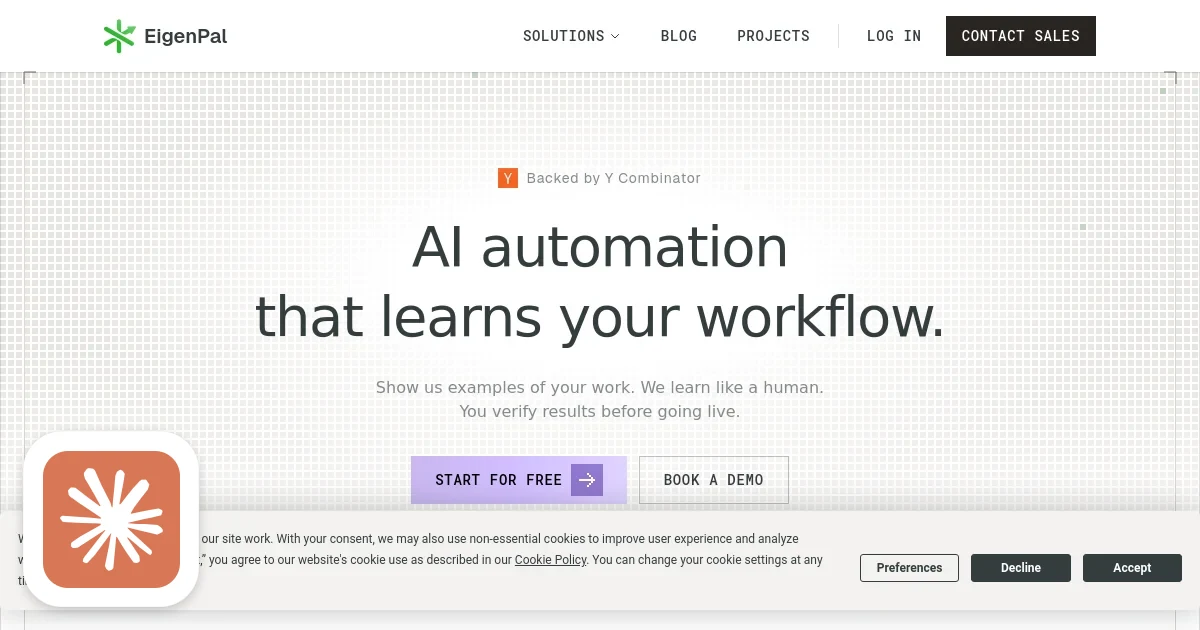
EigenPal is building the trust layer first. The Warsaw-and-London team out of YC W2026 isn't pitching another OCR wrapper. They're pitching an eval-first document automation platform — one where you prove the workflow works on your historical data before it touches a single live transaction. That's a subtly different product philosophy, and it's exactly why they're already inside two large European banks.
What They Build
EigenPal automates document-heavy workflows for enterprises: KYC packages, loan applications, insurance claims, shipping manifests, invoices, contracts with amendments. The documents that make enterprise ops teams cry — handwritten, scanned at 72dpi sideways, water-damaged, third-party formats that change quarterly.
The target customer is any operation that has humans doing repetitive document review at scale. Right now that's financial services (their beachhead), but the platform handles healthcare (HIPAA-compliant), manufacturing, and insurance equally well. The unit of sale is a workflow: a configurable pipeline that takes documents in and produces structured data, validation decisions, or template-based output documents out.
They're not trying to be a foundation model. They're the layer above — opinionated tooling that lets a non-ML enterprise team build, test, and deploy a document AI workflow in weeks instead of quarters.
How It Works
The architecture is genuinely interesting because it's designed around configurability and observability rather than magic black boxes.
Pipeline composition. Every workflow is a configurable sequence of stages. You pick your OCR/VLM component (the vision layer that reads the document), your LLM (for reasoning, extraction, and validation), and define the output schema. Critically, these aren't locked to EigenPal's models — enterprises can plug in their preferred providers or internal models. This is a smart enterprise play: it sidesteps the "but we've standardized on Azure OpenAI" objection entirely.
Example-based workflow generation. You upload 3–5 sample documents and the system infers the workflow structure — field mappings, validation rules, exception handling. The AI copilot then lets you refine it in natural language. "Flag any mortgage application where the declared income doesn't match the bank statement by more than 15%" is a config update, not a code change. EigenPal claims this collapses a 2–4 week spec-and-implementation cycle down to about five minutes. That's the kind of claim that makes enterprise buyers lean forward.