


"AI right now used to be a nice-to-have. It's a utility, it's a must-have." This declarative statement from Celestica President and CEO Rob Mionis on CNBC’s Mad Money with Jim Cramer cuts directly to the core of the current technological zeitgeist. It frames artificial intelligence not as a speculative fad or a nascent technology still finding its footing, but as an indispensable component of modern industry and infrastructure. Mionis’s perspective, delivered during a discussion following Celestica’s strong Q3 earnings report, offers a grounded, operational view from a company deeply embedded in the hardware foundation of the AI revolution.
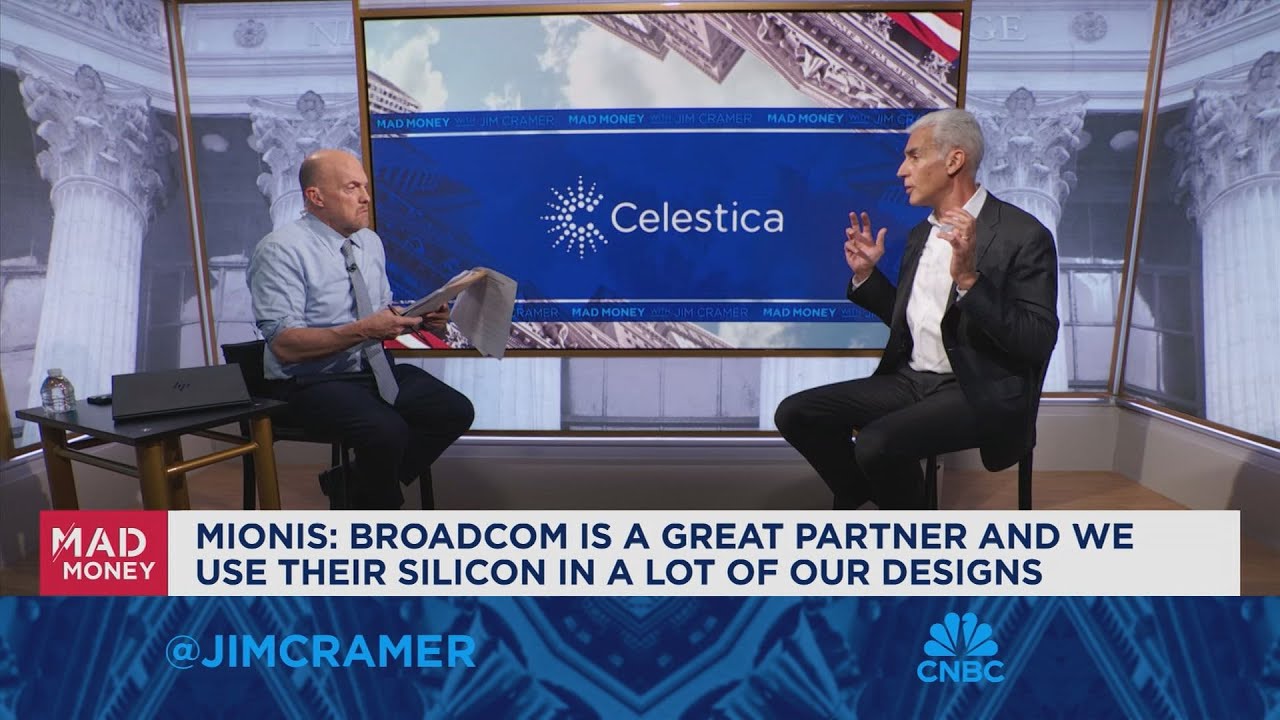
Rob Mionis spoke with Jim Cramer about Celestica’s robust third-quarter performance, the company’s strategic direction, and his definitive stance on the burgeoning artificial intelligence sector, specifically addressing the question of whether the current AI boom is an economic bubble. Celestica, a global leader in design, manufacturing, and supply chain solutions, reported adjusted EPS of $1.58, significantly surpassing the consensus estimate of $1.49, and projected $16 billion in revenue for the next year, exceeding the $14.33 billion consensus. These figures underscore a company not just observing the AI wave, but actively riding it through tangible contributions to its underlying architecture.
Mionis articulated Celestica’s strategic positioning within this transformative period by likening the AI surge to a "speeding freight train." His company, he explained, is not merely a passenger but is actively "laying the tracks ahead of it." This powerful metaphor illustrates Celestica’s role as a critical infrastructure provider, building the complex hardware and advanced manufacturing solutions necessary for AI technologies to function and scale. This includes high-reliability solutions for aerospace and defense, semiconductor capital equipment, health tech, and industrial applications, diverse sectors where the demand for sophisticated, AI-driven computing power is rapidly escalating.
The CEO emphasized that Celestica's focus is on engineering-led engagements, a strategy designed to enhance margins and deepen customer relationships by providing high-value, customized solutions. This approach allows them to capture a greater share of the value chain in complex systems, moving beyond commoditized manufacturing. Their collaboration with partners like Broadcom, whose silicon is integrated into many of Celestica's designs, further highlights their strategic importance in the ecosystem. This isn't about chasing every AI trend; it's about providing the robust, reliable backbone that enables those trends to become reality.
A significant portion of Celestica's revenue, approximately 25%, stems from its Advanced Technology Solutions (ATS) segment, which directly benefits from the increasing complexity and demand in areas critical to AI. Mionis noted that margins within this segment are expected to improve by about 70 basis points year-over-year, indicating not only growth in volume but also an increase in the profitability of these specialized services. This financial performance directly refutes the notion of an AI bubble, as it demonstrates real, profitable demand for the foundational components and services that Celestica provides. The company isn't selling ephemeral promises; it's delivering essential, high-performance hardware.