

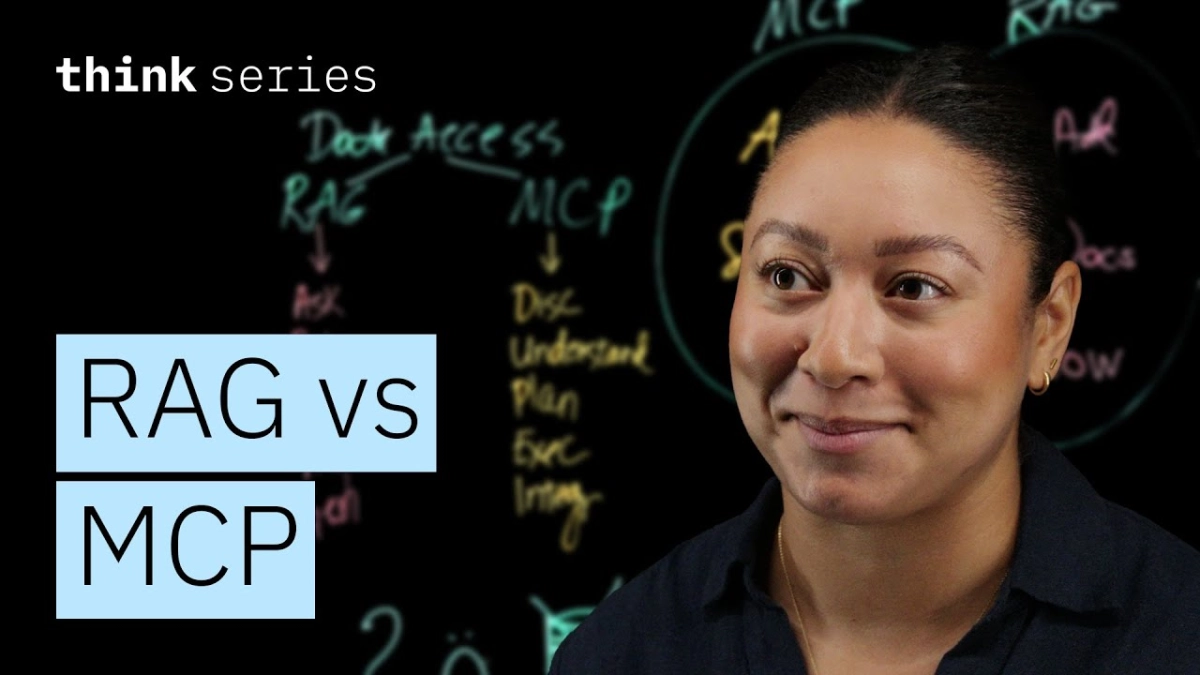
Large language models, while undeniably powerful, often operate like "brilliant interns with literally no memory and no access to your systems," as Melissa Hadley, Sr. AI Productivity Expert at IBM, highlighted during her presentation live from TechXchange in Orlando. Hadley’s insightful discussion centered on two pivotal frameworks, Retrieval Augmented Generation (RAG) and Model Context Protocol (MCP), which collectively address this fundamental limitation, enabling AI agents to interact with proprietary data and execute real-world tasks. The underlying premise is simple yet profound: AI's utility is directly proportional to the quality and accessibility of the data it receives.
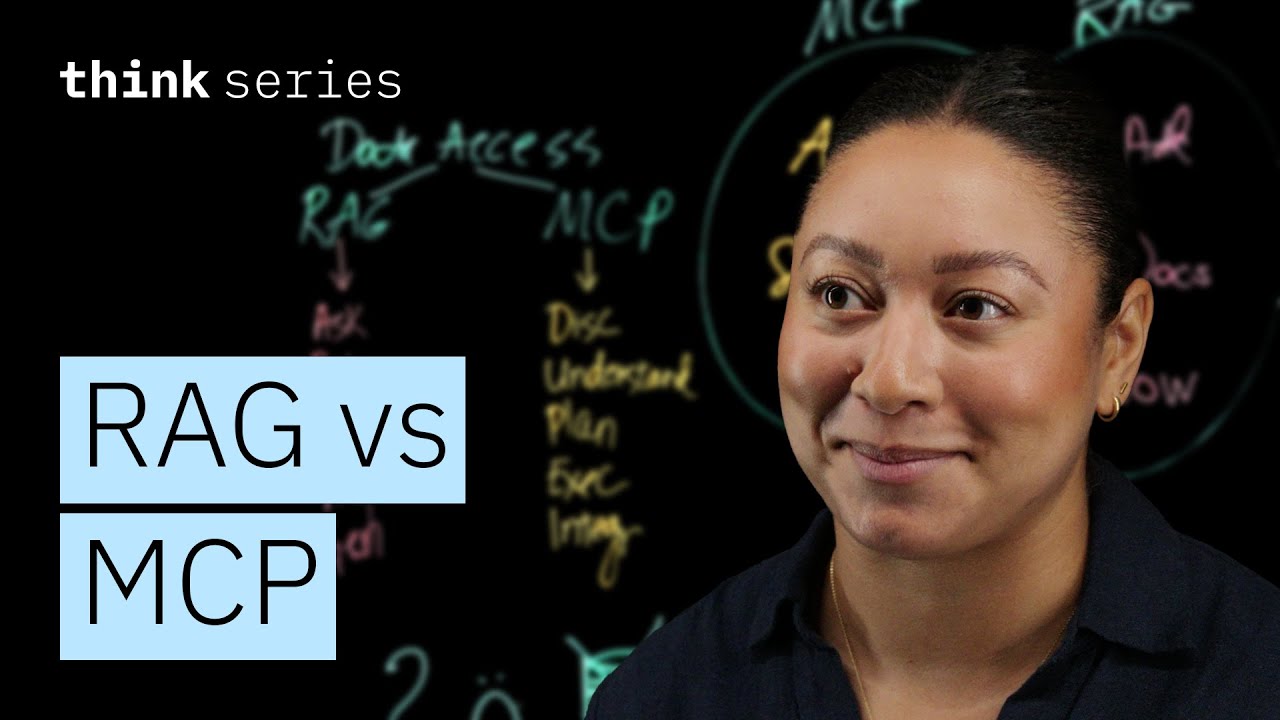
Hadley unpacked how these two methods, RAG and MCP, though distinct in their primary functions, both aim to make AI models more intelligent and practical. Their shared objective is to imbue large language models with external knowledge and capabilities, effectively extending their reach beyond their initial training data. This external grounding is critical for mitigating common AI pitfalls like hallucinations, ensuring responses are not only coherent but also factually accurate and relevant to specific organizational contexts.
Retrieval Augmented Generation, or RAG, focuses on enhancing an AI agent's knowledge. Its core purpose is to "add information" to the model's understanding by drawing from external, authoritative sources. This information can be static, semi-structured, or unstructured, encompassing a vast array of data types such as documents, manuals, PDFs, videos, and even websites. The process involves a five-step sequence: first, a user asks a question; second, the system retrieves relevant data by transforming the prompt into a search query against a knowledge base; third, the relevant passage is returned to an integration layer; fourth, the system augments the original prompt with this retrieved context; and finally, the large language model generates a grounded answer. A key advantage of RAG is its ability to provide the user with the source of the information, fostering transparency and allowing for verification. For instance, if an employee queries a vacation policy, RAG would pull details from the company handbook or payroll documentation, explaining accrual rates and eligibility.
In contrast, the Model Context Protocol, or MCP, is designed for AI agents to "take action." Rather than merely retrieving information, MCP serves as a communication protocol that allows an AI agent to connect directly to external systems and applications. This enables the agent to perform dynamic operations, such as gathering live data, updating systems with new information, or even orchestrating complex workflows. The MCP process also involves five steps, albeit with a different emphasis: first, the large language model discovers available tools and APIs by connecting to an MCP server; second, it understands the schema of these tools, including their inputs and outputs; third, it plans which tools to use and in what sequence to fulfill the user's request; fourth, it executes structured calls through a secure MCP runtime; and finally, it integrates the results, continuing to reason or finalizing an action. This framework is particularly vital for scenarios requiring direct interaction with operational systems, such as checking an employee's vacation days from an HR system or submitting a time-off request to a manager.
Related Reading
- Claude Redefines Private Equity Deal Flow with AI-Powered Speed and Diligence
- Claude Redefines Credit Intelligence with Real-time AI Analysis
- AI Infrastructure Spending: Not Your Dot-Com Bubble Debt
The primary distinction between RAG and MCP lies in their ultimate objective: RAG is about knowing more, while MCP is about doing more. One provides comprehensive, verifiable answers by augmenting information, while the other facilitates direct engagement with systems to execute tasks. Both, however, operate by providing outside knowledge, thereby reducing the likelihood of AI hallucinations and grounding responses in specialized, real-time data rather than solely relying on the model’s pre-trained parameters.