

Here's an article based on the provided video:
**Silicon Valley's Defense Pivot: From Hostility to Homeland Security**
"The capitalist approach is messy, but you have dynamism on your side. The big picture is America as a force for good in the world." This sentiment, articulated by Ben Horowitz, encapsulates a significant shift in Silicon Valley's relationship with the defense sector. Once estranged, a growing number of tech founders and investors are now re-engaging with national security, driven by both geopolitical realities and a re-evaluation of America's manufacturing and innovation capabilities.
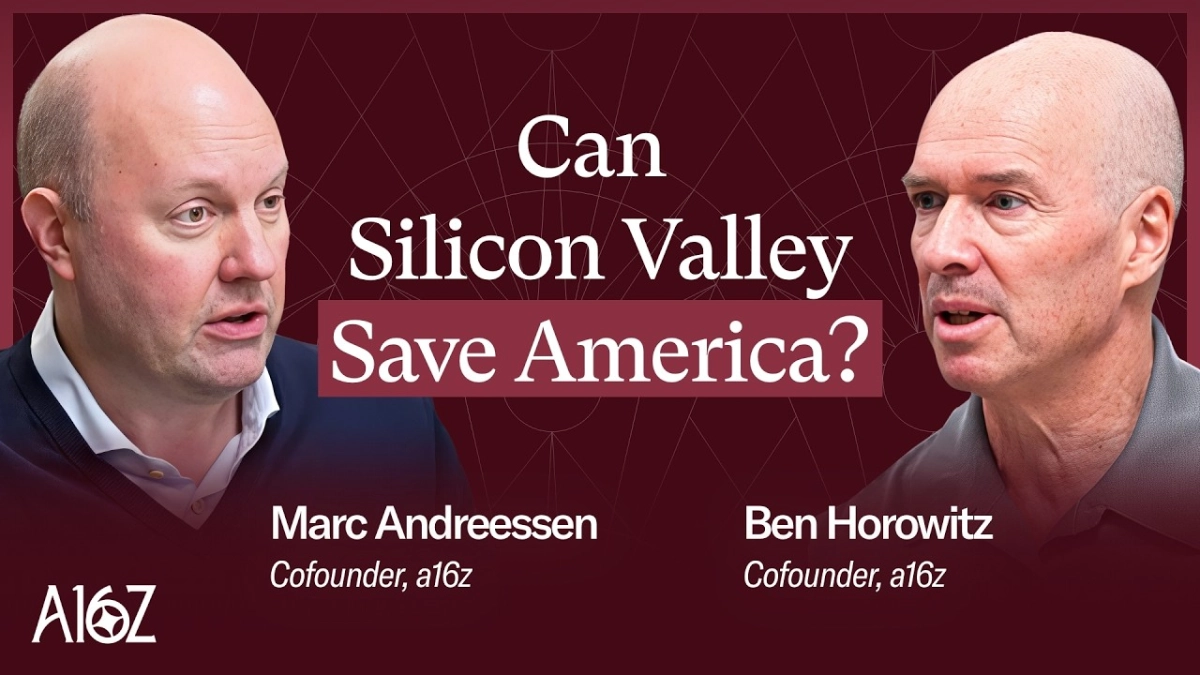
Horowitz spoke with Marc Andreessen at a recent event about this profound transformation, highlighting how a decade and a half of hostility between the tech and defense worlds has begun to thaw. This shift wasn't instantaneous. It was a gradual realization spurred by critical global events. The COVID-19 pandemic exposed a critical vulnerability: America's inability to produce essential goods domestically. Simultaneously, the war in Ukraine revealed how warfare itself now iterates in days, not decades, demanding rapid technological advancement.
This confluence of factors made the "Harvard dorm room generation" realize that the people building satellites and drones weren't just necessary components of national security; they were, in fact, the future. This realization stands in stark contrast to the past, where legacy defense contractors often operated on "Soviet-style five-year plans that guarantee cost overruns and obsolescence," as Horowitz pointed out. The visceral hostility that once defined the relationship, exemplified by Google employees revolting over a Pentagon AI contract, has given way to a more pragmatic, albeit still complex, engagement.

A watershed moment, according to the discussion, was when "three people showed up" to hear about border security, indicating a prior era where "emotional outrage replaced curiosity." This suggests a cultural shift away from a purely ideological stance to one grounded in practical necessity and an understanding of the evolving global landscape. The founders now flooding into sectors like defense, energy, and manufacturing signal a potential "second American century" built not on outsourcing, but on domestic innovation and resilience.
The conversation underscored the stark differences in operational philosophy. While traditional defense procurement often operates on protracted, bureaucratic timelines, the tech industry thrives on rapid iteration and adaptation. This creates a tension, but also an opportunity. As Andreessen noted, the ability to "build things" was a defining characteristic of a past decade, and now that imperative is being redirected towards critical national missions.
Related Reading
- The AI Paradox: Weaponized Intelligence and the Looming Cyber Threat
- AI's Cyber Espionage Leap: The Age of Autonomous Hacking is Here
The core insight here is that the geopolitical and technological landscape has fundamentally shifted. The idea that Silicon Valley could remain insulated from national security concerns is no longer tenable. Events like the war in Ukraine have starkly illustrated the fragility of supply chains and the need for advanced technological solutions to contemporary threats. This has created a fertile ground for innovation in areas previously considered unsexy or even taboo by parts of the tech community.
The shift is not merely about contracts; it’s about a cultural realignment. The previous animosity, fueled by a perception of outdated and inefficient defense systems, is being replaced by a recognition of shared challenges and the potential for technological solutions. As Andreessen suggested, the question is no longer *whether* Silicon Valley returns to its Cold War roots of innovation for national security, but *how* America will leverage its inherent creativity to compete. The founders’ embrace of defense, energy, and manufacturing suggests a renewed commitment to "American dynamism," a testament to the belief that the nation’s future prosperity and security are intrinsically linked to its ability to build and innovate across all critical sectors. This transition marks a pivotal moment, potentially redefining the relationship between technology and national defense for decades to come.

