

ASML Raises 2026 Sales Forecast Amid Strong Demand

Tammy Qiu of Berenberg discusses ASML's raised 2026 sales forecast, driven by AI and memory demand, and the company's capacity to meet global chip manufacturing needs.

4 min read
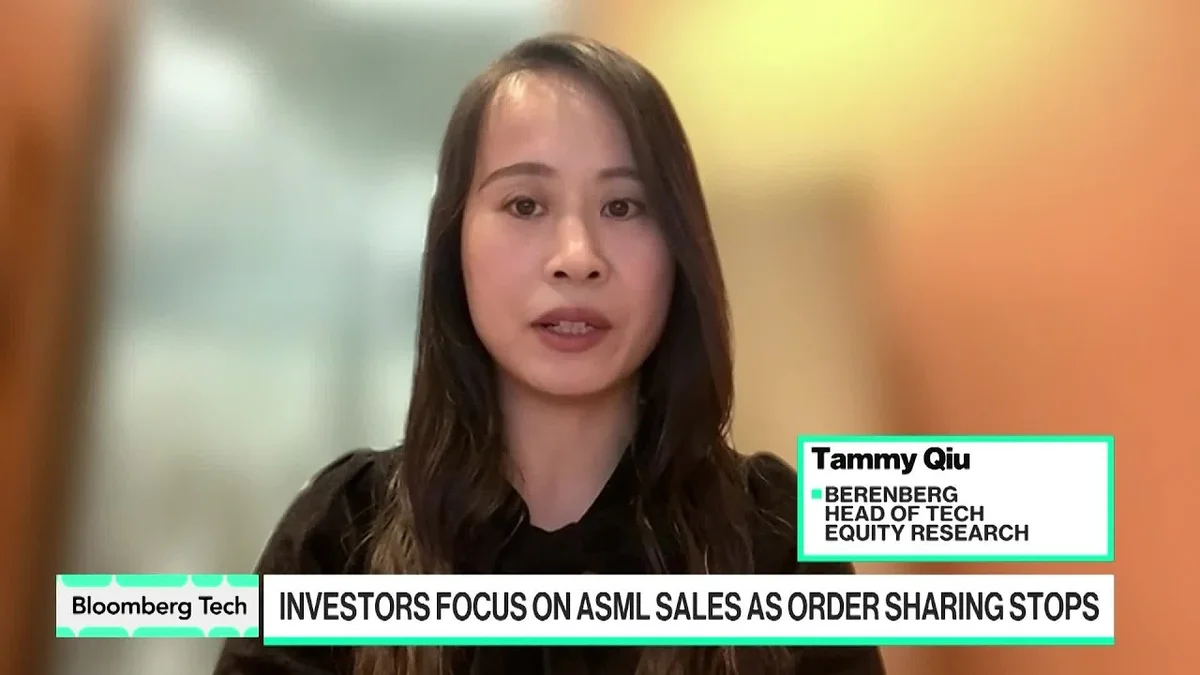
Bloomberg Tech segment featuring Tammy Qiu discussing ASML Holding NV's stock performance and sales forecast.
Image credit: Bloomberg Tech· Bloomberg Technology

In a significant development for the semiconductor industry, ASML Holding NV has announced an upward revision of its 2026 sales forecast. This optimistic outlook comes amidst a surge in demand for advanced chips, particularly those powering artificial intelligence and memory applications. The Dutch company, a critical enabler of the global semiconductor supply chain, is positioned to benefit from this trend, projecting increased capacity to meet market needs.

The full discussion can be found on Bloomberg Technology's YouTube channel.
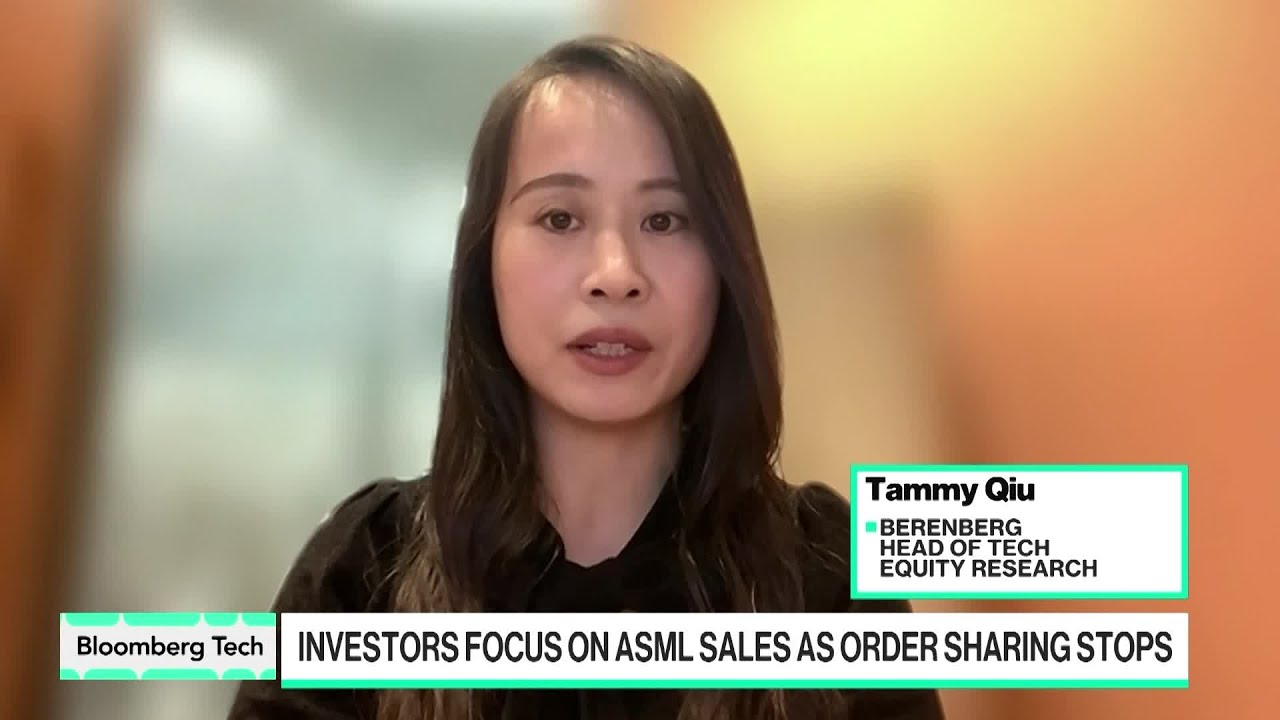
ASML Won’t Be an AI Bottleneck, Says Berenberg's Qiu - Bloomberg Technology
ASML Won’t Be an AI Bottleneck, Says Berenberg's Qiu — from Bloomberg Technology

Tammy Qiu's Analysis of ASML's Outlook

Tammy Qiu, Head of Tech Equity Research at Berenberg, provided key insights into ASML's performance and future prospects. Qiu noted that ASML's stock has seen a substantial year-to-date increase, reflecting strong investor confidence. She highlighted that the company's recent financial results and guidance indicate a positive trajectory, with the sales forecast for 2026 being raised by 4%. This revision is underpinned by the strong performance of ASML's high-end technology segments, particularly its EUV (Extreme Ultraviolet) lithography systems, which are essential for manufacturing the most advanced chips.

Related startups

ASML's Sales Forecast and Growth Drivers

ASML has raised its 2026 sales forecast to between $36 billion and $40 billion, a notable increase from previous estimates. This revised guidance is driven by several factors. Firstly, the demand for AI-driven applications is creating a significant need for more powerful and efficient chips, which in turn requires ASML's cutting-edge lithography equipment. Qiu emphasized that the company is expected to deliver 80 EUV machines, each costing approximately $230 million, to meet this demand. This represents a substantial increase from the 60 machines projected earlier.

Furthermore, the memory market is also showing signs of recovery and growth, contributing to ASML's positive outlook. Qiu pointed out that ASML's machines are crucial for both logic and memory chip manufacturing, making the company a key beneficiary of the broader semiconductor industry's expansion.

The Role of China and Non-China Markets

While ASML's business in China has historically been a significant contributor, the company's future growth is increasingly expected to be driven by non-China markets. Qiu noted that China's contribution to ASML's revenue has been around 40% in recent years, but this is projected to stabilize or even decrease slightly as a percentage of total sales. This shift is partly due to geopolitical considerations and export controls that affect the sale of advanced technology to China. However, Qiu remains optimistic about ASML's ability to navigate these challenges, stating that the demand from other regions remains exceptionally strong.

Qiu elaborated on the performance of ASML's non-China business, stating it has been growing strongly. She anticipates that this segment will continue to be the primary driver of ASML's expansion in the coming years. The company's ability to deliver advanced lithography systems to leading chip manufacturers in North America, Europe, and other parts of Asia is crucial for this growth.

Addressing Supply Chain Concerns

When questioned about potential supply chain constraints, Qiu expressed confidence that ASML will not be a bottleneck for the AI industry. She explained that ASML is actively working to scale up its production capacity to meet the anticipated demand. The company's strategy involves increasing its output of key machines, including both EUV and other lithography systems. Qiu stated, "ASML won't be a bottleneck for AI." She further elaborated that the company has been in discussions with its customers about future capacity needs and is confident in its ability to fulfill orders. While some concerns about the availability of certain components or skilled labor might exist, ASML's proactive approach to capacity expansion suggests they are well-positioned to manage these potential challenges.

The discussion also touched upon the specific needs of customers like TSMC and Intel, who are at the forefront of adopting ASML's most advanced technologies. The commitment to delivering 350-millimeter wafer capacity for these clients highlights ASML's strategic focus on supporting the production of next-generation semiconductors.

© 2026 StartupHub.ai. All rights reserved. Do not enter, scrape, copy, reproduce, or republish this article in whole or in part. Use as input to AI training, fine-tuning, retrieval-augmented generation, or any machine-learning system is prohibited without written license. Substantially-similar derivative works will be pursued to the fullest extent of applicable copyright, database, and computer-misuse laws. See our terms.