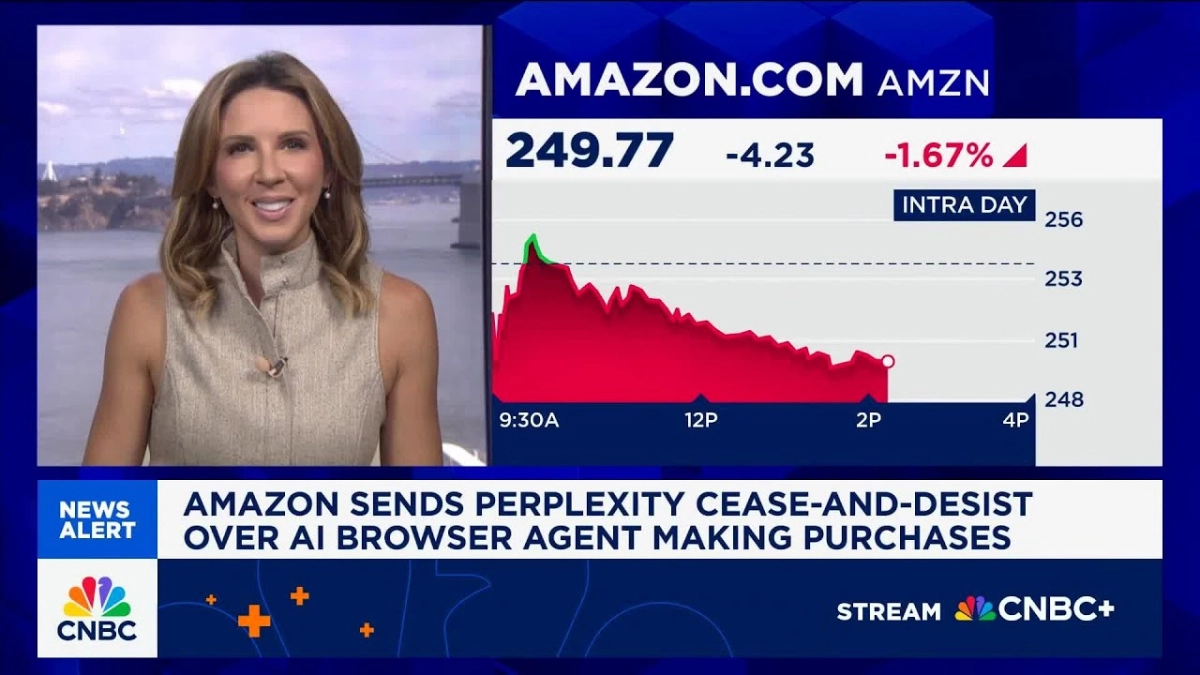
The digital battleground has intensified with Amazon’s recent cease-and-desist letter to Perplexity, the AI-powered web browser startup, over its AI agents facilitating purchases on Amazon’s platform. CNBC’s MacKenzie Sigalos, reporting on this burgeoning dispute, detailed the allegations and counter-arguments, framing it as a pivotal moment for the burgeoning AI agent economy and the established order of e-commerce. The core of the conflict centers on who controls the user experience and the very definition of an AI agent's autonomy.
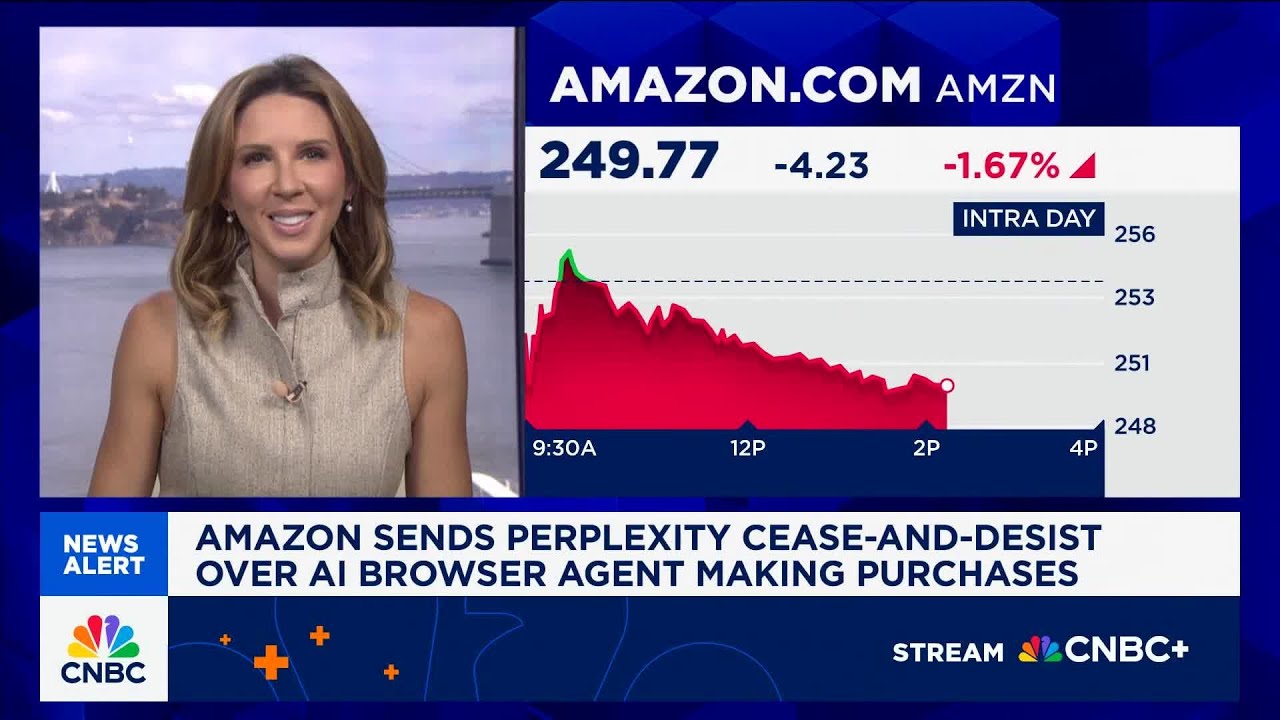
MacKenzie Sigalos, in a CNBC news alert, explained that Amazon is seeking to block Perplexity from allowing users to shop on its platform using AI agents. This move is particularly noteworthy given Perplexity’s existing legal entanglements concerning how it scrapes content online, adding another layer to the complex legal scrutiny facing the Silicon Valley startup. The situation underscores a growing tension between the open, autonomous ethos often associated with AI innovation and the proprietary control asserted by dominant tech platforms.
Perplexity has not shied away from the confrontation, issuing a robust response that directly challenges Amazon's stance. The startup asserts that "Amazon's campaign to prevent users from shopping with their own AI assistants... Amazon is doubling down on old tactics: blocking user choice with litigious bullying." This accusation highlights a central insight into the evolving AI landscape: the struggle for user agency. As AI tools become more sophisticated, enabling users to delegate complex tasks, the question of who truly controls the digital interaction, the user via their AI agent, or the platform, becomes paramount. Perplexity argues that AI user agents are merely "an extension of users. They can only act and behave as their user can, and then can only work on the user's behalf. No more, no less." This framing positions AI agents not as independent entities or bots, but as direct digital proxies for human intent, fundamentally altering the nature of online interaction and commerce.
Amazon's actions, while seemingly defensive, reveal a deeper strategic imperative: the protection of its meticulously built ecosystem and the promotion of its own AI initiatives. It is no coincidence that this cease-and-desist comes as Amazon is actively trying to drive users towards its own AI assistant, Rufus, a product heavily promoted during recent earnings calls. This dynamic illustrates a critical insight for founders and VCs: AI is not just a feature, but a new competitive moat. Incumbent giants like Amazon are not only building their own AI capabilities but are also actively seeking to control how external AI interacts with their platforms, thereby safeguarding their market position and data flows. The fear, from Amazon’s perspective, is likely multi-faceted: potential disruption to their carefully curated customer journey, risks to data integrity, and the erosion of control over their marketplace's monetization and advertising models.
The implications extend beyond just Amazon and Perplexity. Google, too, has recently unveiled its own AI agents integrated into the Chrome browser, tools that, as Sigalos noted, "could theoretically shop Amazon too." This broader industry trend suggests that AI agents are not a fringe concept but a foundational shift in how users will navigate and interact with the internet. The legal and ethical frameworks for these interactions are still very much in flux, creating a volatile environment for startups. The traditional boundaries of web scraping, user terms of service, and even intellectual property are being tested by the capabilities of generative AI and autonomous agents.