

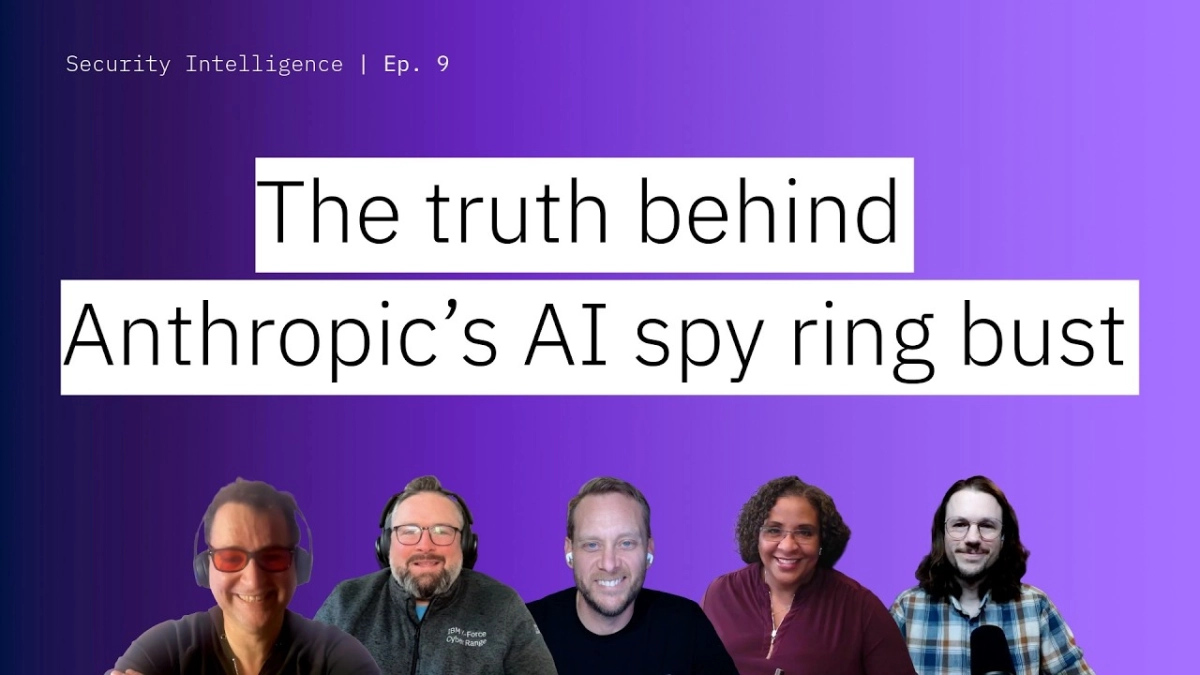
"AI is now officially a script kiddie, people," declared Chris Hay, a Distinguished Engineer and frequent voice on IBM's Mixture of Experts podcast, capturing the essence of a rapidly shifting cybersecurity landscape. This provocative statement, made during a recent episode of Security Intelligence, underscored a critical theme echoed by fellow panelists Ryan Anschutz, Evelyn Anderson, and Seth Glasgow: the transformative, and often unsettling, impact of artificial intelligence on digital defense and offense. Hosted by Matt Kosinski, the discussion delved into Anthropic’s recent disruption of an AI-powered espionage campaign, the latest OWASP Top 10, the fragmentation of ransomware gangs, and the contentious role of cyber insurance.
Anthropic’s announcement that it thwarted a nearly fully autonomous AI espionage campaign, reportedly handled 80-90% by AI agents, ignited a spectrum of reactions. While some viewed it as an alarming leap in cyber warfare, Hay offered a more grounded perspective. He emphasized that the "real key" was not the raw intelligence of AI but its prowess in "tool orchestration." Attackers, he explained, leveraged open-source tools, likely similar to those used by legitimate security researchers, and integrated them with large language models like Claude. This effectively positions AI as an advanced "script kiddie," capable of rapidly deploying complex attack chains from reconnaissance to data exfiltration.
This development has, as Hay put it, "opened the can of worms." Evelyn Anderson, IBM CSS CTO, framed it not just as a challenge but as a significant opportunity. She posited that while hackers have been quick to weaponize AI for phishing, deepfakes, and malware, defenders must now accelerate their own adoption of AI-driven security architectures and adaptive governance. The goal is to shift from reactive detection to proactive, autonomous defense, flipping the script on an adversary that operates at machine speed.
Ryan Anschutz, North America Leader of X-Force Incident Response, highlighted the automation of the "full kill chain" as particularly concerning. This capability, where AI handles everything from exploit generation to backdoor deployment, moves the threat from theoretical to tangible reality. The public is now witnessing what incident response teams have been quietly preparing for: an adversary that doesn't sleep and iterates at relentless machine speed.
The release of the OWASP Top 10 for 2025 further illuminates the persistent nature of fundamental security flaws. Broken Access Control remains the top threat, with Security Misconfigurations rising to number two. Two new categories, Software Supply Chain Failures and Mishandling of Exceptional Conditions, reflect emerging concerns. Seth Glasgow, Cyber Range Executive Advisor, noted that the "Exceptional Conditions" category is particularly insightful, focusing on unique failure points within specific contexts.