


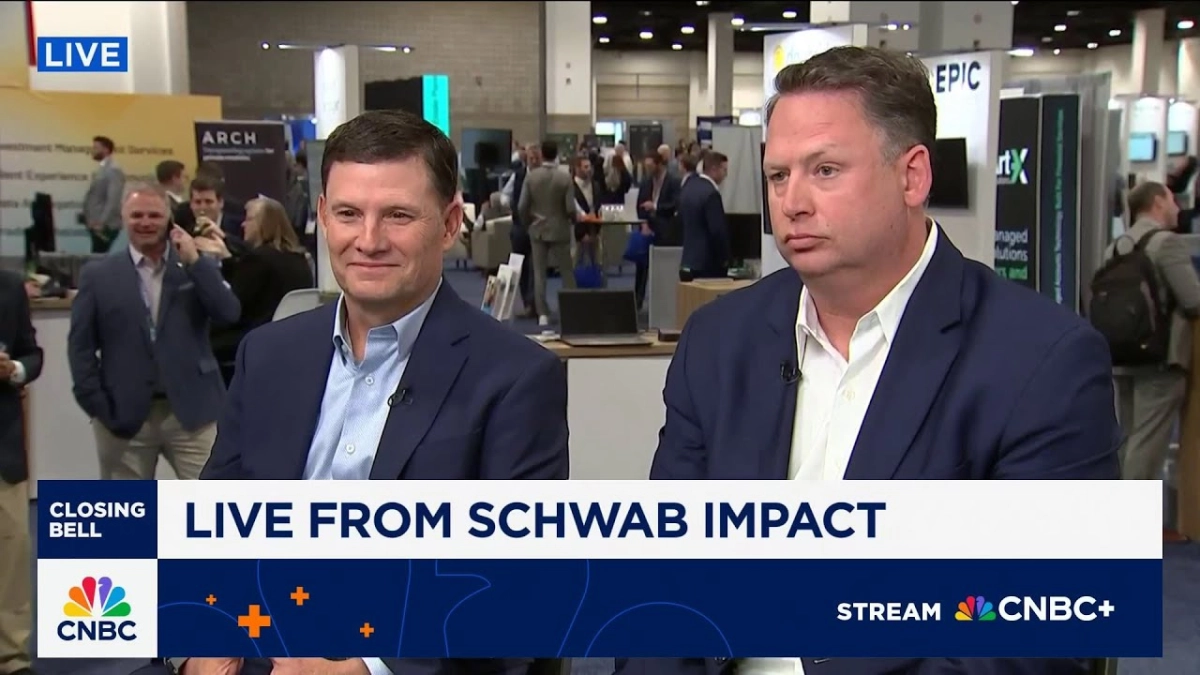
"We're still very early in the AI supercycle," declared Shirl Penney, President & CEO of Dynasty Financial Partners, during a recent CNBC "Closing Bell" segment. This potent assertion, delivered from the bustling floor of Schwab Impact, underscored a foundational belief shared by Penney and Jon Beatty, Head of Advisor Services for Charles Schwab: the financial landscape is undergoing a profound transformation, driven by technological advancement and a shifting investment paradigm. Their conversation, expertly moderated, delved into the evolving dynamics of retail investing, the equity market's current standing, and the strategic adaptations required from wealth managers.
The discussion opened by distinguishing between the short-term retail trader and the long-term retail investor. Beatty emphasized that the advisory community caters to the latter, individuals who "think about the long term," meticulously constructing "diversified portfolios around clients' risk tolerances, their desire for capital appreciation as well as capital preservation." This commitment to long-term strategy and broad diversification, he noted, remains paramount even as market narratives become increasingly concentrated around a handful of high-performing technology stocks.
Penney elaborated on the robust bullish sentiment at Dynasty Financial, highlighting their significant allocation to the equity market. He reiterated the conviction that the "AI supercycle" is merely in its nascent stages, predicting "continued significant CapEx not just with some of the Mag 7 but also you see it with large financial firms like Schwab, JP Morgan and others." This perspective suggests that the current technological revolution is not confined to a few tech giants but is a systemic force reshaping industries, demanding strategic investment across a broader spectrum.
A central theme of the conversation revolved around the challenge advisors face in managing client expectations amidst a market heavily influenced by a small cohort of names. Beatty acknowledged this tension, noting that advisors "earn their money" by "keeping them their feet on the ground as it relates to expectations of the market, the risk-on, risk-off conversations." This involves guiding clients through market fluctuations and reaffirming the enduring principles of sound investing, even when the allure of concentrated gains is strong.
The traditional 60/40 portfolio, once the bedrock of conservative investing, is increasingly viewed as a relic. Beatty pointed out that this conventional allocation is "getting squeezed by alts, precious metals, crypto now coming into the picture." This shift reflects a market where opportunities and risks are distributed across a wider, more complex array of asset classes than ever before.
Penney underscored the necessity driving this evolution. He noted a significant decline in the number of public companies over the past 15 years, from over 8,500 to fewer than 4,000 today. "Many companies are staying private for longer," he explained, emphasizing that "some of the fastest growing firms obviously now in the world of private." This structural change demands that advisors actively seek out and integrate private market opportunities into client portfolios, moving beyond traditional public equities to capture growth.
Related Reading
- AI's Untapped Capital Expenditure and the Looming K-Shaped Economy
- AI's Maturation: From Promise to Proof, OpenAI's Pivotal Role
- Michael Burry’s AI Shorts Spark Debate Amidst Bullish Market
The advent of advanced technology plays a pivotal role in this new landscape. It empowers advisors to construct "highly personalized portfolios on scale for thousands of investors." This technological capability enables sophisticated diversification strategies, incorporating private equity, private credit, venture capital, gold, and even Bitcoin, alongside traditional stocks and bonds. Such customization addresses individual client needs and risk profiles more effectively, moving beyond a one-size-fits-all approach.
The discussion illuminated a financial ecosystem in flux, where the fundamentals of long-term investing meet the disruptive forces of technological innovation and market evolution. The message for founders, VCs, and AI professionals is clear: the AI supercycle is a long-term play, driving capital allocation across diverse sectors and asset classes. Success hinges on a prudent, diversified approach, embracing new investment vehicles, and leveraging technology to navigate an increasingly complex, yet opportunity-rich, market.

