
In a recent "Power Lunch" segment on CNBC, UBS Managing Director Alli McCartney and Jefferies Chief Market Strategist David Zervos joined host Brian Sullivan to dissect the profound implications of artificial intelligence on capital expenditure, economic structure, and the labor market. Their discussion illuminated a critical juncture for investors and policymakers, suggesting that while AI promises transformative growth, it also poses significant challenges to societal equity, demanding a reevaluation of traditional economic frameworks.
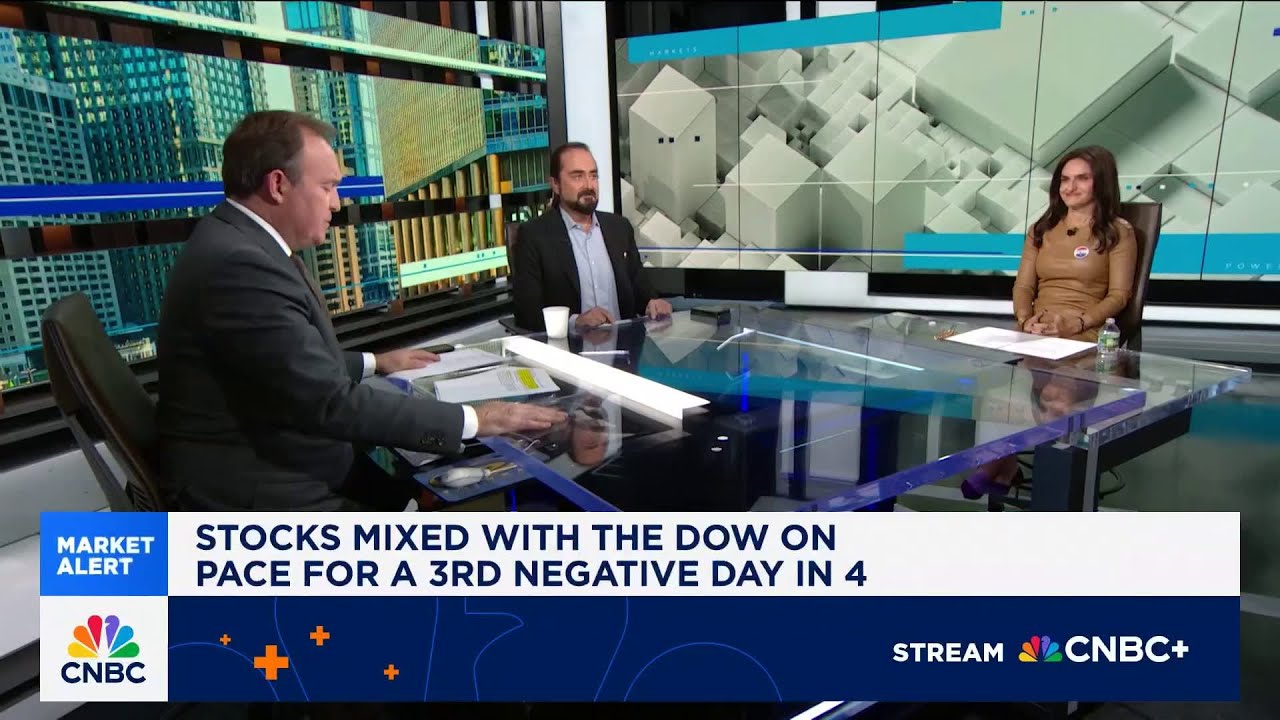
Alli McCartney initiated the conversation by grounding the current AI investment frenzy in historical precedent, drawing parallels to foundational technological shifts like the steam engine, telecommunications, and the electrification of the grid. She highlighted that past eras saw a sustained capital expenditure of "somewhere between 2 and 5% of GDP," while current AI-related infrastructure spending has only reached "slightly less than 1%" for a year or two. This striking disparity suggests that the foundational build-out for AI is still in its nascent stages, implying a substantial runway for continued investment and, consequently, significant upside potential for companies positioned to capitalize on this long-term growth. The sheer scale of investment required for data centers, advanced chips, and energy infrastructure to power the AI revolution dwarfs current outlays, indicating that the perceived exuberance in AI investment today may simply be the initial ripple of a much larger, multi-year wave of capital deployment necessary to fully realize AI's transformative power across industries. Her analysis underscores that the current market dynamics, far from being a bubble, represent the early, critical phase of a foundational economic restructuring.
David Zervos echoed this sentiment by differentiating the current AI boom from the dot-com bubble of the late 1990s, a period often invoked to caution against speculative market behavior. Zervos pointed out a fundamental distinction that should reassure investors: "These companies are making money, Brian. They're they have significant revenues. The concept is proven, and now it's a matter of scale and investment." This perspective challenges the notion of an immediate, impending bust, asserting that today's AI leaders are built on solid financial foundations and tangible products, not merely on abstract potential or inflated valuations. Unlike many ventures during the dot-com era that lacked clear paths to profitability, the contemporary AI landscape is characterized by established tech giants and well-funded startups already generating substantial earnings and demonstrating clear product-market fit. The focus has shifted from speculative ideas to robust execution and expansion, indicating a more sustainable, albeit rapidly accelerating, growth trajectory.
The conversation then pivoted to the broader societal ramifications, particularly the concept of "creative destruction" that often accompanies such profound technological shifts.
McCartney articulated a more sobering outlook on the distribution of AI's economic benefits, characterizing the emerging landscape as a "K-shaped economy." This implies a widening divergence where certain segments of the economy and society thrive, while others falter, exacerbating existing inequalities. She elaborated that while governments have historically been "dumping money and leaning into risk" since the financial crisis, enabling the wealthy to grow "richer and richer," AI introduces a new layer of complexity. Its capacity to automate and optimize tasks "is likely going to disempower lower-level employees," contributing to "very high" unemployment rates among young people. This insight directly confronts the optimistic narratives of AI's universal job-creating potential, suggesting that while new, high-skilled roles may emerge, they might not offset the widespread displacement of existing jobs, particularly for those with less specialized skills or access to retraining. The implications for social cohesion and economic stability are substantial, as the benefits of AI disproportionately accrue to a select few, leaving many behind in its wake.