


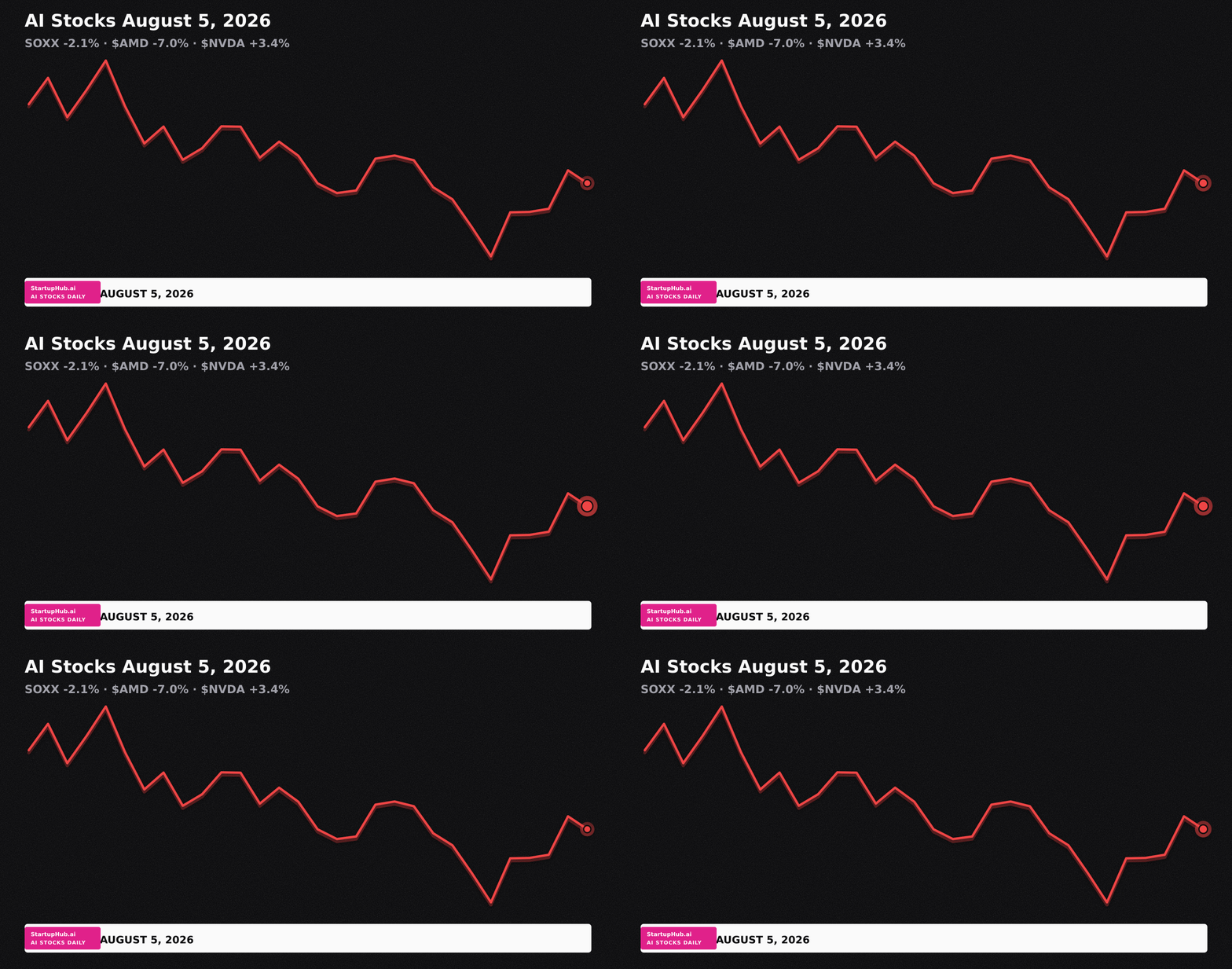
Advanced Micro Devices fell 7% Wednesday despite beating second-quarter estimates, sending a sharp reminder that good numbers are not always enough: NVIDIA Corp. surged 3.4% for its fourth straight session, splitting the AI chip trade into two distinct camps. The Philadelphia Semiconductor ETF SOXX slid 2.1%, the Nasdaq fell 0.8%, and the S&P 500 dipped 0.2% to 7,723 - while the Dow Jones Industrial Average climbed 0.5% to a fresh all-time high as money rotated out of tech and into industrials and financials.
Top AI stocks today: August 5, 2026
| Ticker | Close | Day | 1mo | YTD |
|---|---|---|---|---|
| $NVDA | $219.22 | +3.43% | +7.40% | +16.08% |
| $CRM | $192.98 | +1.04% | +15.85% | -23.91% |
| $META | $588.77 | +0.14% | -2.38% | -9.48% |
| $MU | $893.19 | +0.06% | -5.86% | +183.17% |
| $AVGO | $418.28 | +0.03% | +7.61% | +20.33% |
| $AMD | $482.05 | -7.04% | -6.83% | +115.71% |
| $OUST | $45.12 | -5.69% | +3.94% | +93.07% |
| $SMCI | $30.32 | -4.32% | +7.63% | -2.07% |
| $GOOGL | $362.43 | -4.03% | +0.14% | +15.00% |
| $TER | $389.39 | -3.51% | +10.76% | +87.60% |
AMD drops 7% on Q2 sell-the-news reaction
Advanced Micro Devices Inc. (NASDAQ: AMD) reported second-quarter earnings of $1.66 per share on revenue of $11.54 billion, beating consensus estimates of $1.55 per share and $11.28 billion respectively - and the stock still fell 7%. The dynamic is familiar in high-multiple technology: expectations had been bid up aggressively in the days before the print, AMD rose roughly 8% on Tuesday alone, and investors used Wednesday to collect gains. CNBC reported that CEO Lisa Su addressed reports of Elon Musk redirecting AI spending toward Nvidia, calling the competitive landscape manageable. Despite the drop, AMD still carries a YTD gain of more than 115%. Wells Fargo analyst Aaron Rakers raised his price target to $700 from $615 with an Overweight rating, citing AMD's guidance for 80% year-over-year server revenue growth in the second half of 2026. Bank of America maintained a Buy with a $620 target. AMD remains central to the thesis for diversified AI chip stocks 2026 exposure, but the session underscored how little earnings beats mean when positioning is already stretched.
NVIDIA gains 3.4% for its fourth straight session
NVIDIA Corp. (NASDAQ: NVDA) closed at $219.22, up 3.4% on heavy volume of 156 million shares. The move extends a four-day run and positions NVDA as the clearest beneficiary of any concern that AMD is losing ground in the GPU competition. Per S&P Global data cited by analysts, 61 firms cover Nvidia with a consensus Strong Buy and an average price target of $302.83, representing roughly 38% upside from current levels. NVDA is now a key dividing line in portfolios focused on best AI stocks to buy in the near term: those who believe training-cluster demand remains the primary driver favor NVDA; those betting on AMD''s CPU-GPU crossover thesis were burned today. StartupHub.ai data shows 416 companies active in the AI Hardware space globally, reflecting how deep the silicon ecosystem runs beneath the two headline names - and why a single earnings day can realign capital so sharply between them.
Ouster slips 5.7% ahead of tomorrow''s earnings call
Ouster Inc. (NASDAQ: OUST) fell 5.7% to $45.12, giving back part of a 27% five-day run as traders trimmed exposure ahead of the company''s second-quarter earnings call scheduled for Thursday, August 6 at 5:00 PM EDT. Oppenheimer raised its price target on OUST to $57 from $42 and maintained an Outperform rating, citing improving LIDAR commercialization across automotive and industrial verticals. The stock is up 93% year-to-date, making it one of the stronger performers among AI-adjacent names in 2026. A miss tomorrow could unwind more of that gain quickly; a beat on volume or margin guidance could take it through Oppenheimer''s new target.
Alphabet falls 4% as Magnificent 7 AI stocks face rotation pressure
Alphabet Inc. (NASDAQ: GOOGL) dropped 4% to $362.43 on above-average volume, the steepest single-day loss among hyperscalers and the largest drag from the Magnificent 7 AI stocks cohort on the session. The move had little company-specific catalyst and reads primarily as sentiment contagion from the AMD selloff: when chips fall sharply on good numbers, investors question whether the entire AI capex cycle is priced for perfection. Google''s AI infrastructure spending - which management has committed to maintain through 2026 - becomes a liability narrative on days like this, even though the underlying cloud and search businesses remain intact.